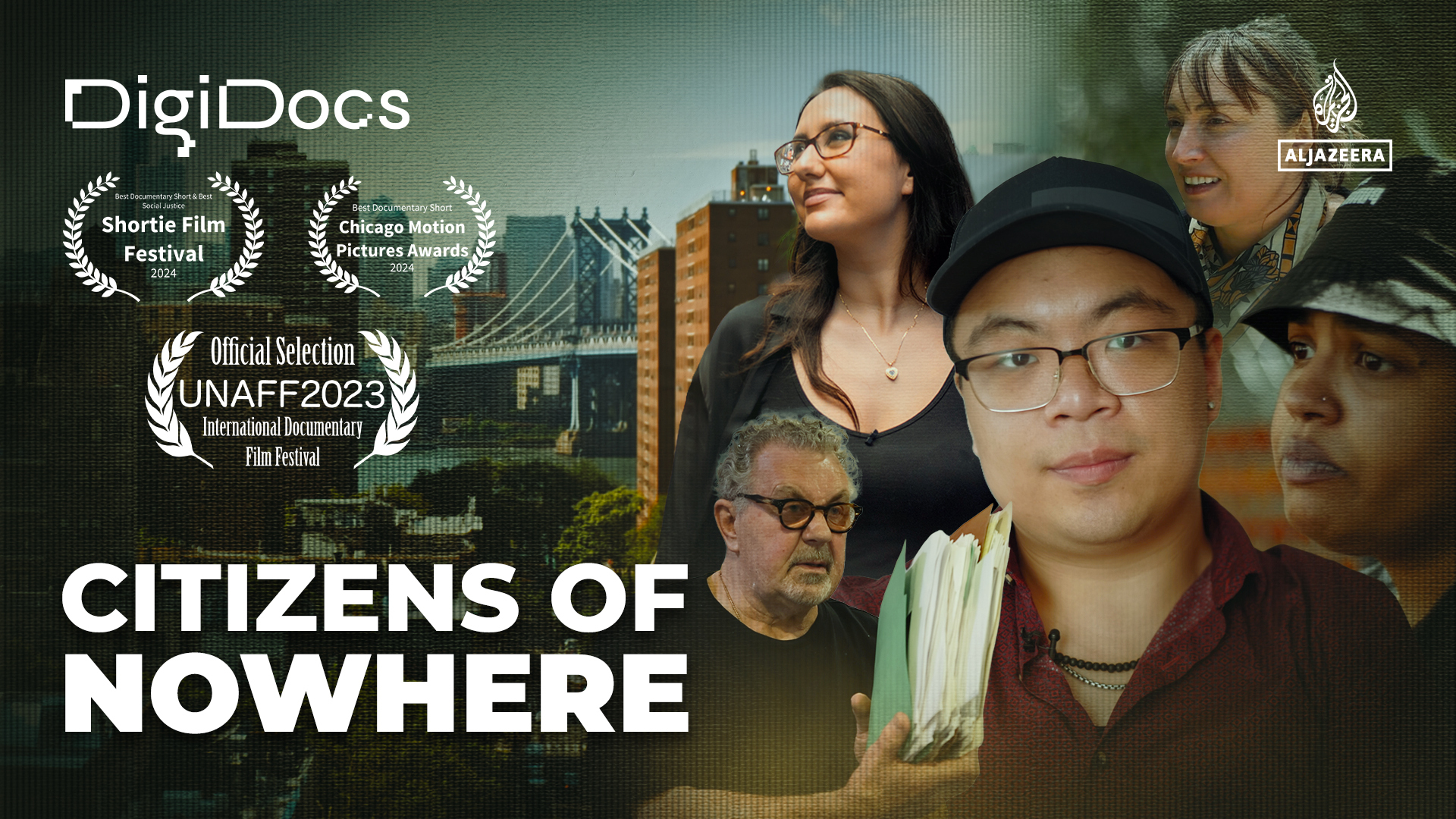
Al Jazeera released a comprehensive new documentary titled "Citizens of Nowhere" on February 4, 2026.
This production investigates the complex and often invisible reality facing stateless individuals currently residing within the United States.
These people live without passports or formal legal recognition from any sovereign nation or governing body.
Alicia Sully directed the production as a What Took You So Long? project in partnership with various advocacy groups.
The film was created in association with the organization known as United Stateless to highlight urgent humanitarian and legal needs.
This collaboration underscores the critical need for legal clarity regarding ambiguous citizenship statuses globally.
Statelessness affects approximately 10 million people globally according to recently published official United Nations estimates.
Many individuals are born into this condition due to conflicting national laws or significant administrative errors during registration.
US immigration policy often exacerbates these issues for specific demographic groups seeking safety and stability.
Without official status, individuals struggle to secure formal employment opportunities in regulated industries across the nation.
They cannot access standard banking services or social safety nets during financial and medical emergencies.
This exclusion limits their ability to contribute economically to the broader society effectively and sustainably in the long term.
Educational institutions frequently require valid identification for enrollment procedures in public schools across the nation.
Children from stateless families often miss critical learning opportunities during their formative years of personal development.
Such gaps in education reduce long-term workforce productivity and national economic potential significantly over the coming decades.
Alicia Sully stated the work questions what citizenship truly means in the context of modern complex society.
Reporters suggest the film exposes bureaucratic barriers that prevent basic human existence for many vulnerable residents in communities.
The documentary seeks to humanize a population often ignored in political and legislative agendas.
Geopolitical tensions and restrictive migration policies contribute significantly to rising statelessness rates globally.
International legal frameworks offer limited protection for those without recognized nationality status or diplomatic and legal support.
Nations must collaborate to address these gaps before they destabilize global regions economically, politically, and socially.
Future policy reforms could alter the legal status of thousands of residents living in legal limbo today and tomorrow.
Economic costs associated with exclusion remain significant for public budgets and overall federal and local tax revenue collections.
Observers will watch for legislative changes regarding non-citizen rights in the coming decade and beyond to assess impact.
Labor markets suffer when human capital remains locked out of formal participation and legal protections and rights.
Unregulated work environments often exploit these populations, leading to lower wages and poor working conditions and safety risks.
This dynamic creates inefficiencies that hinder overall economic growth and development across affected economic sectors.
Regional stability depends on how governments manage populations without legal documentation or national ties or citizenship.
Failure to integrate these individuals creates social friction that can spill over into broader security and stability concerns.
International bodies continue to pressure nations to resolve statelessness before it becomes a systemic humanitarian crisis.