Xi's Purge Frequency Raises Questions on CCP Stability and Leadership Judgment
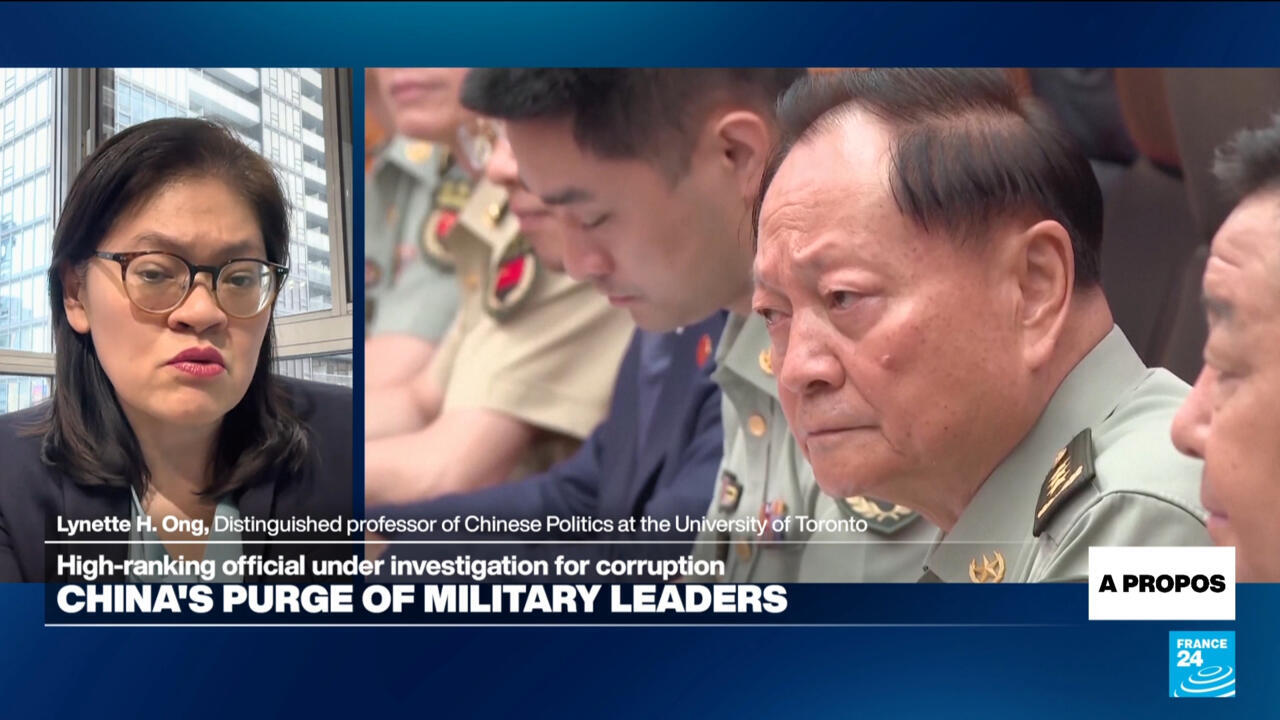
The removal of top military official Zhang Youxia amid anti-graft probes is the latest in a sustained campaign, prompting analysts to question the stability within the Chinese Communist Party's elite echelon. This pattern of high-level cleansing is now forcing international observers to reassess President Xi Jinping's strategic calculus and long-term governance.
Xi's Purge Frequency Raises Questions on CCP Stability and Leadership Judgment
Beijing’s persistent campaign of internal scrutiny, often manifesting as high-profile purges, continues to reshape the landscape of Chinese political power, with recent events casting a shadow over President Xi Jinping's leadership efficacy.The investigation into General Zhang Youxia, formerly the Senior Vice Chairman of the Central Military Commission, for alleged serious violations of discipline and law, marks another significant removal from the core security apparatus. This action, while framed domestically as an anti-corruption drive, has become a recurring feature of Xi’s tenure, drawing increased scrutiny from global political scientists.Speaking on the development, Lynette Ong, Distinguished Professor of Chinese Politics at the University of Toronto, noted that the frequency and targets of these removals suggest potential underlying fissures within the Party’s highest ranks. “This is not an isolated incident; it is a pattern,” Ong stated, suggesting that such continuous internal purges inevitably lead observers to question the judgment behind these strategic personnel decisions.For international markets and geopolitical strategists, the ongoing volatility at the apex of the Chinese power structure presents a significant variable. Sustained internal purges can signal either supreme control or systemic weakness within institutional checks and balances. The removal of senior figures, particularly within the People's Liberation Army (PLA), has direct implications for China’s defense posture and foreign policy coherence.The core concern for international observers is whether these actions are purely aimed at eradicating corruption, thereby strengthening the Party’s mandate, or if they are necessary maneuvers to consolidate absolute personal authority at the expense of institutional resilience. The perceived instability caused by these frequent leadership changes introduces an element of unpredictability into China’s long-term economic planning and international engagement strategies.As Beijing navigates complex domestic economic headwinds and escalating international rivalries, the constant necessity to neutralize potential rivals through disciplinary action suggests a leadership preoccupied with internal loyalty rather than solely outward-facing policy execution. The sustained nature of these internal battles remains a critical metric for assessing the true state of Party unity under Xi Jinping.Source attribution: Analysis based on commentary provided by Professor Lynette Ong to FRANCE 24.