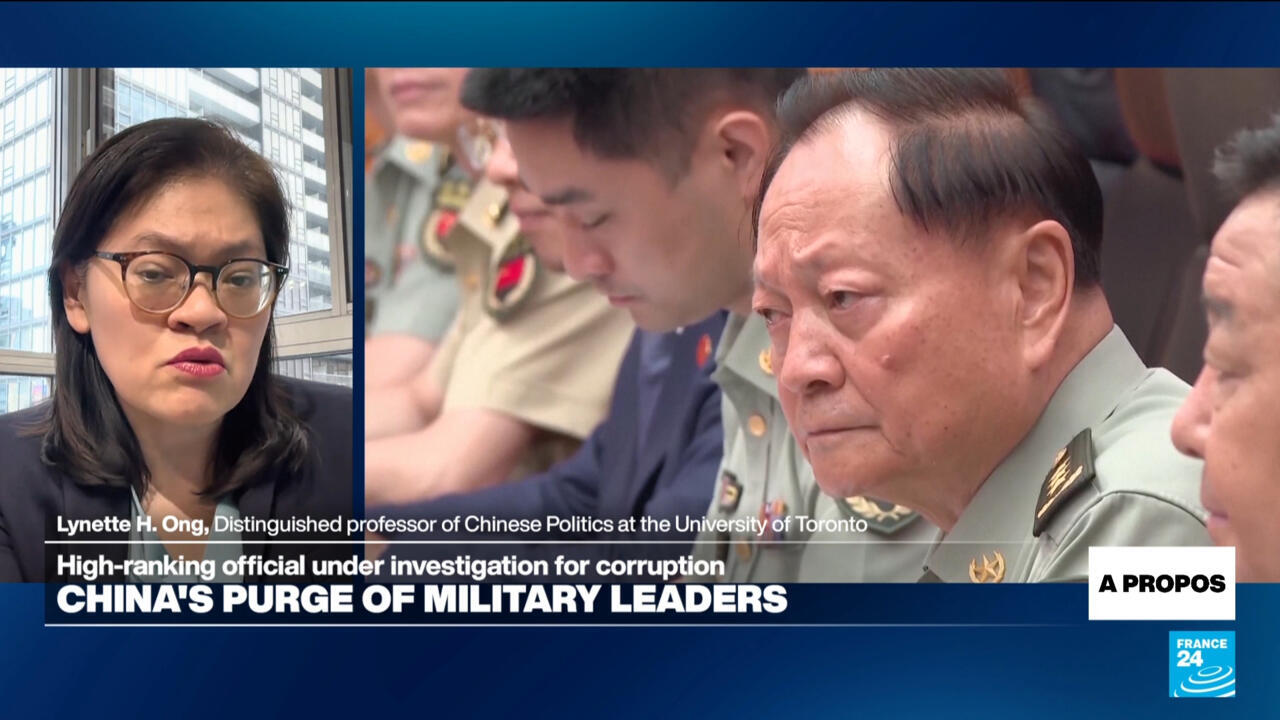
The recent sidelining of General Zhang Youxia, who held the powerful position of Senior Vice Chairman of the Central Military Commission (CMC), marks another significant recalibration within the People’s Liberation Army (PLA) leadership under President Xi Jinping. General Zhang is reportedly under investigation for alleged serious violations of discipline and law, a familiar official indictment used against purged cadres.
This latest high-level removal is not isolated but rather part of an extended pattern of anti-corruption campaigns and personnel reshuffles that have characterized Xi’s tenure. These actions have systematically targeted perceived rivals or those whose loyalty is deemed insufficient, reinforcing the paramount authority of the Party leader.
Speaking on the implications, Professor Lynette Ong, Distinguished Professor of Chinese Politics at the University of Toronto, noted in commentary to FRANCE 24 that the frequency and reach of these purges compel observers to question the efficacy and calibration of President Xi’s personnel management.
From a geopolitical perspective, such internal instability—even when masked by anti-graft rhetoric—can introduce elements of uncertainty into external relations. Predictability in China's decision-making apparatus, particularly concerning military and security policy, is a critical factor for global capitals assessing risk.
While the stated rationale remains the eradication of corruption and ensuring Party control over the armed forces, the underlying effect is the consolidation of power within a smaller, highly vetted circle of loyalists. This process, however, risks alienating established bureaucratic factions.
Economically, the focus on internal security and political alignment can occasionally divert attention or resources from immediate economic challenges, although Beijing consistently frames Party discipline as foundational to long-term national stability and prosperity.
As Xi Jinping navigates the latter stages of his extended leadership mandate, the repeated need to cleanse key institutions suggests either a deep-seated systemic problem or a highly risk-averse approach to maintaining absolute control over the levers of state power. The ultimate judgment on this strategy will likely hinge on whether sustained political stability translates into superior long-term economic and strategic outcomes for Beijing.
This analysis is based on commentary provided by Professor Lynette Ong, as reported by FRANCE 24.