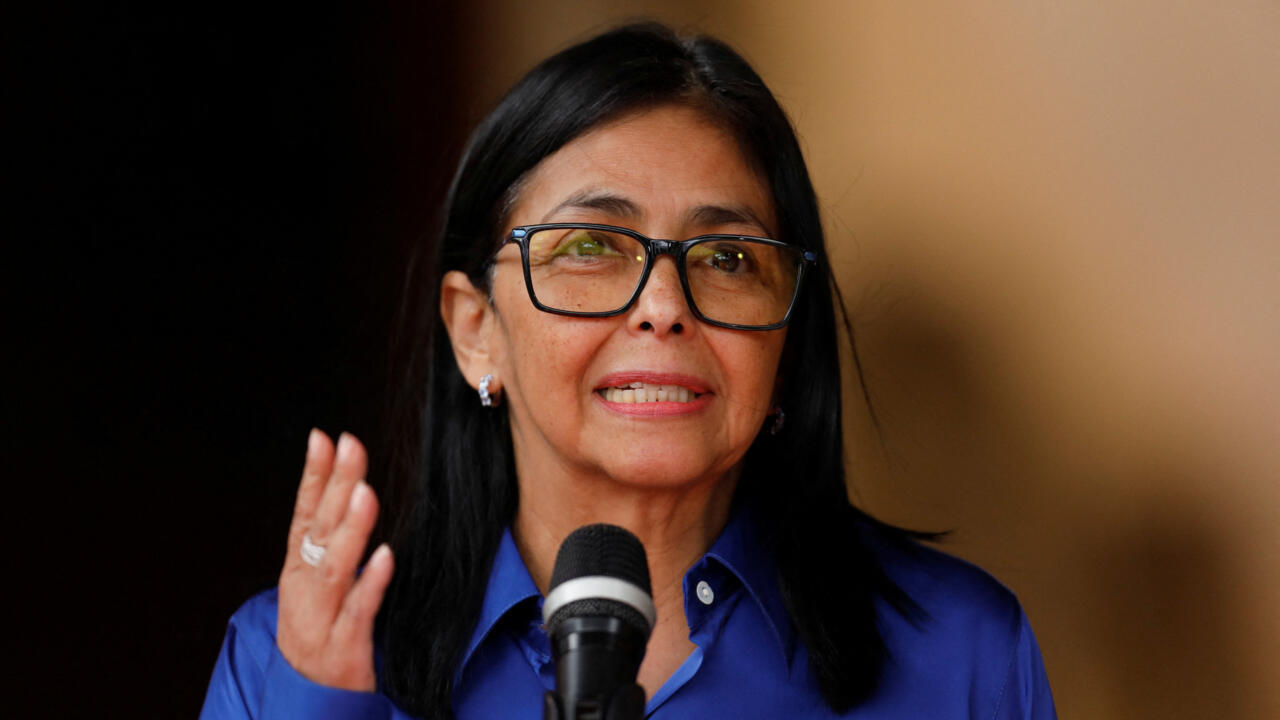
The political landscape in Venezuela, characterized by the ongoing post-Maduro transition efforts, registered a notable shift this week as interim leadership asserted a degree of autonomy from external actors. Delcy Rodriguez, currently holding the interim leadership role, stated explicitly that directives originating from Washington had reached their limit, signaling a potential pivot away from perceived U.S. oversight.
This declaration follows recent positive assessments from the United States, exemplified by Secretary of State Marco Rubio highlighting advancements and the opening of communication channels between the two nations. Such diplomatic overtures have long been viewed by analysts as crucial, yet potentially constraining, factors in shaping the final contours of Venezuela's political resolution.
The assertion by Rodriguez appears to be a direct response to internal political dynamics, specifically addressing comments made by opposition leader Maria Corina Machado. Machado had recently expressed skepticism regarding Rodriguez’s credibility following her own discussions in Washington, stating that 'no one has faith' in the interim figure.
The geopolitical calculus is further complicated by the domestic security apparatus. Rodriguez’s statement coincided with the military leadership reaffirming its allegiance to her position on Wednesday, suggesting a consolidation of internal support that emboldens her pushback against foreign influence.
For international observers, this moment is critical. It tests whether the diplomatic engagement pushed by the U.S. is genuinely aimed at fostering an inclusive transition or if it risks being perceived—or actively rejected—as an attempt to steer internal affairs toward predetermined outcomes.
Economically, any public friction with Washington carries significant weight. U.S. sanctions remain a dominant factor influencing Venezuela’s energy sector and access to global financial markets. A hardening of the interim government's stance could jeopardize recent, albeit tentative, openings for economic relief or dialogue.
In conclusion, Rodriguez’s declaration is less about immediate policy change and more about establishing political posture. How Washington responds—whether with calibrated diplomatic pressure or by acknowledging this clear boundary—will define the immediate trajectory of this fragile Venezuelan political moment. (Source: Based on reporting from France24 and related international briefings.)