United States military assets face a critical shortage following significant damage to advanced radar systems in the Middle East during recent hostilities involving regional actors. Washington has initiated a strategic redeployment of missile defense batteries from South Korea to support operations in the Gulf region where tensions remain high. This shift fundamentally alters the security architecture of the Korean Peninsula while testing American global defense capacity against emerging regional threats and potential adversaries.
According to Global Times, four of the eight most sophisticated radars in the US inventory remain out of service after attacks in the region. These infrastructures cost billions of dollars and possess unique capabilities for detecting long-range ballistic threats across vast distances. The immediate consequence is a forced withdrawal of assets from established defensive positions in Asia to cover the growing gap in the Middle East. Replacement is difficult because these specific technological assets are rare and expensive to manufacture.
The Guardian reports that components of the Terminal High Altitude Area Defense system are being dismantled for transport to the Middle East. Simultaneously, defense officials are considering moving Patriot battery units to Saudi Arabia and the United Arab Emirates to bolster local protection. Seoul faces a situation where protections designed to counter North Korean launches are being relocated thousands of miles away from their intended operational area. This creates a significant vulnerability in the defense perimeter surrounding the capital city.
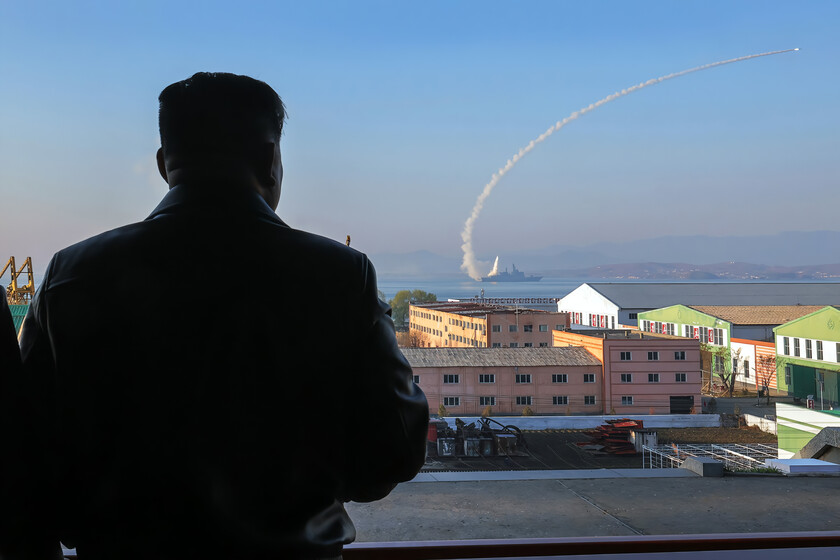
Pyongyang has seized the opportunity to accelerate its nuclear modernization program amidst the perceived security vacuum in the region. CNN notes the regime is constructing the Choe Hyon destroyer, a 5,000-ton vessel capable of launching over 100 missiles including strategic warheads. Analysts suggest the North views the US distraction as proof that nuclear deterrence remains the only viable survival guarantee against Washington. The regime plans to expand naval integration of armament significantly in the coming years.
The Institute for the Study of War indicates this movement exposes the fragility of the American defensive architecture on a global scale. A single additional strike could leave critical regions blind to incoming drone or missile waves targeting key infrastructure. This vulnerability challenges the long-standing assumption of unconditional US military dominance in contested zones throughout the modern international era. Strategic planners must now account for reduced surveillance windows in multiple theaters simultaneously.
For Latin American nations, including Mexico, this realignment signals potential shifts in US foreign policy priorities regarding hemispheric security. Economic and security cooperation often depends on Washington maintaining stability across multiple global theaters simultaneously without overextension. Disruptions in oil markets or trade routes due to Middle Eastern instability could directly impact Mexico's energy sector and export economy significantly. Furthermore, trade agreements under the USMCA framework rely on stable global supply chains that could face delays if shipping lanes remain contested.
China monitors these movements closely through its satellite constellation while Russia maintains its ongoing alliance with Pyongyang. Washington attempts to sustain operations across multiple simultaneous fronts without degrading its overall network integrity against rival powers. The extent of this strain remains uncertain as the conflict in the Middle East evolves and requires sustained logistical support for the duration. These geopolitical dynamics influence how neighboring countries perceive American reliability in security commitments.
The Bulletin of the Atomic Scientists recently adjusted the Doomsday Clock to 85 seconds before midnight, the closest it has ever been set in history. This symbolic representation highlights the rising risk of global self-annihilation through nuclear catastrophe or other existential threats. Many observers consider this warning an indicator of systemic instability beyond current conflict zones affecting international relations globally. The clock serves as a reminder of the precarious balance of power among nuclear states.
The situation demonstrates how regional conflicts can trigger domino effects across unrelated geopolitical spheres and economic systems. Security guarantees previously considered stable may require reassessment by regional partners worldwide who rely on American military presence. Future developments will depend on whether diplomatic channels can de-escalate tensions before further asset withdrawals occur globally. Investors and policymakers must monitor these shifts for potential long-term impacts on global stability.