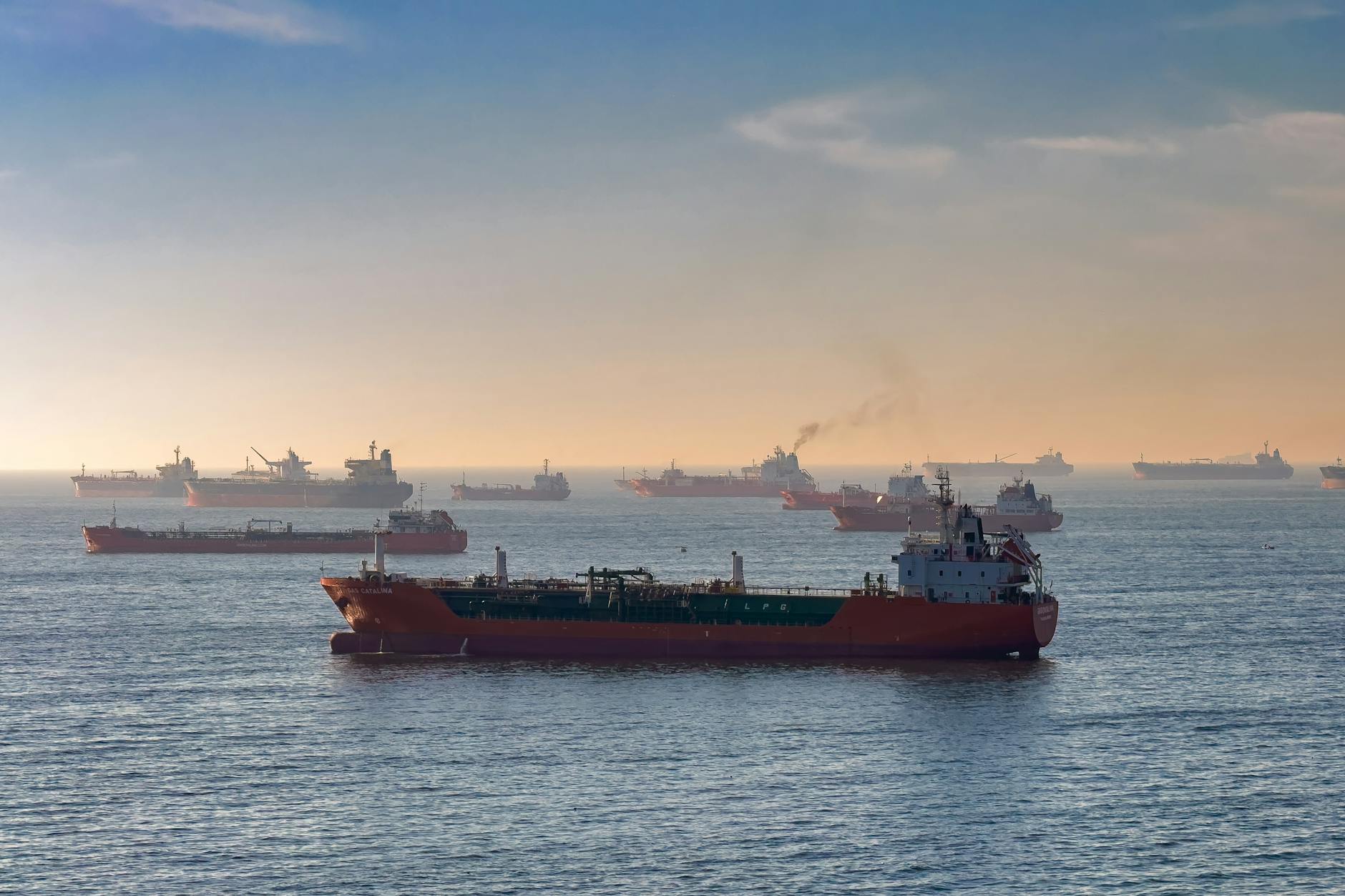
The United States Navy has begun implementing a naval blockade in the Strait of Hormuz to intercept vessels entering or exiting Iranian ports, according to the UK Maritime Trade Operations Centre (UKMTO).
President Donald Trump announced the maritime restrictions would apply “impartially” to ships from all nations traveling to or from Iranian coastal zones. The move follows the failure of recent diplomatic talks between the U.S. and Iran held in Islamabad, Pakistan.
Trump stated on social media that the U.S. Navy would begin the process of blocking all vessels attempting to transit the strait. He issued a direct warning to Iranian forces, stating, “If any of these boats approaches our blockade, it will be eliminated immediately.”
Al Jazeera reported that thousands of Iranians have rallied in Tehran to protest the blockade, with Iranian officials accusing the United States of committing piracy. Despite the military escalation, Trump claimed that Iran “wants a deal ‘very badly’” and that there remains room for negotiation.
Energy markets reacted with immediate volatility. Brent crude prices, the European benchmark, fluctuated from over $103 per barrel down to $97.70, representing a 2.6% daily increase, according to BioBioChile.
West Texas Intermediate (WTI) saw a more moderate daily rise of 0.5% to $97.04. However, the impact on physical cargo availability has been more extreme than futures markets suggest.
According to reports from r/economics, physical oil prices for immediate delivery have reached as high as $150 per barrel. This divergence occurs because buyers are paying massive premiums to secure alternative shipments from the North Sea and Africa to bypass the Middle East.
North Sea Forties crude has surpassed its 2008 crisis peak due to this supply shock. The crisis is also driving up refined product costs, with jet fuel prices nearing $200 per barrel and European diesel climbing to roughly $170 per barrel.
Economic and political fallout
The conflict has triggered significant shifts in global supply and domestic U.S. politics. OPEC countries reported a 27.5% reduction in crude supply during March, totaling a loss of 7.88 million barrels per day, according to BioBioChile.
In the United States, a working paper from the Federal Reserve Bank of Dallas suggests the 2026 Iran War is driving significant inflationary pressure through retail gasoline price shocks. The paper notes that the outbreak of war in February 2026 has already caused widespread disruptions to oil trade.
Domestically, the Trump administration faces internal friction. International lawyer Paz Zárate, speaking on CNN Chile, noted a fracture within the MAGA movement, stating that some major propagandists have abandoned the President and even called for military disobedience.
Zárate also highlighted a growing controversy involving the President and religious figures. Following Trump’s use of an AI-generated image of himself as Jesus on Truth Social, Zárate observed that “attacking Pope Leo XIV, for any ruler, is not a good business.”
While Pakistani Prime Minister Shehbaz Sharif has defended the ceasefire reached last week, Zárate described the recent Islamabad negotiations as “more of a symbolic” event. She argued that the U.S. position is too extreme, stating, “the dialogue to resolve a war does not materialize in a single session. That is illusory.”
She further criticized the composition of the American negotiating team, noting that members from the real estate speculation world lack international relations experience. Zárate also characterized the naval blockade as “an act of war formally,” noting the contradiction of pursuing a ceasefire while simultaneously adopting such measures.