United States President Donald Trump urged Iran on Wednesday to negotiate a nuclear agreement, warning that any subsequent American military action would be significantly more severe. Tehran swiftly countered the warning, issuing threats to strike the United States, Israel, and their allies in response to aggression. This escalation unfolds as the administration faces scrutiny regarding domestic political struggles.
Analysts suggest the heightened military rhetoric surrounding the Iranian file functions as a strategic distraction from internal political pressures. The ambiguity surrounding Washington's ultimate goal—whether it seeks regime change or simply a renewed nuclear dialogue—complicates international assessment of the situation. This uncertainty mirrors previous periods of heightened tension in the Gulf region.
Reports indicate that Tehran’s response emphasized national sovereignty and the defense of its interests against perceived external threats. Such strong language is designed both for domestic consumption and as a signal to regional partners and adversaries. The exchange marks a notable uptick in direct verbal confrontation between the two nations.
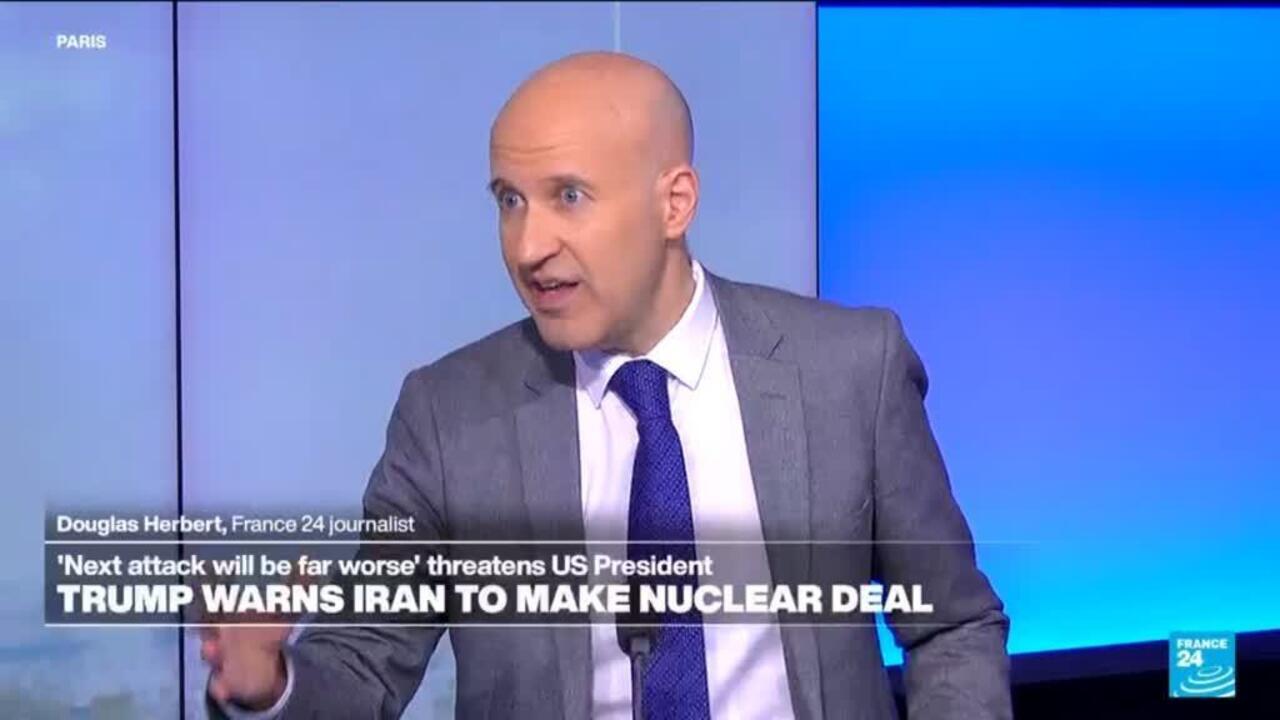
Furthermore, the timing of the escalation aligns with domestic political maneuvering, leading some observers to label the international focus as a calculated maneuver. This phenomenon, where foreign policy crises overshadow domestic issues, is a recurring feature in modern presidential politics, according to reporting by FRANCE 24’s Douglas Herbert.
Uncertainty persists regarding the administration’s desired end state concerning the Iranian nuclear program and sanctions relief. The administration has not clearly delineated whether immediate concessions or long-term structural changes are the primary objective of the current pressure campaign. This lack of clarity affects the ability of European allies to coordinate a unified response.
The broader economic implication involves potential volatility in global energy markets, given Iran’s role as a major oil producer. Any significant disruption in the Strait of Hormuz, a critical chokepoint for maritime trade, would immediately ripple through global commodity pricing structures. Investors are cautiously monitoring developments for signs of physical confrontation.
Looking ahead, the trajectory of this confrontation will depend heavily on whether diplomatic channels remain viable or if either side miscalculates the other's threshold for action. The next few weeks will likely reveal the true depth of the administration’s commitment to either dialogue or sustained maximum pressure.