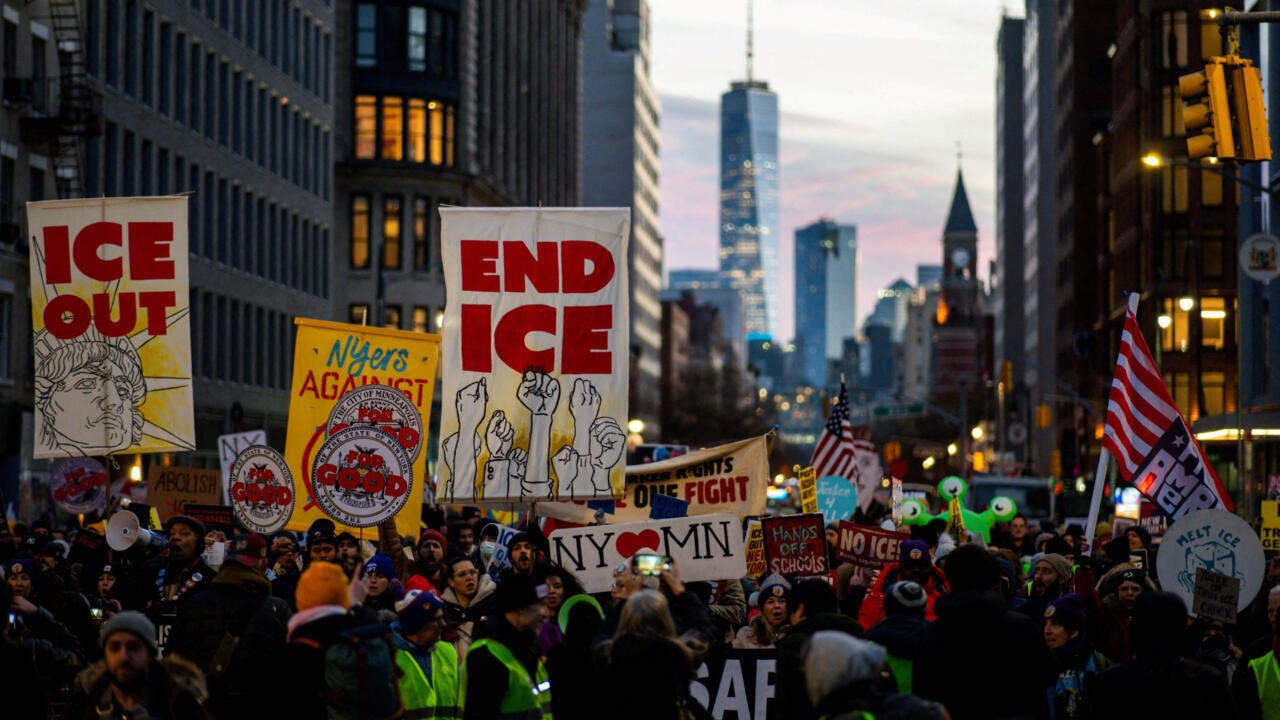
Senate Democrats have signaled a robust legislative challenge to the White House, threatening to obstruct appropriations bills necessary to maintain funding for the Department of Homeland Security and several other critical federal agencies beyond the January 28 deadline. This procedural roadblock is explicitly tied to demands for new restrictions on the administration's current strategy regarding immigration enforcement, spearheaded by Immigration and Customs Enforcement (ICE).
The potential failure to pass funding measures introduces significant fiscal instability, pushing the federal government closer to a partial shutdown. Such an event carries immediate economic consequences, disrupting federal services and potentially freezing non-essential government operations across the country, impacting sectors reliant on federal contracts and regulatory oversight.
At the core of the dispute is the scope and scale of ICE operations. Democratic lawmakers are leveraging their position within the appropriations process to exert pressure on the White House to moderate what they term a 'surge' in immigration enforcement activities. This tactic underscores the deep partisan divide over border and interior enforcement policy.
From a geopolitical perspective, domestic fiscal volatility, particularly involving essential security functions housed within DHS, can influence international perceptions of U.S. governance stability. Creditors and trade partners closely monitor such internal legislative impasses, as they can signal underlying policy uncertainty.
Analysts view this as a high-stakes negotiation, where the immediate budgetary imperative clashes directly with long-term policy aims regarding immigration enforcement. The outcome will not only determine the continuity of government services but also set a precedent for executive agency funding under divided legislative control.
Should a shutdown materialize, the economic ripple effects would extend beyond government payrolls, impacting federal regulatory timelines and potentially slowing down approvals essential for infrastructure and industry projects. The next few days will be critical in determining whether a bipartisan compromise can be brokered to avert fiscal disruption.
This development, as reported by Fraser Jackson for FRANCE 24, highlights the ongoing tension between executive policy implementation and congressional budgetary authority in the current political climate.