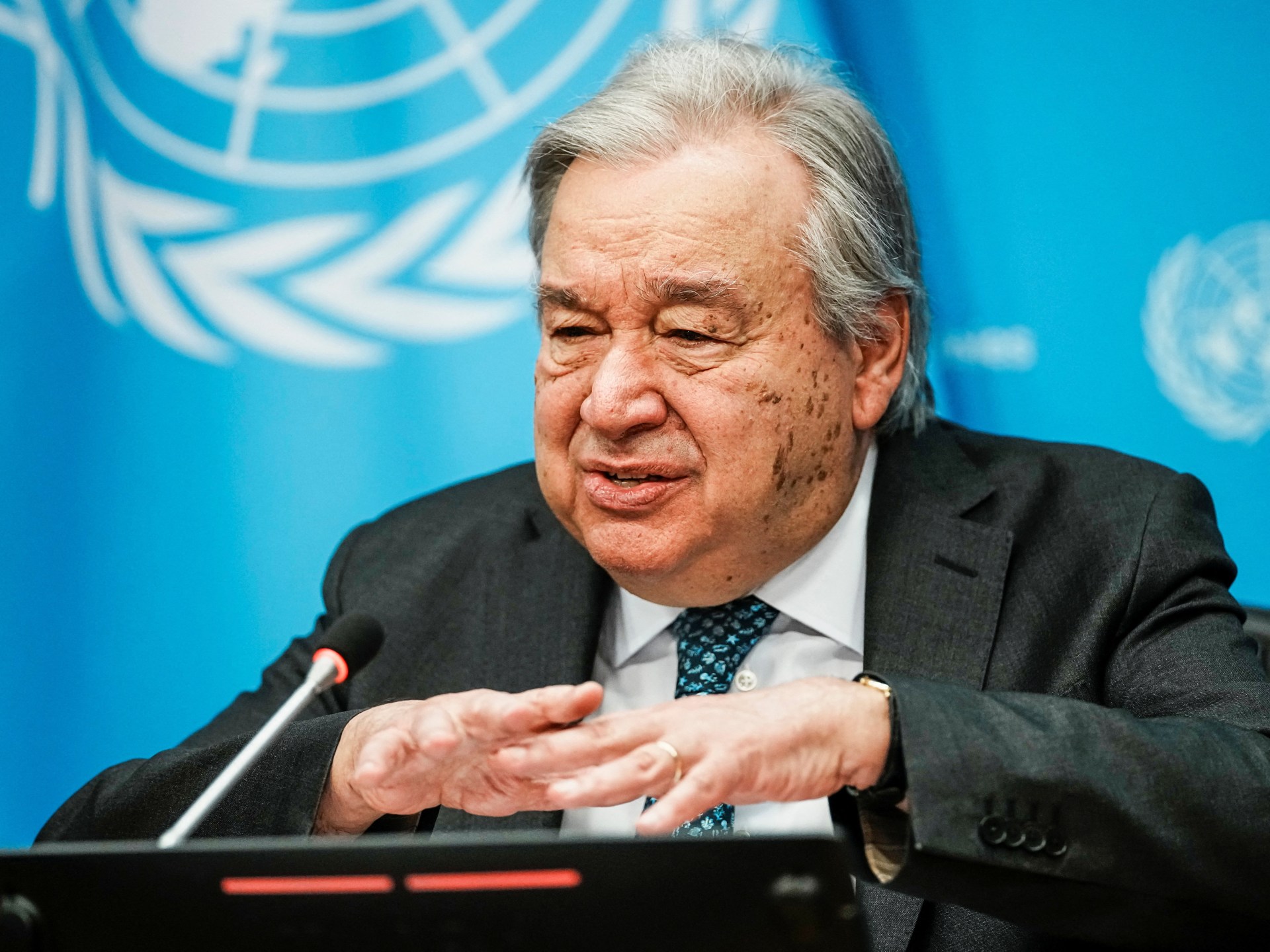
United Nations Secretary-General Antonio Guterres warned that international cooperation is rapidly eroding while addressing pressing global issues during his annual address on Thursday. He asserted that the world body remains essential for tackling climate change, inequality, and conflict, but cautioned that global problems cannot be solved by unilateral action.
The Secretary-General specifically cautioned against a scenario where one dominant power dictates global policy, an apparent reference to the current United States administration’s actions regarding UN treaties. Guterres also warned against a bipolar world where two major powers divide the globe into rival spheres of influence, a comment analysts suggest targets the evolving relationship between Washington and Beijing.
Amid ongoing severe international crises, including the conflict in Gaza and other sovereignty disputes, Guterres emphasized that international law is currently under severe strain. He noted that multilateral institutions face assaults on multiple fronts, even as the UN continues to advocate for peace rooted in established international legal norms.
This context follows significant friction between the US and the UN system, including reported threats of sanctions against UN officials and moves to withdraw from key international commitments. Guterres, whose term concludes this year, underscored the necessity of upholding treaties that have long underpinned global stability.
Brazilian President Luiz Inacio Lula da Silva recently criticized US President Donald Trump's efforts to establish parallel governance structures, such as the recently launched “Board of Peace.” This initiative, unveiled at Davos, has attracted numerous signatories but has also faced rejection from key allies, including France, which questioned its alignment with the UN framework.
France reportedly expressed reservations that the Board of Peace initiative moves beyond specific regional issues and challenges the fundamental structure of the United Nations itself. This divergence highlights a growing schism between nations favoring established multilateral bodies and those seeking alternative, power-centric diplomatic avenues.
As the geopolitical environment stiffens, Guterres’s address serves as a direct appeal to member states to recommit to collective problem-solving mechanisms. The effectiveness of the UN in addressing complex, transnational issues hinges on whether major powers choose cooperation over isolationist policies, according to observers.