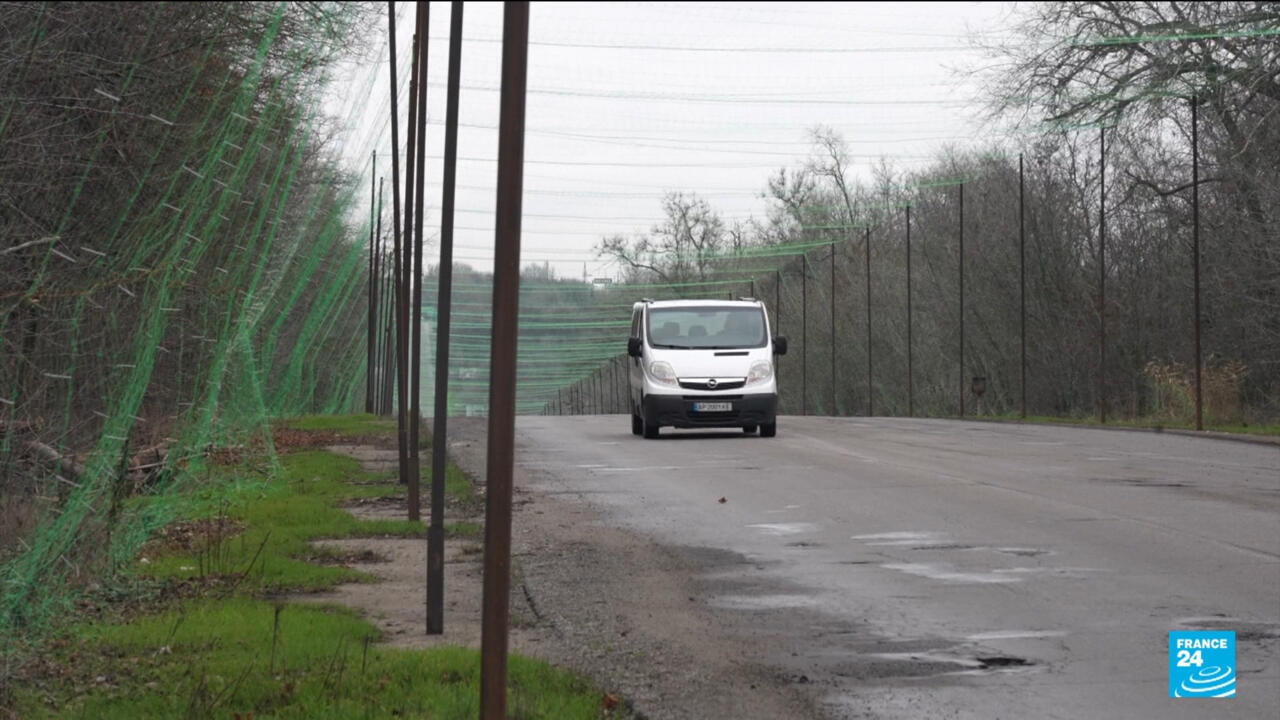
Authorities in the southern Ukrainian city of Kherson have initiated the deployment of protective netting over key infrastructure and roads to mitigate risks from escalating drone warfare. This improvised defense system utilizes commercially available fishing nets, sourced in part through international efforts, to intercept or disrupt small unmanned aerial systems.
Lightweight drones, capable of acting as kamikaze weapons or delivering small ordnance, present a significant and growing danger to both military personnel and civilians near the front lines. Reports indicate that attacks of this nature have resulted in the deaths of at least 200 civilians in Kherson alone, according to local reporting.
French fishermen have reportedly taken a leading role in organizing and supplying these materials, demonstrating an unusual intersection between maritime industry resources and battlefield necessity. The nets are being adapted to serve as physical counter-drone measures, a low-tech solution to a high-tech threat.
This defensive adaptation underscores the resourcefulness required in protracted conflicts where conventional anti-air systems may be insufficient or overstretched. The nets function by fouling drone rotors or disrupting flight paths upon impact, offering a localized layer of protection.
Economically, the reliance on readily available, non-military surplus material suggests a focus on cost-effective and rapidly deployable security solutions. This contrasts sharply with the high expenditure often associated with advanced electronic warfare or dedicated counter-UAS technology.
Geopolitically, the involvement of French entities in supplying these materials highlights continued, albeit unconventional, support flowing into Ukrainian defense efforts. Such material transfers often bypass formal military aid channels, relying instead on civil society or commercial networks.
Future security planning in the region will likely involve scaling these effective, low-cost measures across other vulnerable urban centers. The success of these nets may prompt further exploration into repurposing civilian goods for defensive applications against aerial threats.