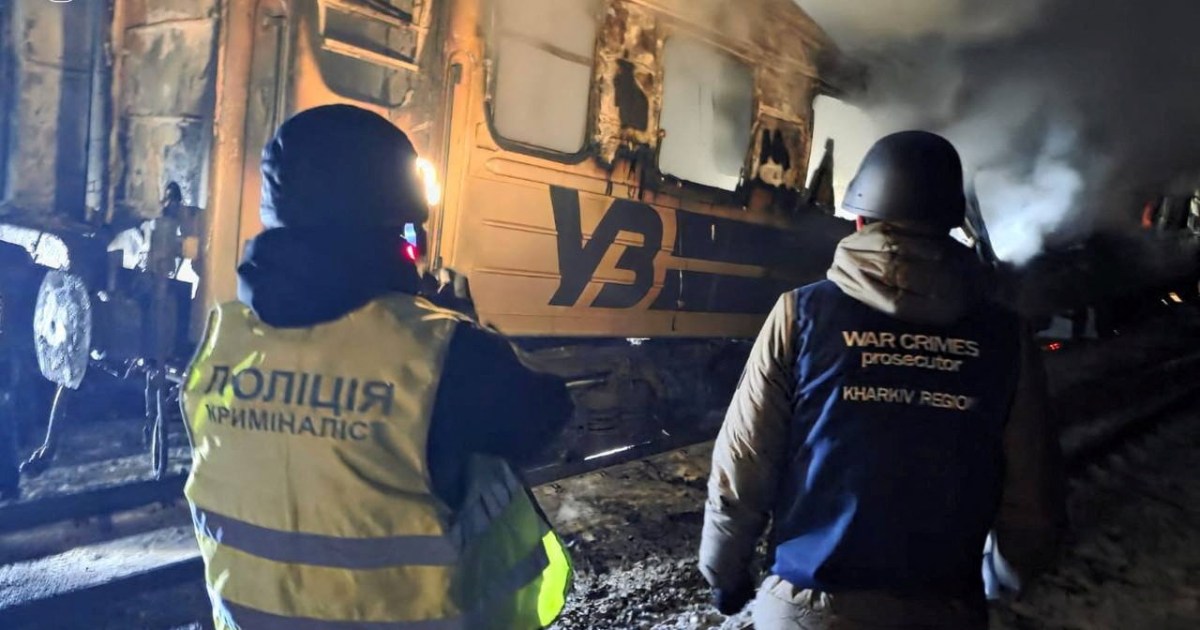
The protracted conflict in Ukraine saw a grim escalation as Russian drone and aerial attacks claimed civilian lives across multiple regions, including a devastating strike on a passenger train in Kharkiv. Meanwhile, contested territorial claims and a persistent energy crisis underscore the deepening humanitarian and strategic challenges.
Kyiv/Moscow, January 28, 2026 – The ongoing conflict in Ukraine has entered a critical phase with intensified Russian strikes resulting in significant civilian casualties and raising humanitarian concerns, particularly amidst a severe energy crisis. The latest reports indicate a rising death toll from drone and aerial bomb attacks across several Ukrainian regions, highlighting the persistent human cost of the protracted hostilities.In the Kharkiv region, at least four individuals were killed and four remain missing following a Russian drone attack that struck a passenger train, Ukrainian President Volodymyr Zelenskyy announced on Telegram. The attack, which also injured two people, underscores the vulnerability of civilian infrastructure and transport routes. Further south, in the Odesa region, three people lost their lives and 25 were injured in a separate Russian assault on a building, according to Serhiy Lysak, head of the regional military administration. In Kostiantynivka, an aerial bomb targeting a kindergarten, reportedly used as a community center for charging devices during power outages, resulted in one fatality, as confirmed by Serhii Horbunov, the city's military administration head. The Sumy region also reported the deaths of a man and a woman attempting to evacuate from Hrabovske village due to a Russian drone strike.Moscow, through its Defence Ministry, claimed to have intercepted 105 Ukrainian drones within a 24-hour period, according to the TASS state news agency. The ministry also asserted territorial gains, reporting the seizure of Novoyakivlivka in Zaporizhia and Kupiansk-Vuzlovyi in Kharkiv. However, these claims have been met with skepticism. Andriy Kovalenko, head of Ukraine’s Centre for Countering Disinformation, dismissed the capture of Kupiansk-Vuzlovyi as a fabrication, a sentiment echoed by open-source intelligence maps from the volunteer organization DeepState, which did not corroborate Russian troop presence in the claimed areas of Novoyakivlivka.The conflict's impact on critical infrastructure remains profound. Ukraine's capital, Kyiv, is grappling with a widespread energy crisis, with 710,000 residents still without electricity due to ongoing Russian attacks on power facilities. In response, the European Union is supplying 447 generators to Kyiv, Kropyvnytskyi, and frontline communities, with 76 delivered on Tuesday, as reported by Ukrinform. Conversely, Russia's Foreign Ministry ambassador-at-large, Rodion Miroshnik, stated via TASS that nearly 1.3 million residents in Russia and Russian-occupied Ukrainian territories experienced power outages last week due to Ukrainian strikes. Naftogaz, Ukraine's state oil and gas firm, confirmed a Russian strike on one of its facilities in the western part of the country.On the diplomatic front, a stark division in perspectives on achieving peace persists. U.S. President Donald Trump indicated that negotiations to end the invasion were progressing positively, though he offered no specifics. Conversely, Kirill Dmitriev, President Putin’s special envoy, reiterated Moscow's stance that a Ukrainian withdrawal from the Donbas region is the prerequisite for peace. Meanwhile, Finland's Prime Minister Petteri Orpo suggested in Beijing that China and President Xi Jinping possess the leverage to influence Moscow and potentially end the conflict.Adding a layer of complexity to international economic responses, an oil tanker operating under EU sanctions for carrying Russian oil was escorted to Tanger Med port in Morocco by a Spanish rescue vessel. In a move that could further strain EU energy policy, Slovakian Prime Minister Robert Fico indicated his intention to challenge the EU's ban on Russian gas imports through legal action.The situation on the ground remains fluid, with contested territorial claims and a persistent humanitarian crisis exacerbated by energy infrastructure attacks. International diplomatic efforts continue, albeit with divergent approaches and limited tangible breakthroughs.This report was compiled from information provided by Al Jazeera and its news agencies.