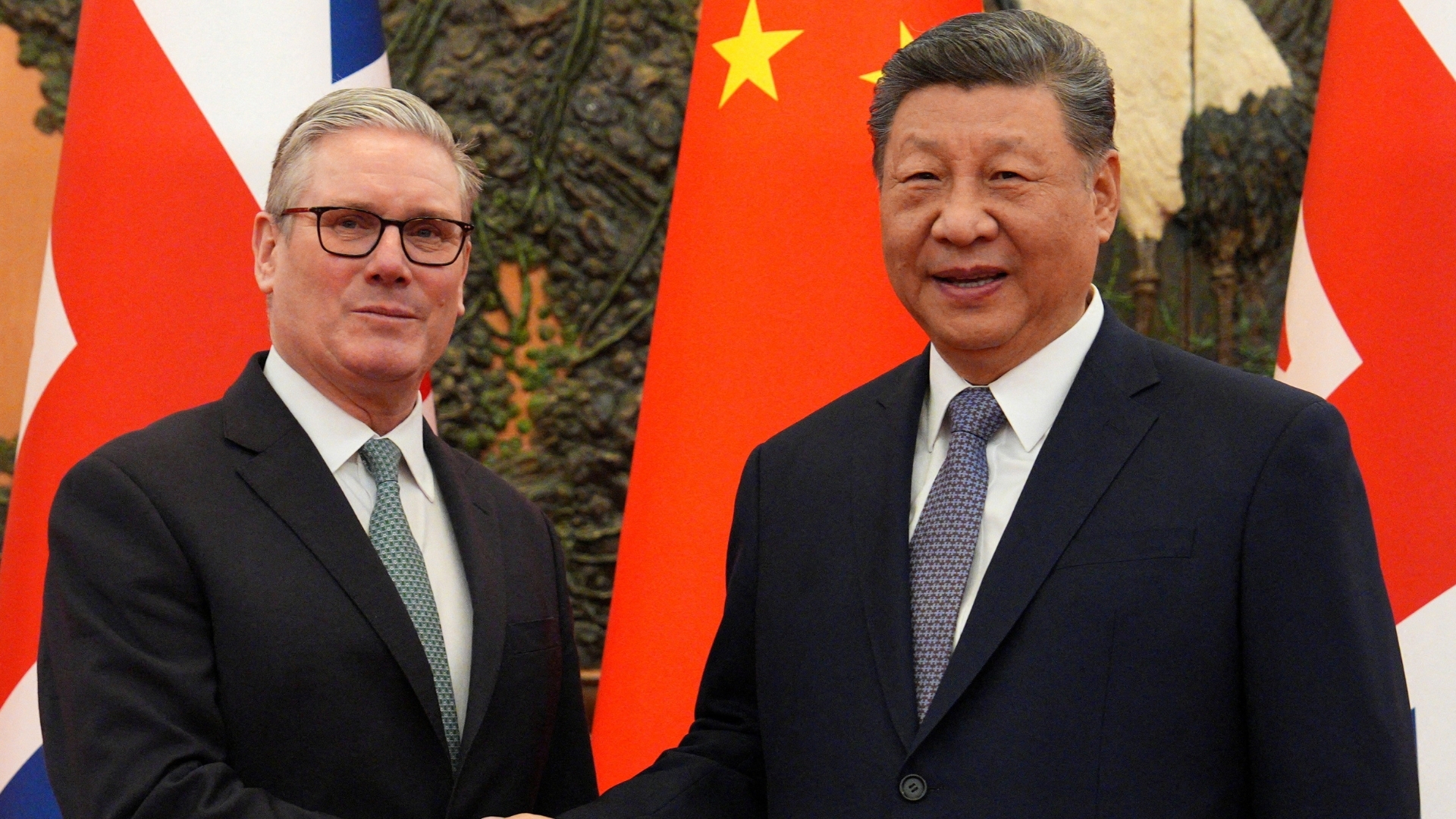
British Prime Minister Keir Starmer arrived in Beijing this week, receiving a notably warm reception from Chinese President Xi Jinping, signaling an effort to stabilize bilateral relations. The visit included a substantial delegation of British business and cultural figures, underscoring economic objectives alongside diplomatic overtures.
This diplomatic outreach contrasts sharply with the recent cooling of ties between London and Beijing, suggesting a pragmatic shift in UK foreign economic policy toward engagement. Analysts suggest the UK seeks to rebalance trade relationships while navigating heightened geopolitical tensions involving security and technology.
The visit, however, immediately faced external friction, as United States President Donald Trump publicly characterized Starmer’s trip as "dangerous." This reaction highlights the ongoing transatlantic divergence on how to manage economic interaction with the People's Republic of China.
Experts observing the dynamic note that the importance of the visit lies in establishing clear lines of communication for trade and investment, despite global headwinds. Political economist Will Hutton and Director Steve Tsang of the China Institute at SOAS University of London provided context on the motivations driving the engagement.
Andy Mok, Senior Research Fellow at the Center for China and Globalization, offered insight into Beijing’s perspective on welcoming the high-level delegation. China typically seeks to foster economic ties with major European economies to counter broader Western decoupling efforts.
Economically, the delegation's focus likely centered on securing market access and investment opportunities for key British sectors, seeking to mitigate risks associated with escalating global trade disputes. The scale of the accompanying business contingent suggests tangible commercial outcomes are a primary goal for the Starmer administration.
Moving forward, the success of this rapprochement will be measured by concrete trade agreements and the stability of ongoing dialogue, particularly concerning areas of previous contention like intellectual property and supply chain resilience. The UK must now balance renewed engagement with Beijing against commitments to its Western security alliances.