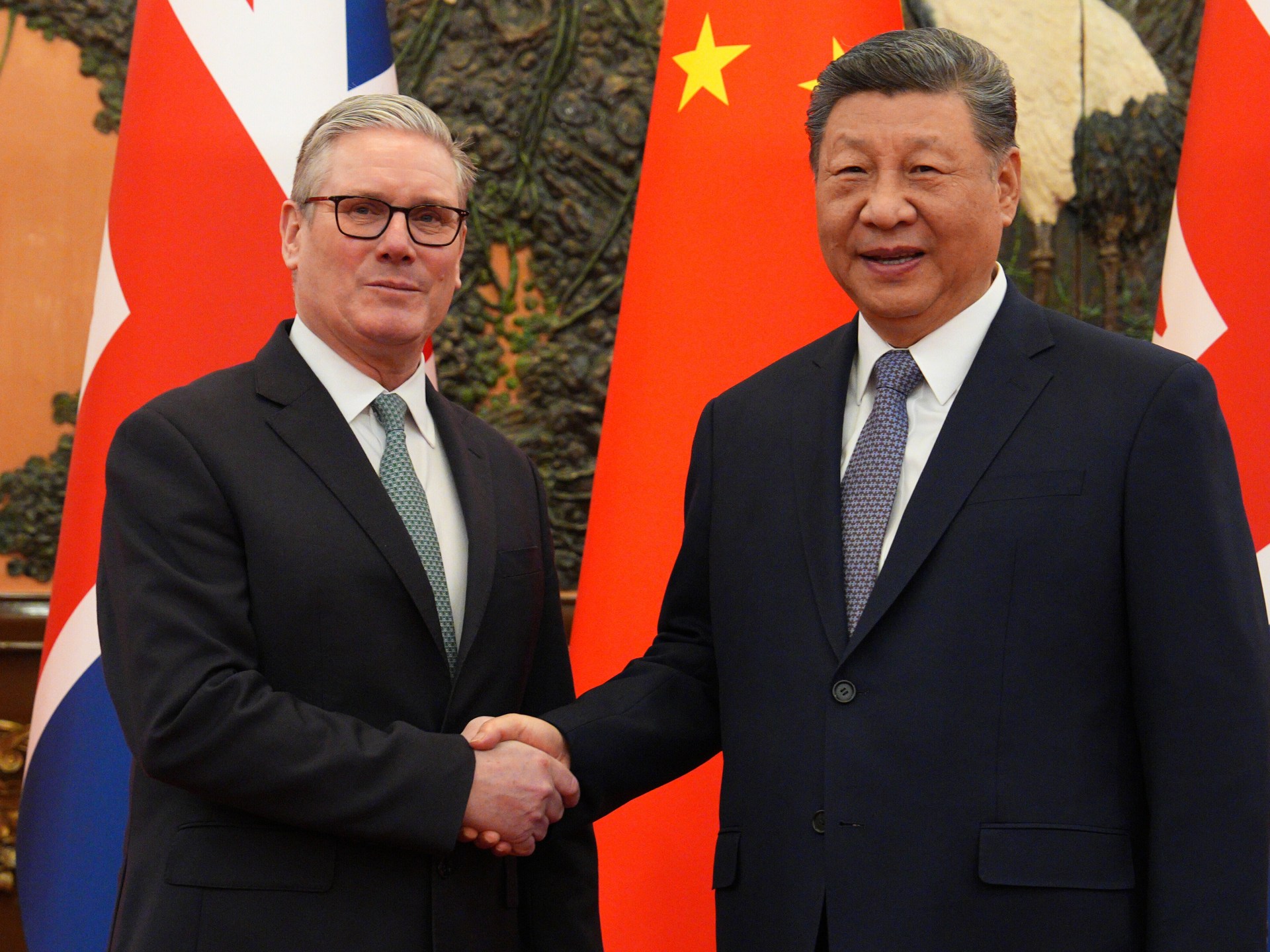
United Kingdom Prime Minister Keir Starmer commenced a three-day official visit to China, marking the highest-level engagement between the nations since 2018, as London seeks to stabilize economic ties with the world’s second-largest economy. The trip’s primary objective appears to be pragmatic engagement, balancing commercial interests against persistent security and human rights concerns, according to reports from his office.
During Thursday's meeting in Beijing, Starmer and Chinese President Xi Jinping jointly advocated for strengthening a “comprehensive strategic partnership,” with Xi acknowledging prior setbacks in bilateral relations. Starmer stressed the necessity of collaboration on global issues like climate change, while simultaneously insisting on a “meaningful dialogue” regarding areas of disagreement between the two nations, reported Reuters.
The Prime Minister traveled with a delegation of nearly 60 representatives from key sectors, including HSBC, GSK, and Jaguar Land Rover, signaling a strong business focus for the visit. Starmer previously told Bloomberg that “significant opportunities” exist for British entities in the Chinese market, framing the trip as essential for the UK’s national interest amid post-Brexit economic headwinds.
This economic pivot occurs as the UK economy continues to face structural challenges; estimates from the National Bureau of Economic Research suggest Brexit reduced UK GDP by 6 to 8 percent cumulatively. Furthermore, the UK faces potential external economic pressure, including uncertainty surrounding trade policy shifts from the incoming US administration, prompting diversification efforts.
Despite the economic push, long-standing tensions regarding Beijing’s actions in Hong Kong and allegations of espionage persist, with MI5 recently characterizing Chinese state actors as a daily national security threat. Analysts, such as Steve Tsang of the SOAS China Institute, suggested that Beijing would likely avoid making substantive concessions on politically sensitive issues like human rights during the visit.
However, the visit did yield immediate operational agreements in specific security areas, with both sides agreeing to enhance cooperation on combating illicit synthetic opioid flows into the UK. Starmer’s office confirmed arrangements for intelligence sharing to disrupt organized crime supply chains, including the provision of small boat engines used for Channel crossings.
Starmer’s strategy mirrors moves by other major economies, including France and Australia, who are also pursuing high-level engagement to secure trade advantages. The success of this reset will hinge on London’s ability to secure tangible market access while managing domestic political pressure concerning Beijing’s geopolitical conduct.