Former President Donald Trump's recent address at the World Economic Forum (WEF) in Davos served as a significant policy signaling event, directly challenging the prevailing global consensus on the energy transition. His rhetoric, characterized by provocative statements, focused heavily on framing Europe’s current economic headwinds as a direct consequence of its commitment to renewable energy mandates.
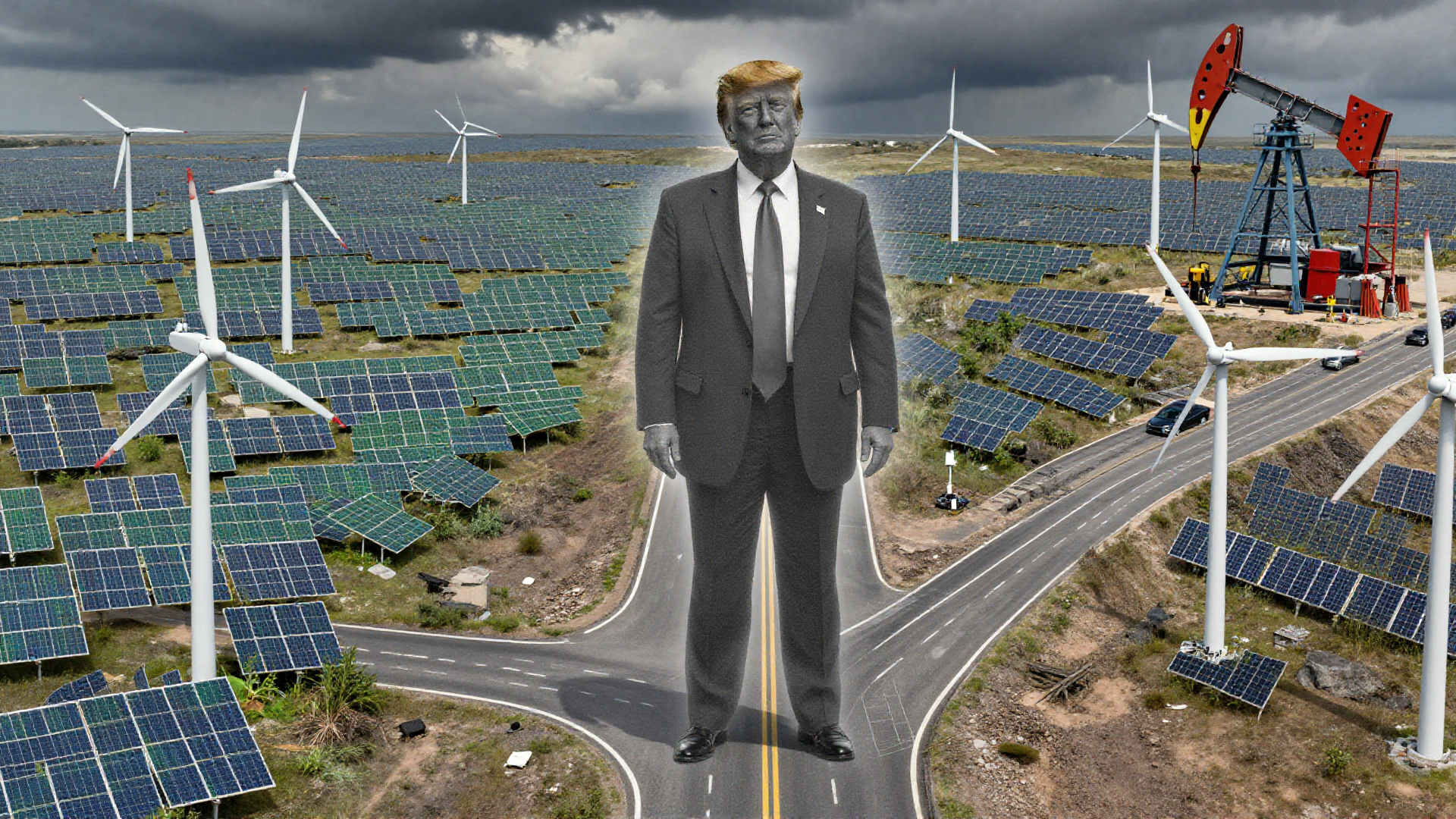
Trump explicitly targeted what he termed the 'Green New Scam,' arguing that the shift toward intermittent sources like wind power has resulted in 'civilizational erasure' by replacing reliable, affordable energy infrastructure with costly and unstable alternatives. This framing directly counters the narrative promoted by many European leaders and multilateral institutions present at the forum, highlighting a deep ideological fissure regarding climate action and economic stability.
For global markets, such pronouncements carry substantial weight. A return to protectionist trade stances, coupled with a potential rollback of domestic and international climate regulations, could profoundly reshape investment flows in the energy sector. The reliance on tariffs, an issue raised by observers regarding the scope of executive power, was implicitly linked to his broader economic worldview during the gathering of global elites.
The juxtaposition of Trump’s economic nationalism against the backdrop of the WEF—an institution generally supportive of ESG principles and international cooperation on climate—underscored the geopolitical friction defining the current era. The event itself became a stage for contrasting visions on industrial competitiveness and national sovereignty.
Analysts note that the critique is not solely aimed at environmental policy; it is deeply intertwined with geopolitical strategy. By casting reliance on renewables as a weakness, Trump advocates for a prioritization of domestic fossil fuel production and energy independence, potentially leading to renewed tensions with allies dependent on stable, diversified energy markets.
While the immediate policy impact remains contingent on domestic political developments in the United States, the Davos platform provided a high-profile venue for disseminating a counter-narrative. This narrative resonates with segments of the industrial base prioritizing short-term energy cost stability over long-term decarbonization goals.
This divergence in energy philosophy between potential future U.S. leadership and established European partners suggests that any renewed transatlantic coordination on climate finance and trade mechanisms will face significant headwinds. The outcome of upcoming elections will therefore be viewed not just through a domestic lens, but as a determinant for the trajectory of global energy governance, as reported by attendees at the Swiss forum. (Source: Analysis based on reports from the World Economic Forum in Davos.)