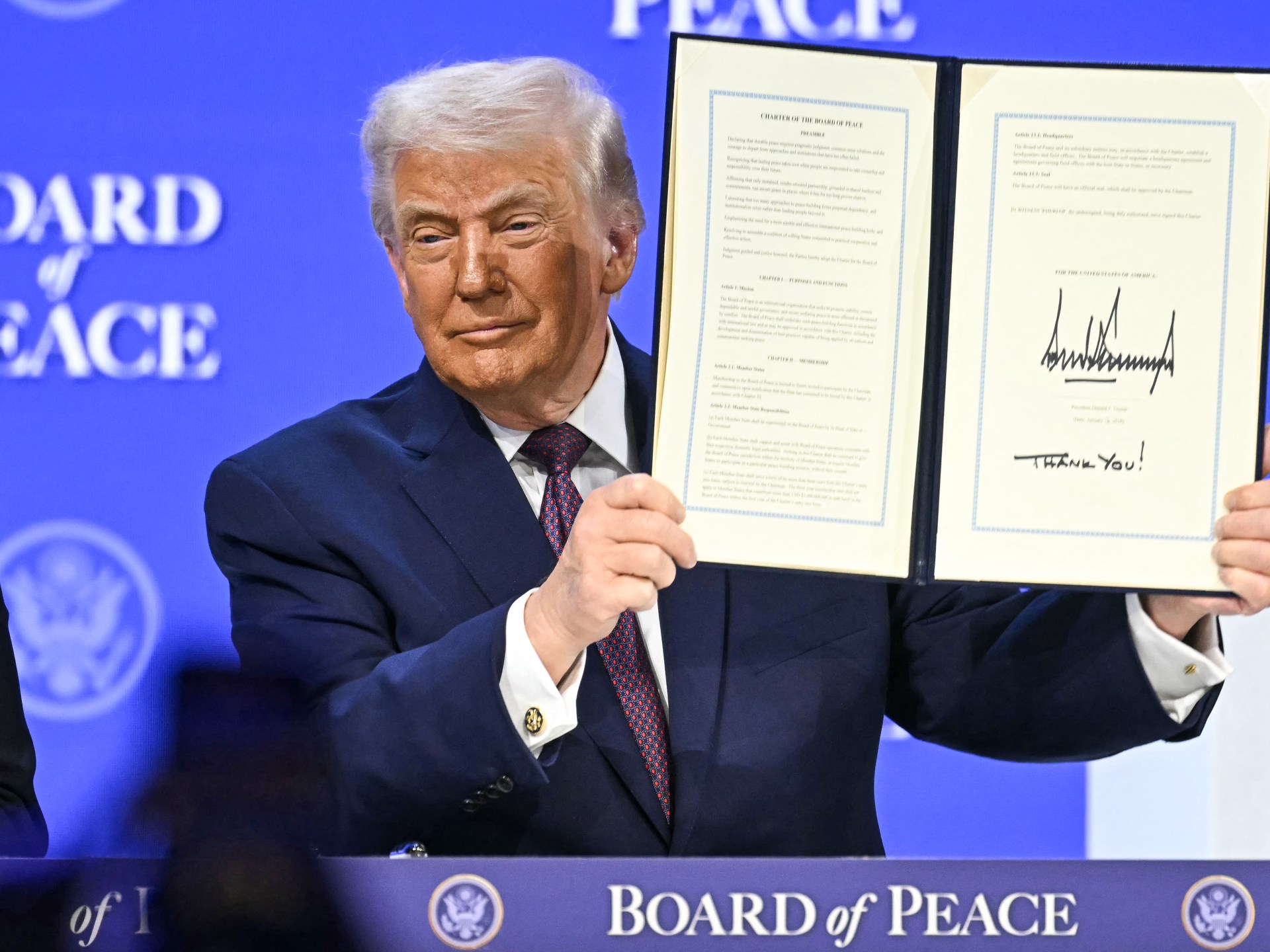
Trump's 'Board of Peace' Challenges UN Authority with Authoritarian Alliance
The Trump administration's latest diplomatic initiative, a proposed "Board of Peace" with the US president as lifetime chairman, represents a significant challenge to the established United Nations framework, according to analysis from international observers and human rights organizations.The new organization, unveiled at the World Economic Forum in Davos, has attracted membership from countries with contested human rights records while notably omitting traditional democratic allies. The proposed charter requires a $1 billion fee for permanent membership and conspicuously avoids any mention of human rights protections.Among the invited participants are Russian President Vladimir Putin and Israeli Prime Minister Benjamin Netanyahu, both subject to International Criminal Court arrest warrants for war crimes and crimes against humanity. Additional invitations extended to leaders from China, Belarus, and Kazakhstan have raised questions about the organization's commitment to its stated goals of promoting stability and lawful governance.The membership composition contrasts sharply with traditional multilateral institutions. Only two European Union members, Hungary and Bulgaria, have agreed to participate, while France's Emmanuel Macron declined the invitation, prompting threats of increased tariffs on French wine and champagne from the Trump administration.Canada's initial invitation was withdrawn after Prime Minister Mark Carney's Davos speech criticized the use of economic coercion by great powers against smaller nations and warned of threats to multilateral organizations like the UN.The Board of Peace charter grants Trump supreme authority "to adopt resolutions or other directives" as chairman, establishing a governance structure that differs markedly from consensus-based international bodies. This centralized decision-making model has drawn criticism from diplomatic observers who note its departure from established multilateral norms.Originally conceived to oversee Gaza's post-conflict administration, the organization's scope has expanded beyond its initial mandate. A subsidiary "Gaza Executive Board" led by Jared Kushner includes former UK Prime Minister Tony Blair and officials from Turkey and Qatar, but notably excludes Palestinian representation.The initiative reflects broader tensions between the current US administration and the United Nations system. Since 2025, the Trump administration has withdrawn from multiple UN agencies, including the World Health Organization and various climate bodies, while withholding assessed contributions and defunding humanitarian programs.International relations experts suggest the Board of Peace represents an attempt to create alternative institutional frameworks outside existing multilateral constraints. The organization's structure and membership criteria indicate a preference for bilateral relationships over consensus-based international cooperation.The development has prompted responses from various governments and international organizations concerned about potential fragmentation of global governance structures. Critics argue that replacing established institutions with selective membership bodies could undermine decades of international law development and human rights protections.As geopolitical alignments continue to shift, the Board of Peace initiative may signal broader changes in how international cooperation and conflict resolution mechanisms operate in the coming years. The success or failure of this alternative framework will likely depend on its ability to deliver concrete results while maintaining legitimacy among the international community.Analysis based on reporting from Al Jazeera and diplomatic sources.