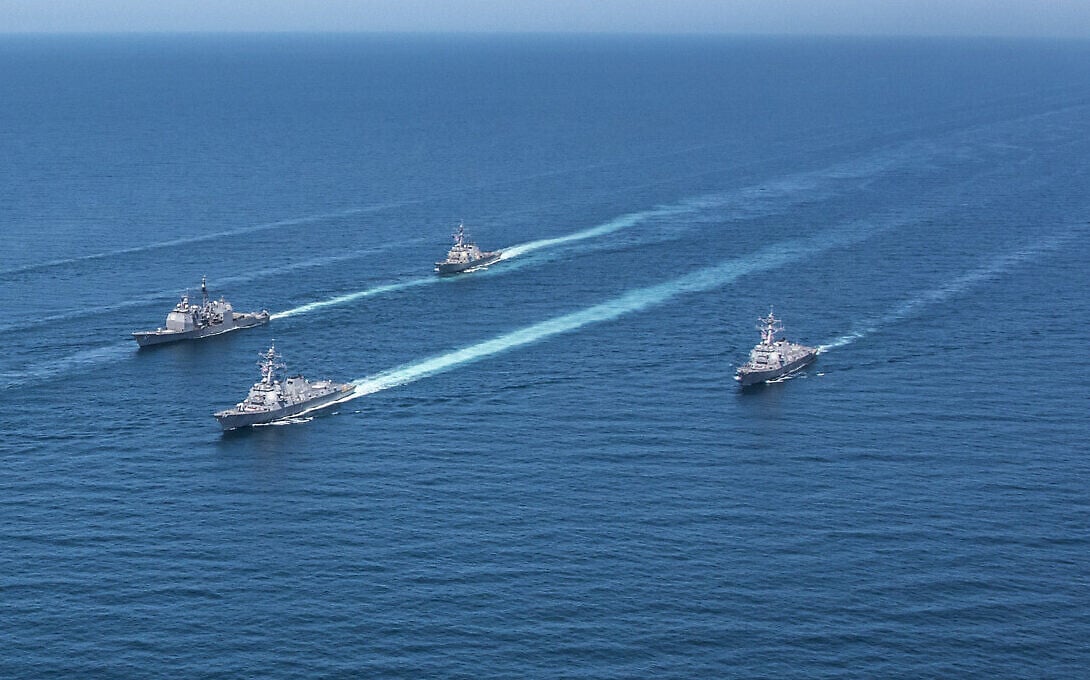
President Trump ordered a full naval blockade of the Strait of Hormuz on Sunday following the collapse of high-stakes ceasefire negotiations with Iran. The directive mandates that the U.S. Navy stop all shipping from entering or leaving the vital waterway. US Central Command confirmed that the blockade would be enforced against vessels of all nations entering or departing Iranian ports and coastal areas, including those in the Arabian Gulf and the Gulf of Oman, according to Fox News. As news of the order broke, global oil prices surged, reflecting investor anxiety over the potential for a major supply disruption, CNN reported.
"We’re putting on a complete blockade," Trump told Fox News. "We’re not going to let Iran make money on selling oil to people that they like and not people that they don’t like." The president warned that there would be no exceptions for any nation, including those friendly to Tehran. He further stated that the Navy has been instructed to interdict any vessel that has paid transit tolls to Iran and to "blow to hell" any Iranian assets that open fire on ships. In a separate post on Truth Social, Trump vowed that the U.S. would strike Iranian power plants and bridges if the strait is not reopened, Fox News reported.
In response, Iran’s military has labeled the U.S. blockade plans an "act of piracy," warning that the ports in the Gulf and the Sea of Oman are "either for everyone or for no one," Al Jazeera reported. Ali Akbar Velayati, a senior adviser to Iran's Supreme Leader, signaled that Tehran views the Bab al-Mandeb—a critical chokepoint linking the Red Sea to the Gulf of Aden—as a strategic target, warning that if the U.S. proceeds, Iran could direct its Houthi allies to disrupt that route as well, according to Fox News.
The China and UK factor
The move creates a high-stakes standoff with Beijing, which relies on the strait for nearly half of its oil imports. China has urged calm and restraint on all sides, a spokesperson for its foreign ministry said, according to France 24. White House officials hope the blockade will pressure Beijing to force further concessions from Tehran. However, tensions are already high following reports that China may be preparing to supply advanced missile and air defense systems to Iran. "If China does that, China is gonna have big problems," Trump said on Saturday.
Meanwhile, the U.S. is facing friction from its own allies. British Prime Minister Keir Starmer announced that the UK will not support the blockade, stating that Britain "is not getting dragged in" to the conflict, Al Jazeera reported. Starmer clarified that while the UK has minesweepers and anti-drone systems deployed in the region, they will not participate in the U.S. effort to block Iranian ports.
Negotiations in Islamabad, Pakistan, failed to secure a long-term agreement after Iran insisted on maintaining its nuclear program and continued to demand transit tolls. Vice President JD Vance confirmed that these demands remained the central sticking point during the weekend talks. Analysts warn that a prolonged blockade could trigger a massive spike in global energy prices, with some estimates suggesting oil could reach $150 per barrel if the flow of traffic remains obstructed.