U.S. President Donald Trump announced a naval blockade of the Strait of Hormuz this weekend after peace negotiations between the United States and Iran ended without an agreement. The move targets all vessels attempting to enter or exit the vital waterway, according to reports from the New York stock market opening.
Negotiations between U.S. and Iranian delegations lasted over 20 hours in Islamabad. The talks concluded without a deal, prompting Trump to move forward with the maritime restriction.
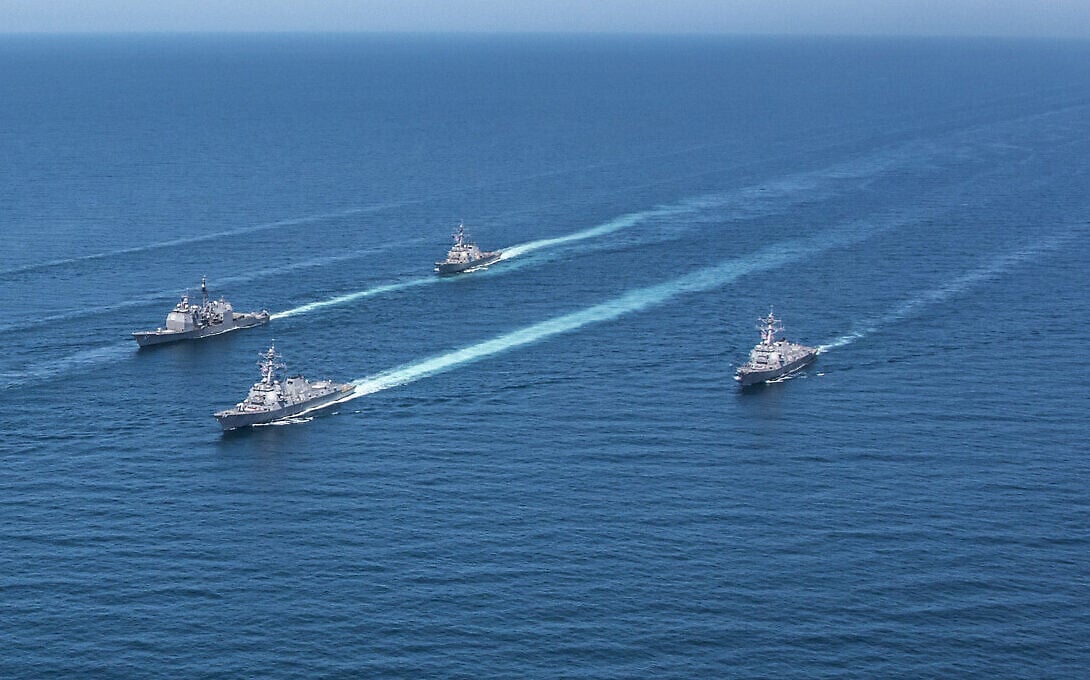
Trump accused Iran of maintaining its "ambitions nuclear." The President stated that the U.S. Navy "will begin to block all ships attempting to enter or exit the Strait of Hormuz."
Israeli Prime Minister Benjamin Netanyahu confirmed the breakdown of the talks during a meeting with his Cabinet. Netanyahu claimed the U.S. halted negotiations because Iran refused to immediately reopen the strait and would not commit to eliminating all of its enriched uranium.
Netanyahu also revealed that the Trump administration provides him with daily intelligence regarding the conflict in Iran. "I spoke yesterday with Vice President JD Vance. He called me from his plane on his way back from Islamabad. He reported to me in detail, as this administration does every day, about the development of the negotiations. In this case, the explosion in the negotiations," Netanyahu said.
Netanyahu further asserted that the U.S. could not tolerate Iranian violations of the ceasefire terms. "The agreement was that they would cease fire, and the Iranians would immediately open the gates. They did not do that. The Americans could not accept that," the Israeli leader added.
Global market reaction
Wall Street opened in the red on Monday following the announcement of the blockade. The Dow Jones Industrial Average fell 0.65%, losing 311 points to reach 47,605. The S&P 500 dropped 0.32% to 6,795, while the Nasdaq fell 0.38% to 22,815.
The energy sector faced immediate volatility as the price of West Texas Intermediate (WTI) crude surged above $103 per barrel, a jump of more than 7% at market opening. The blockade threatens a primary global oil supply route currently partially closed by the Iranian Revolutionary Guard.
The Iranian Revolutionary Guard has kept the strait closed as a reprisal for the U.S. and Israeli military offensive that began on February 28.
Financial institutions also saw declines. Goldman Sachs shares dropped 4.11% despite reporting a net profit of $5.63 billion, an 18% increase from the previous year. Other major banks, including JP Morgan, Citigroup, and Wells Fargo, all opened with losses between 0.91% and 1.11%.
Safe-haven assets also retreated. Gold fell 0.77% to $4,750 per ounce, and silver dropped 3.01% to $74.18 per ounce.
Critics suggest the administration's close ties to Israel may impact domestic politics. Some Republican and Democratic lawmakers have expressed views that the war in Iran is driven by Israeli interests. Analysts noted that Trump's polling numbers have been negatively impacted by the conflict, particularly as public sympathy shifts toward Palestinians.