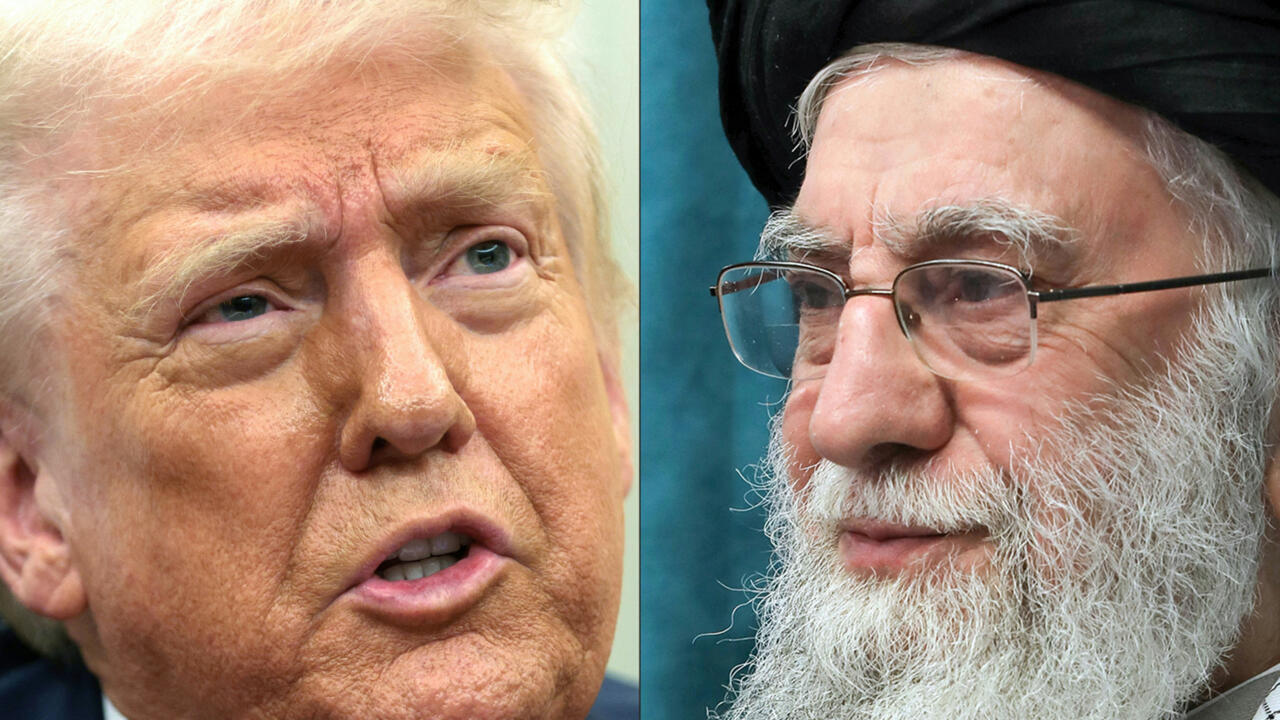
US President Donald Trump stated on Sunday he remains optimistic about securing a deal with Iran, notwithstanding a stern warning from Supreme Leader Ayatollah Ali Khamenei. Khamenei cautioned that any direct military action by the United States against the Islamic Republic would inevitably escalate into a broader regional war. Trump responded to the threat by suggesting Khamenei's statement was expected, adding that a deal would obviate the need to test the validity of the warning.
This exchange occurs amid heightened military readiness, as top US and Israeli generals reportedly held closed-door discussions at the Pentagon on Friday regarding regional security. The meeting, previously undisclosed, involved US Joint Chiefs of Staff Chairman General Dan Caine and Israeli Chief of Staff Eyal Zamir. These talks coincide with the US augmenting its naval presence and air defenses in the Middle East to maintain pressure on Tehran.
In a related development reflecting international reaction to domestic Iranian tensions, Qatari Foreign Minister Sheikh Mohammed bin Abdulrahman Al met with Iranian security officials in Tehran Saturday. Qatar's ministry stated the objective of the talks was to support efforts aimed at de-escalating current regional tensions. The meeting took place while the USS Abraham Lincoln carrier group was positioned off the Iranian coast.
Furthermore, geopolitical ramifications are evident in trade relationships, as President Trump asserted that India has agreed to purchase Venezuelan oil instead of Iranian supplies. Trump indicated that a similar arrangement was being negotiated concerning Chinese purchases of Venezuelan crude. This suggests an ongoing US effort to isolate Iranian energy exports through diplomatic and commercial means.
The Iranian Parliament Speaker, Mohammad Bagher Qalibaf, announced that the Islamic Republic now designates all European Union militaries as terrorist organizations. This reciprocal action follows the EU's recent decision to list Iran’s Revolutionary Guard Corps (IRGC) as a terrorist entity over its suppression of domestic protests. Qalibaf cited a 2019 Iranian law authorizing such countermeasures.
Domestically, Tehran released Iranian protester Erfan Soltani on bail after the US publicly warned he faced execution, according to his lawyer. Soltani was arrested during recent crackdowns, and his release followed the payment of two billion tomans, approximately $12,600, in bail. This incident highlights the sensitive nature of human rights issues in ongoing diplomatic negotiations.
The broader implications suggest a delicate balancing act by the US administration, simultaneously pursuing high-stakes diplomatic engagement while reinforcing military deterrence against potential escalation. The comments from Khamenei serve as a clear red line, framing future US policy decisions regarding Tehran as inherently linked to regional stability.
Future developments will focus on whether sustained diplomatic engagement, potentially mediated by Gulf partners like Qatar, can supersede the threats of military confrontation. The status of Iran’s nuclear program and its regional proxies remains central to any potential long-term agreement sought by Washington.