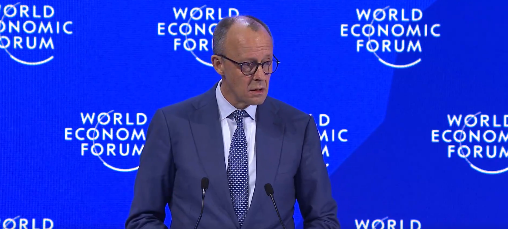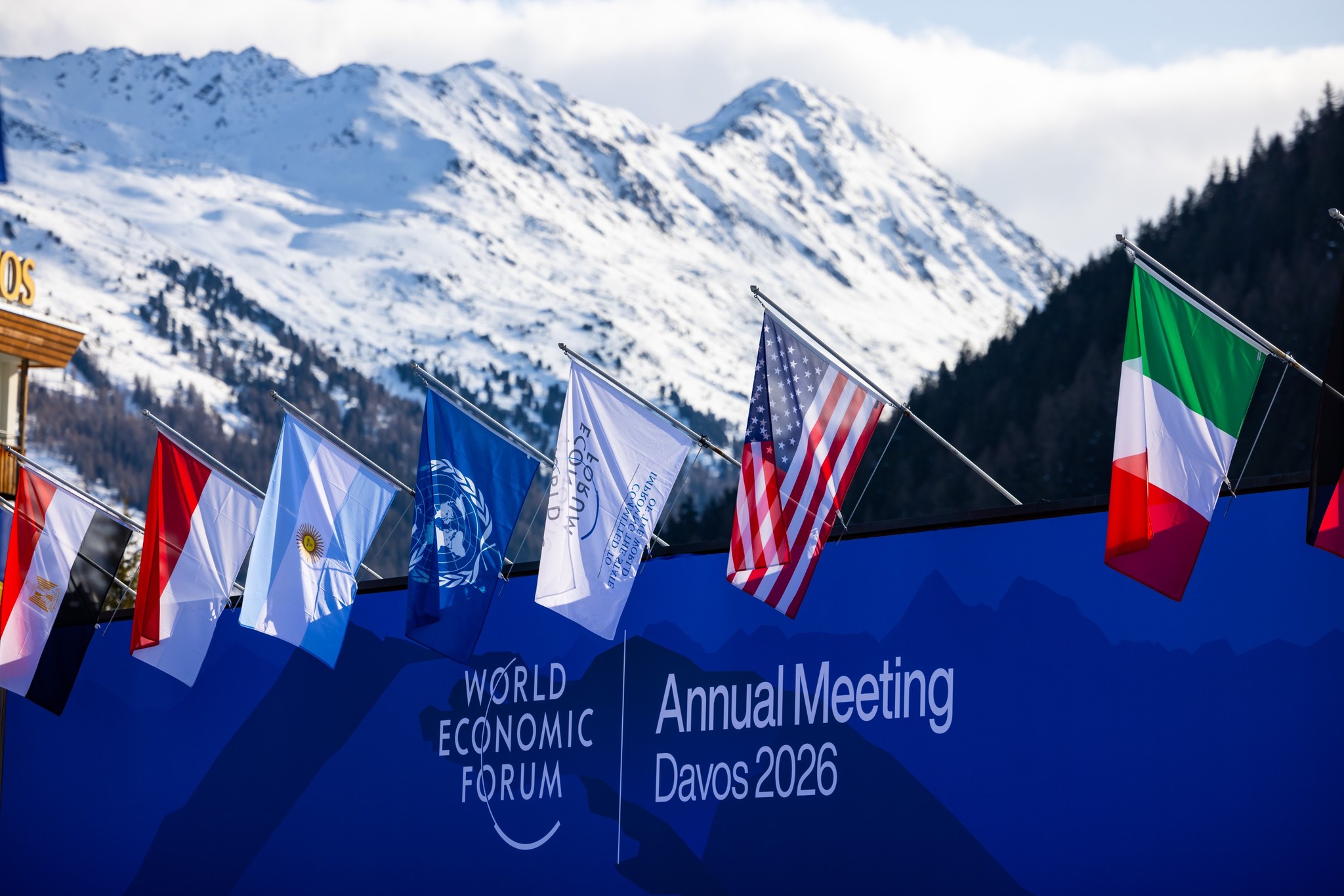
World leaders and chief executives concluded the annual World Economic Forum in Davos last week, dominated by the assertive posture of the U.S. administration under President Trump, according to reports from cde.news. Trump’s territorial claim regarding Greenland prompted significant resistance from European capitals, an action widely seen as severely straining Washington’s relationship with its traditional allies.
European officials indicated that the confrontation underscored a critical need for faster, more autonomous decision-making structures within the continent, with one EU official noting, “We are probably too slow.” The perceived rudeness of the U.S. approach, despite acknowledging some legitimate policy points raised by Washington, has left many European executives prioritizing strategic stability over current U.S. alignment.
Geopolitical tensions remained central, as Ukrainian President Volodymyr Zelenskiy secured talks following the Greenland announcement, though a peace deal with Russia remains distant despite reported progress between principals. Furthermore, the presence of Kirill Dmitriev, a Russian envoy, for undisclosed talks with U.S. officials marked the first official Russian engagement at Davos since the 2022 invasion.
Trade friction intensified as the U.S. threatened new tariffs against allies resisting the Greenland ambition, fueling calls for commercial diversification away from the United States. Canadian Finance Minister François-Philippe Champagne stated during a panel that stability, predictability, and the rule of law—essentials sought by CEOs—were currently in short supply within the global economic framework.
Financial services firms grappled with policy disruption, as JPMorgan CEO Jamie Dimon issued a stark warning against proposed caps on credit card interest rates, framing it as a potential economic disaster. Concurrently, the industry continued to explore blockchain and stablecoin technologies while managing macroeconomic concerns, including the Federal Reserve's independence and asset valuations.
Technology executives, including Tesla CEO Elon Musk and Nvidia’s Jensen Huang, actively engaged in discussions surrounding artificial intelligence, signaling a shift away from the skepticism of late 2025 regarding AI valuations. Business leaders suggested AI would serve as justification for existing layoff trends rather than being the primary cause, though labor organizations voiced strong fears regarding inequality and job destruction.
Energy policy saw a sharp divergence as the U.S. Energy Secretary advocated for doubling global oil production and criticized green energy spending in Europe and California. Conversely, Elon Musk argued that solar power could meet all U.S. electricity needs, provided high tariff barriers impeding solar deployment were removed, offering a counter-narrative to the administration’s pro-fossil fuel stance.
The broader implication of the Davos meeting is a deepening fragmentation of established alliances, driven by unilateral U.S. actions, forcing allies and corporations to rapidly reassess supply chains and geopolitical risk management frameworks in the coming fiscal year.