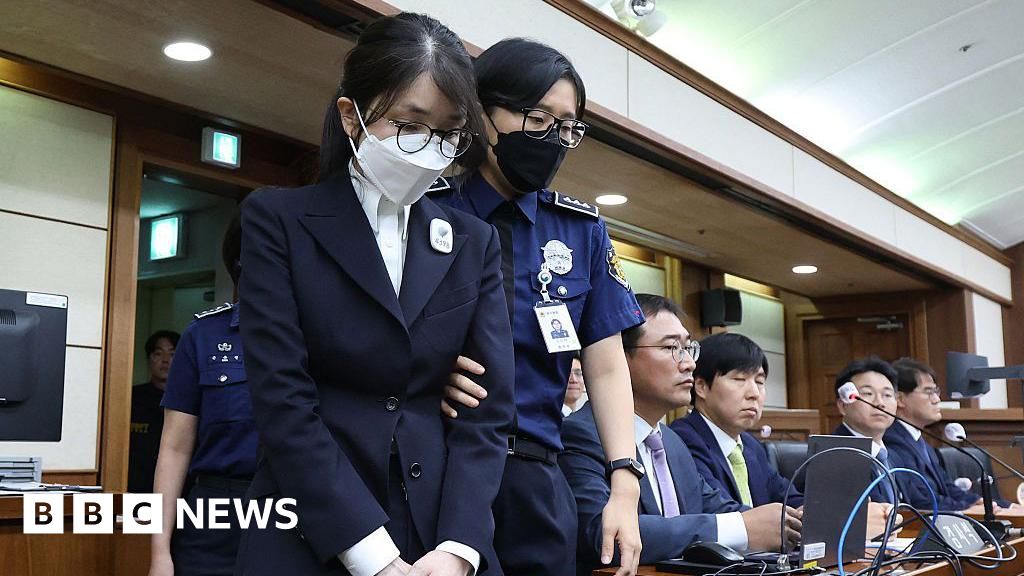
South Korea's Former First Lady Sentenced in Historic Corruption Case
South Korea's former first lady Kim Keon Hee was sentenced to 20 months in prison Wednesday for accepting bribes from the controversial Unification Church, marking a historic first for a presidential spouse to be jailed while detained and deepening the legal crisis surrounding the country's former first family.The Seoul Central District Court found Kim, 52, guilty of accepting luxury gifts including Chanel handbags and a diamond necklace worth up to 80 million won ($55,000) in exchange for business favors. However, she was cleared of stock manipulation charges related to BMW dealer Deutsch Motors and campaign finance violations.The verdict comes less than two weeks after her husband, disgraced former President Yoon Suk Yeol, received a five-year prison sentence for his failed martial law attempt in December 2024. The couple now represents an unprecedented case in South Korean history—the first time both a former president and first lady have been imprisoned simultaneously.Kim's legal troubles extend beyond the current conviction. Prosecutors had sought a 15-year sentence and 2 billion won fine, arguing she "stood above the law" and compromised the constitutional separation of religion and state through her dealings with the Unification Church.The former first lady's controversies began well before her husband's presidency. A businesswoman and art exhibition company CEO, Kim faced repeated scandals including allegations of academic plagiarism that led Sookmyung Women's University to annul her degree in 2025, tax evasion claims, and fabricated credentials on university and job applications.Perhaps most damaging was spy camera footage that surfaced in late 2023, showing Kim receiving a 3 million won Chanel handbag in violation of South Korea's anti-graft laws, which prohibit public officials' spouses from accepting gifts exceeding 1 million won.The legal reckoning for both Yoon and Kim reflects broader concerns about corruption and abuse of power at the highest levels of South Korean government. Their cases have intensified public scrutiny of political ethics and the accountability of those in power.Two additional cases against Kim remain pending, suggesting her legal battles are far from over. The unprecedented nature of these proceedings—involving both a former president and first lady—marks a watershed moment in South Korean judicial history and political accountability.Source: BBC News