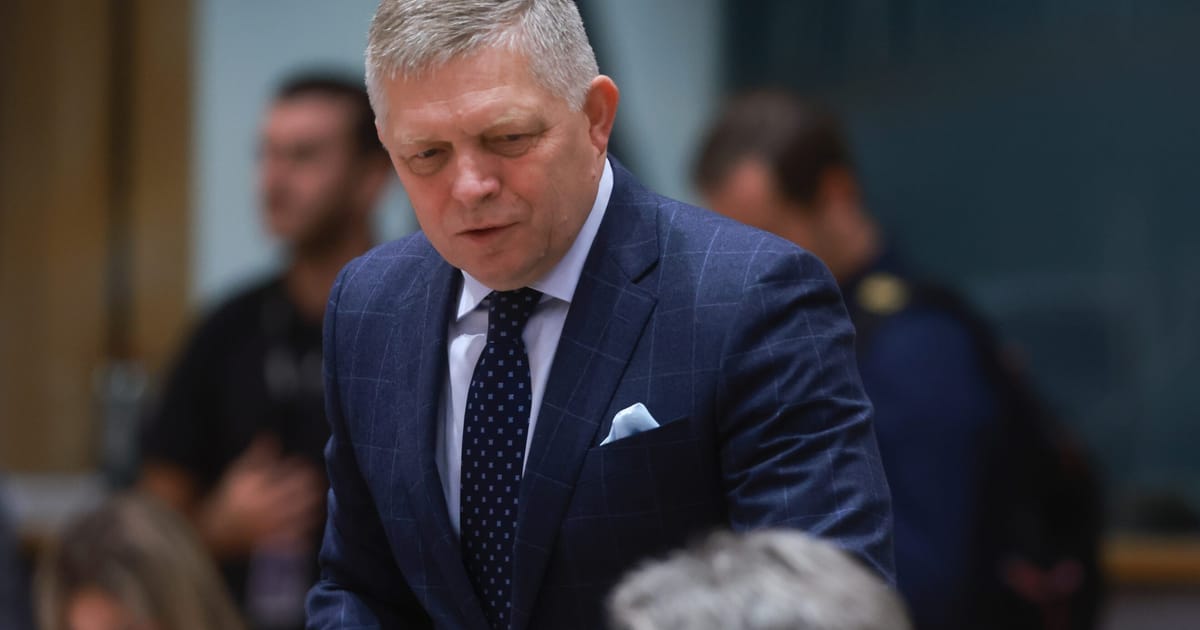
Slovak PM's Alleged Comments on Trump's 'State of Mind' Highlight Deepening EU Anxiety Over U.S. Unpredictability
Confidential reports suggest Slovak Prime Minister Robert Fico expressed deep concern over Donald Trump's psychological state following a private meeting, signaling private alarm among some European leaders. This alleged private assessment starkly contrasts with Fico's public endorsements and underscores broader EU apprehension regarding future U.S. foreign policy stability.
Slovak PM's Alleged Comments on Trump's 'State of Mind' Highlight Deepening EU Anxiety Over U.S. Unpredictability
BRUSSELS – Emerging accounts from European diplomatic circles suggest that Slovak Prime Minister Robert Fico privately conveyed significant alarm regarding the mental acuity of former U.S. President Donald Trump following a recent meeting at Mar-a-Lago. Five European diplomats briefed on the exchange indicated that Fico described the U.S. leader’s demeanor as concerning, with two sources quoting him using the term “dangerous” to characterize the encounter on January 17.The alleged private assessment, shared during an informal huddle on the sidelines of an emergency EU summit in Brussels on January 22, injects a new layer of complexity into transatlantic relations already strained by U.S. policy volatility. The Brussels gathering itself was convened partly to address tensions following Mr. Trump’s threats regarding tariffs against European nations over the issue of Greenland.Fico, historically one of the more publicly accommodating EU leaders regarding Mr. Trump’s geopolitical stances, reportedly shared these unvarnished concerns with counterparts. This narrative stands in sharp relief against his public social media postings following the Florida visit, where he lauded the meeting as a sign of “high respect and trust,” focusing discussions on Ukraine and the perceived “deep crisis” within the EU.The veracity of these accounts remains contested. Mr. Fico subsequently issued a strong denial on X, labeling the reports as “lies” from anonymous sources and asserting he did not make the comments at the informal summit. A White House spokesperson dismissed the reports as “total fake news,” while a senior administration official present at the Mar-a-Lago meeting maintained that the encounter was positive and productive.Nevertheless, the circulation of such private commentary, even if denied, underscores a palpable undercurrent of anxiety within European capitals regarding the potential return of Mr. Trump to power and the attendant unpredictability in U.S. foreign and trade policy. Beyond the specific claims regarding Mr. Trump’s disposition, a sixth EU diplomat confirmed that concerns about U.S. leadership volatility—spanning trade barriers, the approach to the Russia-Ukraine conflict, and defense commitments—are increasingly central topics of discussion among EU officials.This context is further amplified by Mr. Trump’s recent posture on Greenland, where he demanded “immediate negotiations” backed by threats of “excessive strength and force,” only to later announce a framework agreement with NATO Secretary-General Mark Rutte. Senior EU leaders, including French President Emmanuel Macron and German Chancellor Friedrich Merz, used the recent summit to reiterate the strategic imperative for the bloc to reduce its reliance on Washington for continental security.European Commission President Ursula von der Leyen suggested that the bloc had learned to manage the situation by responding to Mr. Trump in a “firm” yet “non-escalatory” manner. The episode involving Mr. Fico’s alleged remarks, regardless of official denials, serves as a stark indicator of the internal debates gripping the EU as it prepares for a potentially volatile geopolitical landscape shaped by the 2024 U.S. election cycle. (Source: Adapted from reporting by Politico Europe)