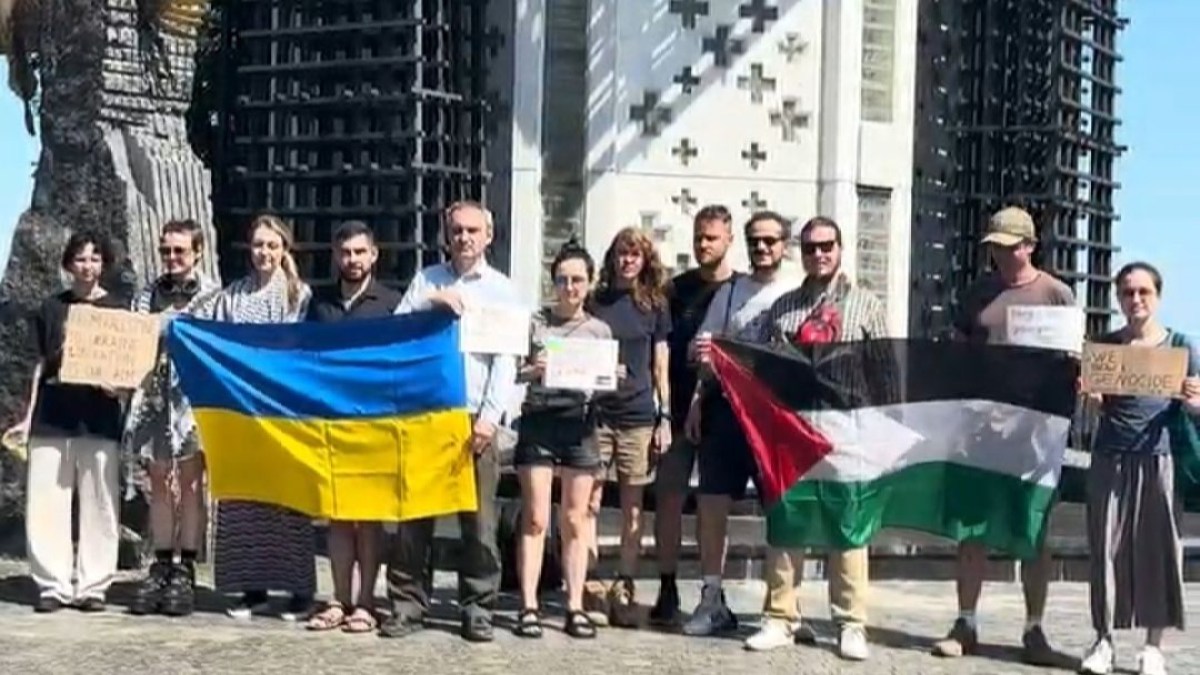
In Kyiv, public sentiment regarding the Israeli-Palestinian conflict is reportedly evolving away from the initial strong support for Israel seen immediately after the October 2023 escalation, according to reports from local observers. Early reactions, including official statements from President Volodymyr Zelenskyy and First Lady Olena Zelenska, mirrored many Western governments' positions, but continuous bombardment in Gaza has spurred reconsideration among some Ukrainians. This shift is highlighted by an open letter signed by over 300 Ukrainian scholars and activists expressing solidarity with Palestinians, as detailed by researcher Yuliia Kishchuk.
Observers like Hashem, a Palestinian-Ukrainian dual citizen, pointed to a long-standing discrepancy in how international sympathy is allocated based on nationality and passport access. He argued that while human rights principles should be universal, the practical experience of movement and acceptance differs significantly between Ukrainian and Palestinian identities. This perceived inconsistency reportedly fueled introspection among segments of the Ukrainian population regarding international equity.
Kishchuk suggests that the engineered starvation in Gaza became a critical inflection point for many Ukrainians, prompting comparisons to the Soviet-era Holodomor, which Kyiv views as a deliberate act of genocide. Furthermore, Israeli military actions against other nations reportedly challenged the dominant Israeli defensive narrative concerning Hamas.
Simultaneously, disillusionment with the United States' posture toward the Russia-Ukraine war has factored into this reconsideration of global alliances. Many Ukrainians view Washington's approach as transactional, treating Ukraine as a resource base, a sentiment echoed in concerns over mineral deals granting US access to rare earth elements. This perceived imperial logic is reportedly drawing parallels to how nations in the Global South view major power interactions.
Kyiv’s official foreign policy has also demonstrated subtle movement, with President Zelenskyy acknowledging the right to statehood for both Israel and Palestine at the 2024 Shangri-La Dialogue. Furthermore, Ukraine dispatched 1,000 tonnes of wheat flour to Palestinian territories in July 2024 through its established grain initiative, signaling a humanitarian outreach.
While pro-Palestinian protests have emerged in Kyiv, Kishchuk noted that recent Russian infrastructure attacks, causing widespread energy and heating outages during winter, have temporarily suppressed public demonstrations. Despite these complex internal dynamics, the broader information flow concerning Palestinian suffering is reaching more segments of Ukrainian society, leading to increased, albeit sometimes conflicted, understanding.
Hashem concluded that while experiential differences in suffering remain stark, the shared experience of external pressure—whether from Russia or perceived global empires—may foster a foundation for solidarity based on consistent principles rather than fluctuating political expediency. This environment presents a complex geopolitical moment where domestic concerns intersect with evolving international ethical stances.