Gulf states, led by Saudi Arabia and the United Arab Emirates, are privately urging President-elect Donald Trump to continue prosecuting the war against Iran. According to U.S., Gulf and Israeli officials, Riyadh and Abu Dhabi argue that Tehran has not been sufficiently weakened by recent bombing campaigns. This diplomatic push occurs during a period of heightened regional tension and strategic realignment ahead of the new administration.
The allies contend that a decisive victory is necessary to secure long-term stability in the Middle East. They reportedly believe that a half-measure approach could allow Iran to regroup and threaten neighbors again. This position contrasts sharply with calls for de-escalation from other international stakeholders and the United Nations.
Bombing campaigns have reportedly failed to achieve the desired threshold of deterrence in the eyes of Gulf leaders. Officials suggest that further escalation is required to neutralize Tehran's military capabilities before any potential negotiations occur. This strategy aims to ensure the Islamic Republic cannot project power across the Persian Gulf or influence regional politics significantly.
Key Details
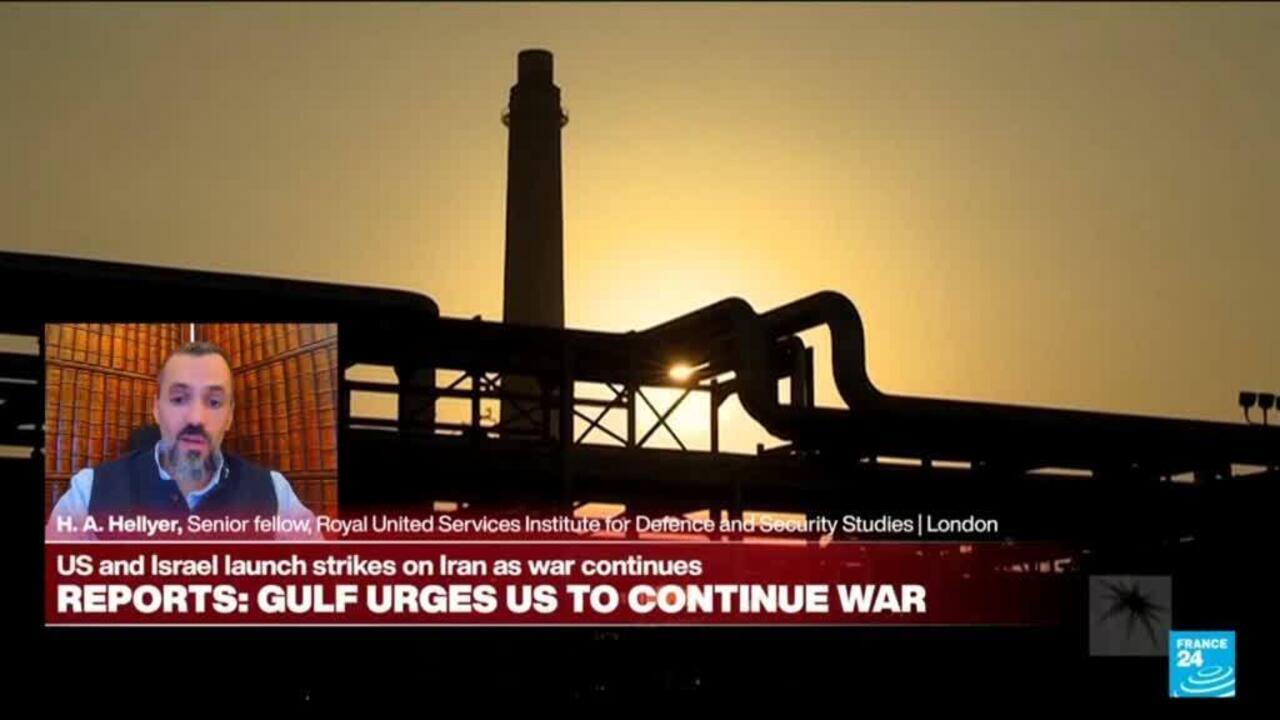
Despite the aggressive stance, experts warn that regime collapse remains counterproductive for regional allies. Dr. H. A. Hellyer, a Senior Fellow at the Royal United Services Institute, spoke with France 24 regarding the situation. He stresses that none of the Gulf States want the Iranian state to collapse despite the pressure.
"Despite some Gulf States pressing to prolong the war, none of the Gulf States want the Iranian state to collapse," said Dr. H. A. Hellyer. This distinction highlights the complex balance between military pressure and political stability required for the region. Riyadh and Abu Dhabi seek security without the chaos of a failed state next door.
What This Means
The economic implications of prolonged conflict in the Strait of Hormuz remain a critical concern for global markets. Oil prices could face volatility if shipping lanes become contested during active hostilities and military engagements. Investors are watching closely to assess the risk premium embedded in energy contracts and supply chains worldwide.
Geopolitical shifts in the region often dictate broader international trade flows and security alliances among major powers. Prior engagements in the Middle East have shown that military solutions often require decades of stabilization and reconstruction efforts. This current push reflects a desire to avoid repeating past strategic mistakes that led to protracted instability.
Trump's previous policies emphasized maximum pressure campaigns that targeted Iran's economy and nuclear program specifically. The private communications suggest a desire for continuity in that approach under the new leadership. A failure to coordinate could lead to fragmented strategies that undermine regional security architectures significantly.
Observers will track whether the United States aligns with its Gulf partners on the scope of military action. Future developments will likely hinge on public statements from Washington and Riyadh regarding defense cooperation. The outcome will determine the trajectory of security dynamics in the broader Middle East for years to come.