Russian Drone Strike on Civilian Train Kills Five in Escalating Campaign
Publicidad
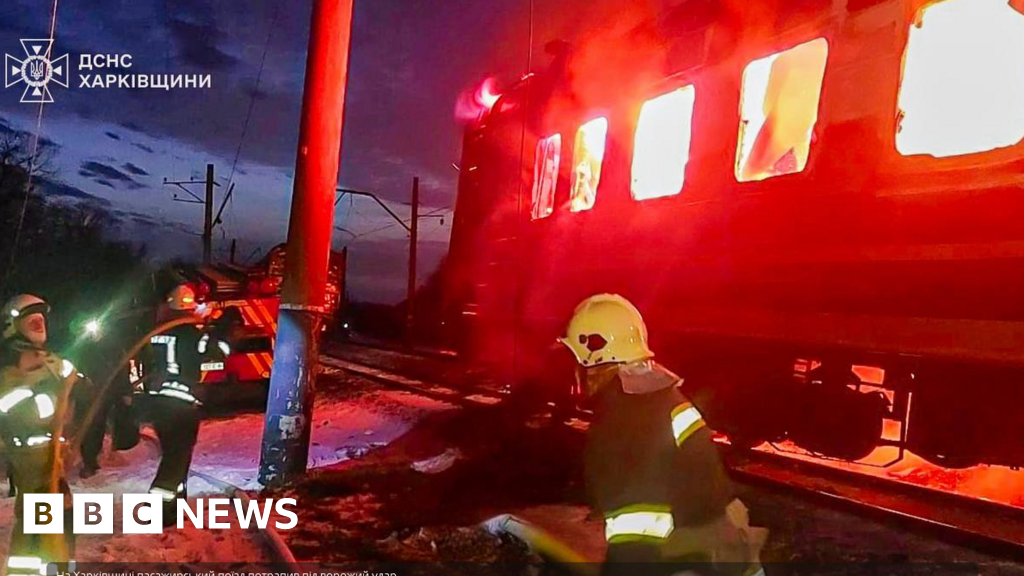
Ukrainian President Volodymyr Zelensky condemned a Russian drone attack on a civilian passenger train that killed at least five people and wounded several others in Ukraine's northeastern Kharkiv region, characterizing the strike as an act of terrorism against non-combatants.The attack occurred Tuesday when one of three drones struck a carriage carrying 18 passengers out of more than 200 people aboard the train traveling from the western border town of Chop to Barvinkove. Two additional drones exploded in proximity to the railway line near Yazykove village, according to regional prosecutors."In any country, a drone strike on a civilian train would be considered in exactly the same way - purely as terrorism," Zelensky wrote on social media, emphasizing the absence of military justification for targeting civilians. Emergency services footage showed at least one carriage severely damaged and burning following the strike.The railway line serves both local residents and Ukrainian military personnel traveling to and from leave, as well as family members visiting troops stationed in eastern regions. This dual-use nature highlights the complex targeting dynamics in the ongoing conflict, though international humanitarian law maintains protections for civilian infrastructure.Simultaneously, Russia launched over 50 drones against the southern port city of Odesa overnight into Tuesday, killing three civilians and causing what energy officials described as "enormous damage" to local infrastructure. The attacks continued for a second consecutive night, with several floors of a residential building collapsing and multiple structures sustaining damage.In the Kyiv region, a separate strike on a residential apartment block killed two adults and injured a four-year-old child, police reported. These coordinated attacks have left millions of Ukrainians without essential services including heating, electricity, and water during what meteorologists describe as one of the harshest winters in recent years.The escalation comes despite recent diplomatic engagement, with Ukraine-Russia talks involving US negotiators taking place in the United Arab Emirates last week. While all parties characterized the discussions as constructive, fundamental territorial disputes remain unresolved, with Russia currently controlling approximately 20% of Ukrainian territory since launching its full-scale invasion in February 2022.The systematic targeting of civilian infrastructure represents a significant shift in Russian military strategy, raising questions about compliance with international humanitarian law and the broader implications for regional stability as the conflict enters its third year.