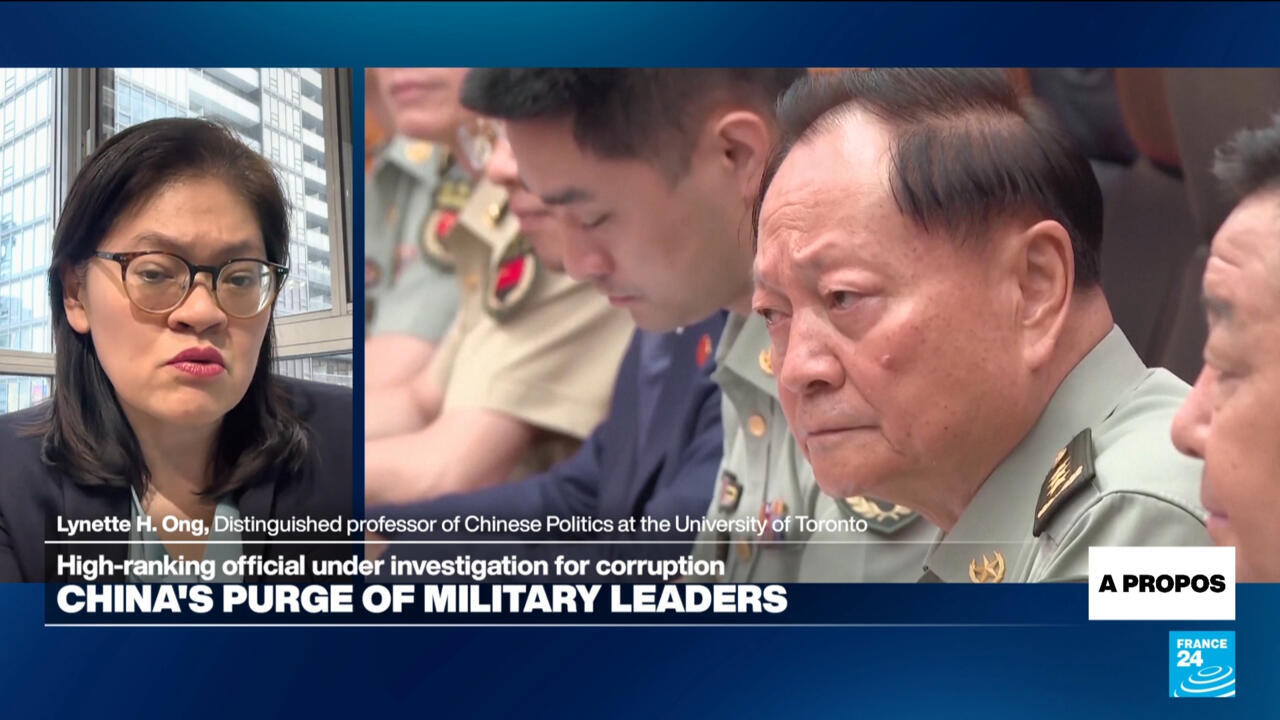
General Zhang Youxia, the Senior Vice Chairman of the Central Military Commission, is currently under investigation for suspected serious violations of discipline and law, according to reports. This development represents the most recent high-level casualty in President Xi Jinping's sustained campaign targeting perceived internal threats within the Chinese Communist Party and military.
Speaking with FRANCE 24, Professor Lynette Ong of the University of Toronto stated that the recurrence of such purges directly challenges assessments of President Xi's political acumen. Ong suggested that the necessity of repeatedly removing senior officials may indicate underlying instability or flawed vetting processes at the highest levels of governance.
Zhang Youxia’s removal is significant given his seniority within the People’s Liberation Army (PLA) command structure and his proximity to the core leadership circle. Such actions invariably trigger speculation regarding factional alignments and power consolidation within Beijing’s elite circles.
This pattern of extensive internal vetting and subsequent removal has become a characteristic feature of Xi's tenure since he assumed leadership. Analysts observe that the continuous removal of officials, even those previously deemed loyal, suggests an ongoing effort to ensure absolute fealty across state institutions.
Geopolitically, instability within the PLA leadership could momentarily impact military decision-making timelines, although immediate operational shifts are unlikely. China’s commitment to its long-term strategic goals, including Taiwan contingencies, remains the official priority, according to state media releases.
For international observers, the repeated purges complicate efforts to predict long-term policy continuity emanating from the top tiers of the Chinese government. The opacity surrounding the specific reasons for these high-level investigations limits external analysis of internal political currents.
What comes next involves watching whether this specific investigation yields broader exposure of interconnected networks within the security sector. The ultimate implication rests on whether these actions stabilize or further strain the internal political equilibrium maintained by the current leadership.