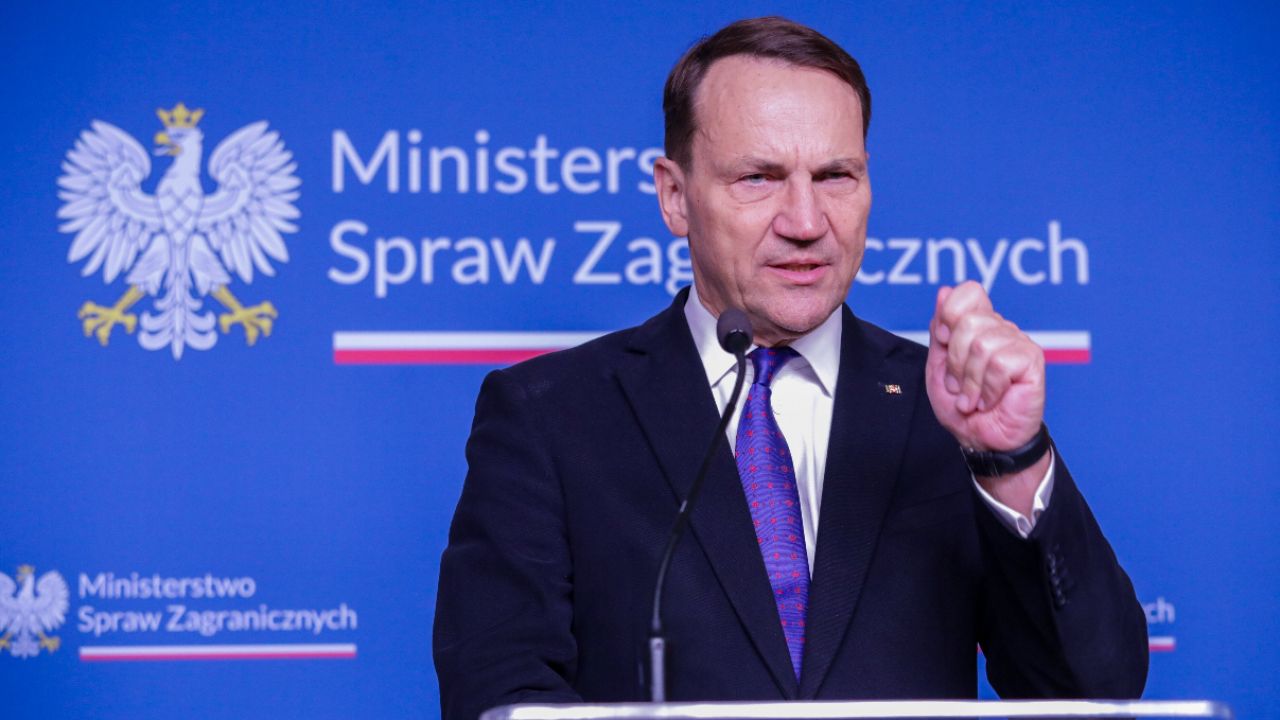
Polish Foreign Minister Radosław Sikorski proposed the creation of a standing “European legion” to bolster the European Union’s capacity to respond to emerging security challenges, according to reports on Thursday. Sikorski framed this concept as a pragmatic alternative to the more ambitious, and currently unattainable, goal of a unified federal European army.
Speaking ahead of a meeting of EU foreign ministers, the Deputy Prime Minister stated that national armies are unlikely to merge, rendering the federal army concept politically inert. Instead, he advocated for an initial brigade-sized unit comprising personnel from EU member states and potentially candidate nations.
Sikorski clarified that this legion would not serve as a primary deterrent against major state actors like Russia, given the ongoing conflict in Ukraine. However, he suggested it could provide necessary capabilities for intervening in lower-intensity regional crises, such as those observed in North Africa or the Balkans.
This proposal surfaces as European capitals grapple with strengthening collective defense structures amid growing uncertainty regarding the long-term security commitments from the United States. The discussion reflects a broader European push for greater strategic autonomy in defense matters.
EU Defense Commissioner Andrius Kubilius had previously floated the idea of a 100,000-strong EU military force, though Sikorski’s legion appears to be a scaled-down, more politically palatable iteration. EU foreign policy chief Kaja Kallas echoed skepticism regarding a separate army, warning that parallel structures risk obscuring the overall defense picture.
NATO leadership has also expressed reservations, with Secretary General Mark Rutte stating that a dedicated European army could complicate coordination and result in significant duplication of efforts within the existing transatlantic framework.
Poland’s proposal gains context against the backdrop of U.S. political shifts and frequent criticism from Washington regarding European defense spending shortfalls. Warsaw itself has significantly increased its defense investment relative to GDP, positioning itself as a leading contributor to NATO readiness.
The formation of such a legion would represent a significant step toward integrated European operational capacity, even if limited in scope, addressing immediate regional instability while navigating the complexities of full defense integration.