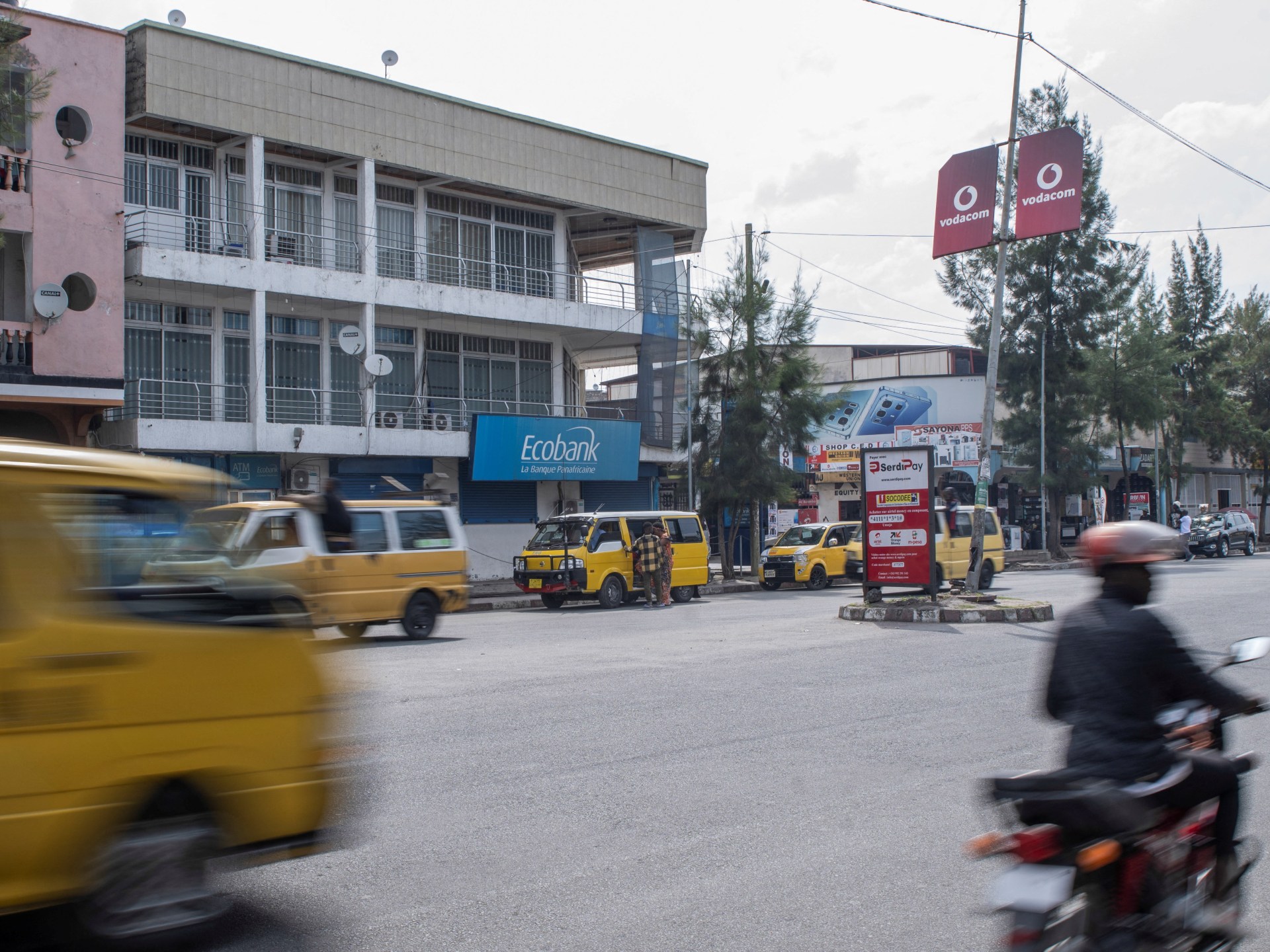
Goma, Democratic Republic of the Congo – One year after the M23 rebel group seized Goma, the strategic capital of North Kivu province, the façade of normalcy in the city masks a profound financial paralysis. While daily commerce flows through informal channels, essential financial infrastructure remains defunct, symbolized by the bolted doors of major commercial banks like Rawbank, Ecobank, and Access Bank.
The immediate consequence of the January 2025 takeover was the abrupt shutdown of all banking services, cutting off formal access to capital for residents. For citizens like Sheilla Zawadi, this has necessitated costly workarounds, including frequent, expensive trips across the border into Gisenyi, Rwanda, to access functioning ATMs. The cost of simply withdrawing funds has soared, with fees reaching up to $15 for the equivalent of $100, compounded by subsequent currency exchange losses.
This forced reliance on the informal economy and cross-border arbitrage is severely impacting local trade. Merchants report sharp rises in commodity prices and reduced sales volume, as documented by traders like Esperance Mushashine, highlighting how the collapse of formal financial mechanisms chokes capital flow. Analysts confirm that this situation is undermining the dollarized economy that has long characterized the region.
Geopolitical tensions fuel the ongoing dispute over responsibility for the banking closure. The Kinshasa government suggests banks cannot legally operate under the administration of an armed group, particularly one facing international sanctions. Conversely, M23 leadership accuses President Tshisekedi’s administration of ordering the closure to safeguard assets, potentially constituting a war crime by holding citizen savings hostage.
Some larger financial institutions, such as Equity BCDC, maintain limited functionality for those with digital access, utilizing mobile money transfers. However, even these users report significant percentage losses when attempting to convert electronic balances to hard currency within Goma, underscoring the system's fragility. This digital workaround is inaccessible to a significant portion of the population.
Economic experts argue that the suspension of banking and microfinance operations prevents the necessary circulation of currency required for economic recovery. The situation has created a dual economy: one reliant on tenuous digital access or expensive border runs, and another entirely cash-based, subject to inflation and scarcity.
While the fighting has subsided and the M23 maintains administrative control over key Eastern DRC cities, the financial infrastructure remains frozen in a state of pre-conflict suspension. The inability of authorities—both Kinshasa and Goma's de facto administrators—to resolve this core economic issue suggests that stability remains elusive, irrespective of the immediate security posture. (Source: Adapted from Al Jazeera reporting.)