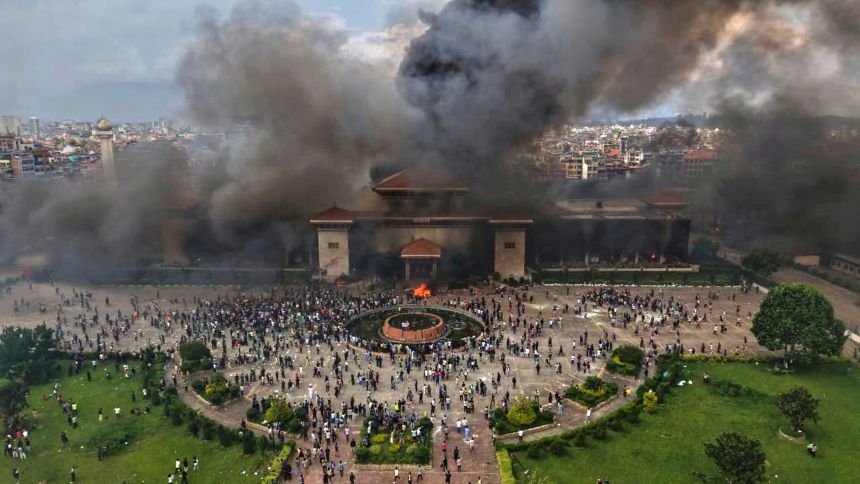
Gen Z protest movements in Nepal and Bangladesh both toppled governments following explosive demonstrations, but only one has successfully translated that street-level energy into legislative power.
In Nepal, the four-year-old Rastriya Swatantra Party (RSP) secured a landslide victory in recent elections, ushering in a wave of young lawmakers and installing rapper-turned-politician Balendra Shah as a key national leader. Conversely, Bangladesh’s post-protest political landscape remains dominated by the established Bangladesh Nationalist Party, with the youth-led National Citizens' Party failing to gain traction in February’s elections.
For activists like Umama Fatema, who participated in the 2024 Bangladeshi protests, the contrast is stark. “Bangladesh has not been able to deliver such a change,” Fatema said. “It is naturally disheartening to realize that we have not been able to organize and rebuild our country in the same way.”
The anatomy of success
Nepalese youth leaders credit their electoral success to consistent messaging and an ability to channel public frustration with long-standing political corruption. KP Khanal, a newly elected RSP legislator, said the movement transcended simple reaction. “Consistency was also a key factor,” Khanal said. “We kept raising our voices around accountability and justice, and gradually that message reached far and wide.”
Analysts point to the unique structure of Nepal’s political system as a catalyst for the RSP’s rise. For nearly two decades, the country cycled through 14 different governments, leaving voters exhausted by a rotating door of established party alliances. “Since all three established parties were discredited, the main beneficiary has been the youthful RSP,” said Nitasha Kaul, director of the Centre for the Study of Democracy at the University of Westminster.
The RSP also benefited from a strategic alliance with Balendra Shah and the decision by seasoned activists to fold their organizations into the party structure. By utilizing the RSP’s existing resources, these young candidates bypassed the logistical hurdles that often cripple grassroots movements.
While the RSP has faced internal challenges—including embezzlement allegations against party leader Rabi Lamichhane—the movement managed to maintain its momentum where other regional youth uprisings have faded. Across Asia, while Gen Z protests have become more frequent, the Nepalese experience remains a rare example of a permanent shift in the political hierarchy.