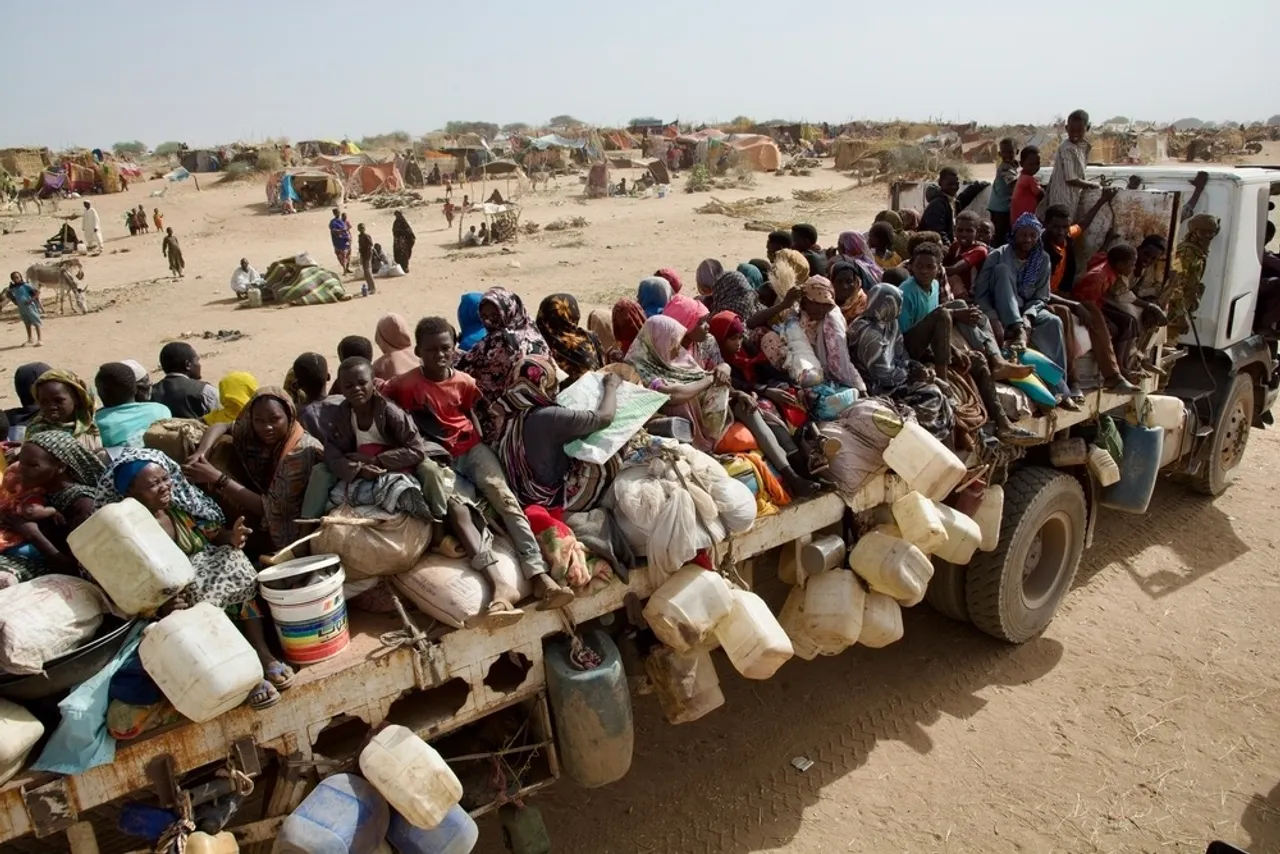
Millions of people across Sudan are surviving on one meal a day as a brutal war between the Sudanese army and the paramilitary Rapid Support Forces (RSF) enters its third year. A new report from a coalition of NGOs, including the International Rescue Committee and the Norwegian Refugee Council, warns that systemic violence has systematically dismantled the country's food security.
In the hardest-hit states of North Darfur and South Kordofan, residents are frequently skipping meals entirely. The report notes that many families have resorted to eating leaves and animal feed to stave off starvation.
“Nearly three years of conflict, marked by violence, displacement and siege tactics, have systematically eroded Sudan’s food system – field by field, road by road, market by market – producing mass hunger,” the coalition stated on Monday.
Starvation as a tool of war
The humanitarian catastrophe is exacerbated by the deliberate destruction of farms and marketplaces. According to the report, the war has disrupted farming cycles and crippled local distribution networks, leaving communal kitchens unable to meet the overwhelming demand for basic nourishment.
Women and girls face the most severe consequences of this collapse. The report found that female-headed households are three times more likely to experience critical food shortages than households led by men. Additionally, women face heightened risks of sexual violence and harassment when attempting to reach fields, markets, or water sources.
The conflict has displaced more than 12 million people, with over 33 million currently requiring humanitarian assistance. While the United Nations reports that at least 40,000 people have been killed, aid groups warn that the actual death toll is likely significantly higher.
Despite these findings, the army-aligned Sudanese government continues to deny that famine exists within its borders. The RSF has similarly denied responsibility for the dire conditions in areas under its control.
Data from the 2026 Humanitarian Needs and Response Plan indicates that nearly 62 percent of Sudan’s population is now facing acute food shortages. In regions like Um Baru, malnutrition rates among children under five have already surpassed official famine thresholds.
As resources dwindle, the crisis is being further compounded by a volatile economic environment and the increasing impact of climate change. With no clear end to the hostilities in sight, aid organizations emphasize that the country’s food systems remain under constant assault.