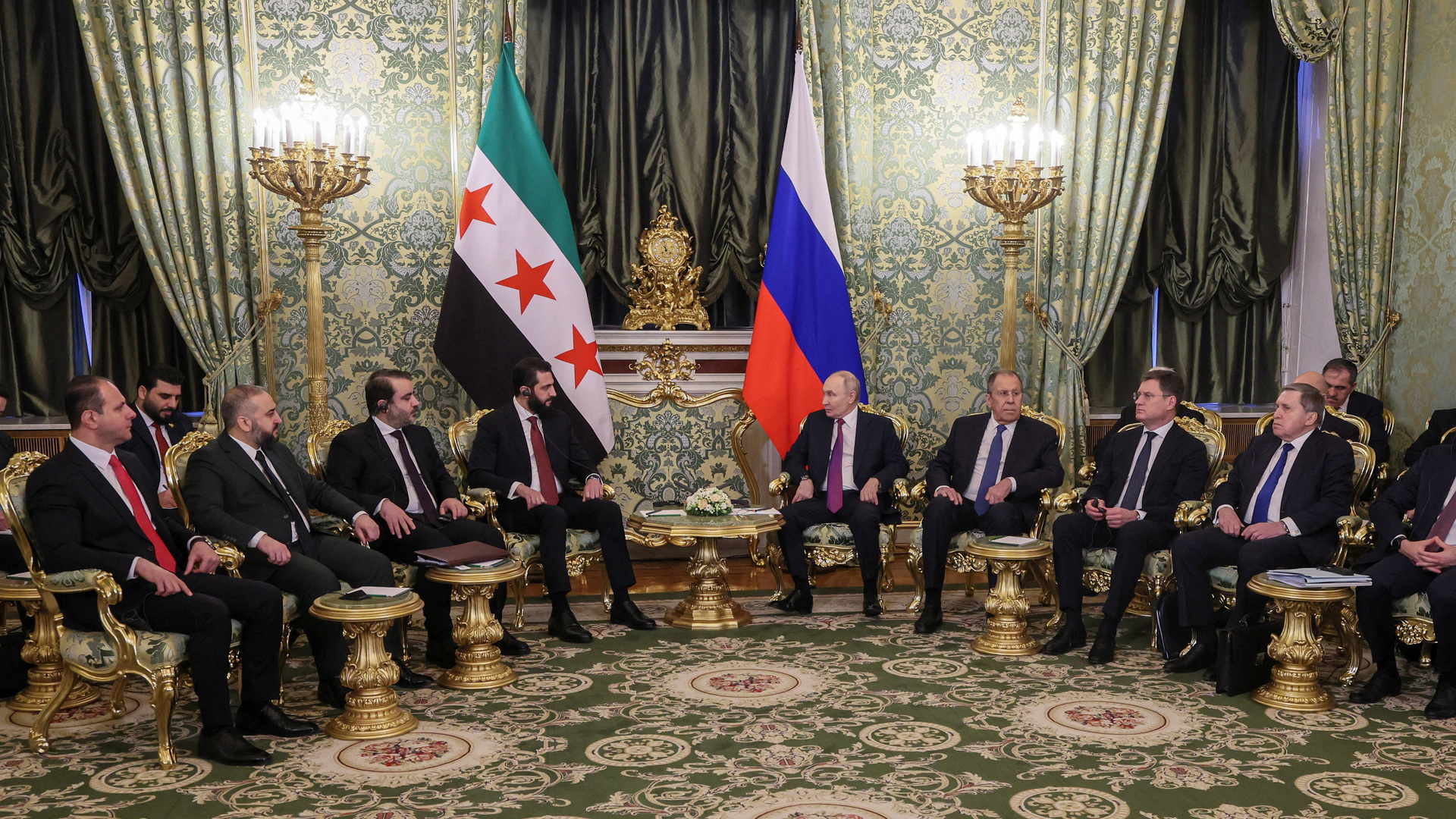
Moscow has reaffirmed its strategic alignment with Damascus, as Russian President Vladimir Putin offered commendation to Syrian President Ahmed al-Sharaa for his administration's ongoing efforts toward national territorial unification. The meeting, held at the Kremlin, underscores the enduring, albeit complex, geopolitical partnership binding the two nations.
This public endorsement serves as a crucial political lifeline for the Syrian government, which continues to navigate fractured internal control and external geopolitical pressures. For the Kremlin, maintaining influence in Syria is vital for projecting power into the Eastern Mediterranean and countering Western influence in the region.
The central economic and security focus of the bilateral talks is understood to center on the long-term security architecture of the Russian military presence. Key facilities, including the Hmeimim air base and the Tartus naval facility, represent critical nodes in Russia's global defense posture.
Discussions regarding these bases are not merely logistical; they carry significant implications for regional power projection, particularly concerning ongoing dynamics with NATO members bordering the Black Sea and the Middle East. Any renegotiation of basing terms could signal subtle shifts in the balance of power brokered by Moscow.
From an economic perspective, stabilization in Syria, as championed by al-Sharaa, is a prerequisite for any meaningful reconstruction efforts, which Russia is keen to play a foundational role in. This alignment allows Moscow to secure future economic concessions in infrastructure and energy sectors.
The convergence of political validation and strategic military positioning suggests that Russia views the current stage of the Syrian conflict not as concluded, but as entering a consolidation phase where its role as the primary external guarantor remains indispensable.
This development will be closely monitored by regional actors, including Turkey, Iran, and Israel, whose own security calculations are inextricably linked to the nature and longevity of the Russian footprint in Syria. The outcome sets the tone for geopolitical maneuvering across the Levant for the foreseeable future.
Source attribution: Based on reporting by Al Jazeera’s newsfeed, January 28, 2026.