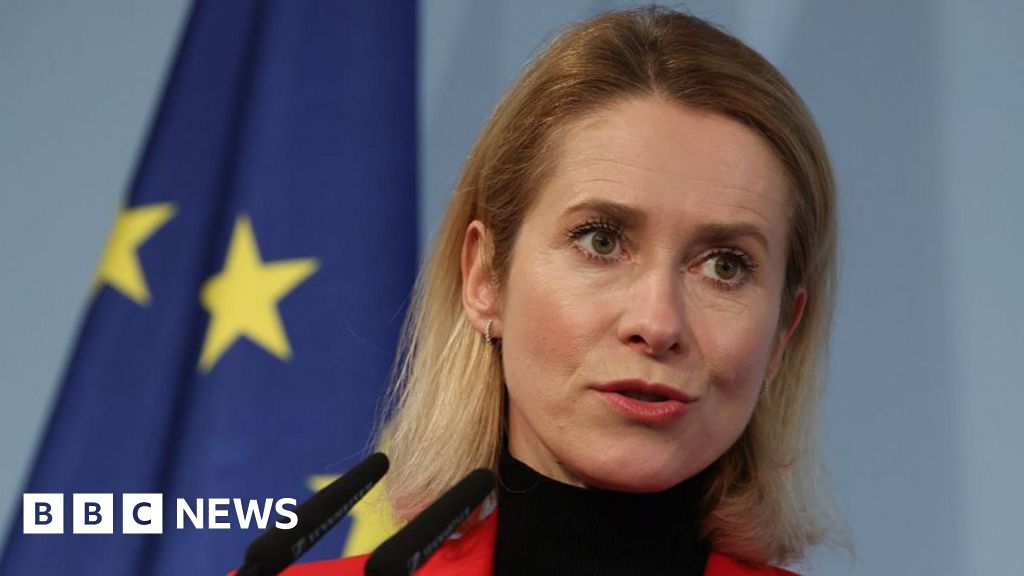
The European Union’s foreign policy chief, Kaja Kallas, has issued a stark warning to member states, asserting that Europe must urgently cease outsourcing its defense capabilities, even as it seeks to reinforce the transatlantic alliance. Speaking at a defense conference, Kallas emphasized that while the United States remains a crucial partner, no great power can afford to 'outsource its survival and survive,' signaling a fundamental reassessment of post-Cold War security dependence.
Kallas framed this necessity as a structural shift, noting that under the previous Trump administration, Europe was 'no longer Washington's primary centre of gravity.' This transition, she argued, is not temporary but indicative of a long-term realignment in US strategic priorities, compelling the EU to cultivate a unified defense posture.
This strategic divergence has been recently highlighted by geopolitical friction, including the brief but sharp dispute over the US interest in acquiring Greenland, which spurred tariff threats against European allies. Kallas stressed that the 23 nations dual-hatted in both the EU and NATO bear a special responsibility to synchronize efforts and demonstrate the added value of a 'distinct European pillar' within the alliance framework.
Her remarks follow comments from incoming NATO Secretary-General Mark Rutte, who previously suggested that European self-defense ambitions without US backing would require an astronomical commitment—potentially 10% of GDP and a dedicated nuclear deterrent. French Foreign Minister Jean-Noël Barrot countered this view, insisting that Europeans 'can and must take control of their security,' echoing the call for a strong European component within NATO.
EU Defence Commissioner Andrius Kubilius reinforced this urgency, stating that the US explicitly expects Europeans to assume greater responsibility as American military presence on the continent is projected to diminish. He described Europe as a 'sleeping giant' that must rapidly build 'independence in defence: without delays and without excuses.'
This pivot towards strategic autonomy occurs against the backdrop of renewed European security concerns driven by Russia's aggression in Ukraine. Moscow’s invasion has prompted Finland and Sweden to join NATO, yet the Kremlin continues to frame alliance expansion as an existential threat, demanding Kyiv be barred from future membership.
Ultimately, the debate centers on balancing indispensable mutual defense under NATO with the strategic imperative for the EU to act as a more capable and self-reliant geopolitical actor in an increasingly multipolar world. The consensus emerging from Brussels is that European strength within NATO is contingent upon internal consolidation and investment. (Source: Based on reporting from the BBC and related defense conference statements.)