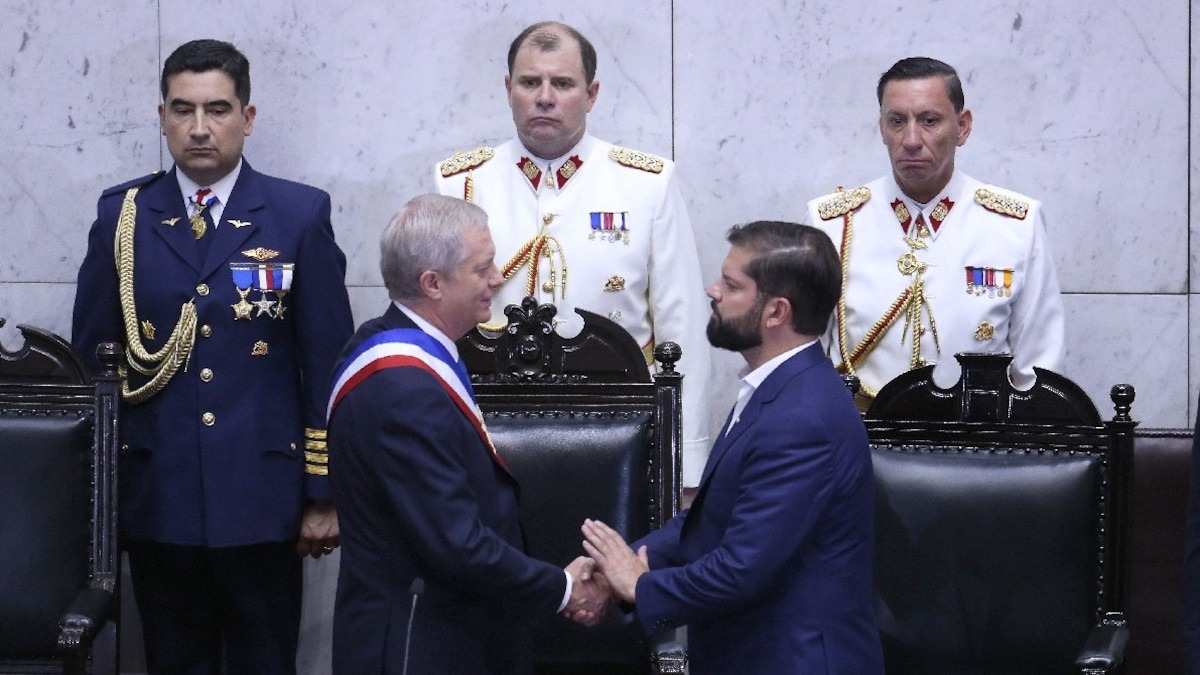
Conservative leader José Antonio Kast officially assumed the Chilean presidency on Wednesday during a formal ceremony in Valparaíso. The event marked the conclusion of the 2026 election cycle and the official end of Gabriel Boric’s administration. Kast received the presidential band and the O’Higgins Medal from Senate President Paulina Núñez before addressing the nation.
This transition represents a significant political shift as Kast becomes the first president identified with the extreme right since the return of democracy. The ceremony included representatives from diverse political forces and a substantial delegation of international heads of state. According to reports, the turnout highlighted the global attention focused on Chile’s changing political direction. This change challenges the progressive coalition that held power for the last four years.
International attendance featured King Felipe VI of Spain and Argentine President Javier Milei among the key guests. Conversely, Brazilian President Luiz Inácio Lula da Silva cancelled his participation hours before the event began. This diplomatic absence underscores the complex regional dynamics surrounding the new administration.
In his initial statements, Kast outlined a three-point agenda centered on public security, irregular migration control, and economic growth. He described the incoming term as a Government of Emergency designed to address immediate national challenges. These priorities aim to reverse trends observed during the previous four years of governance.
Prior to the inauguration, Kast unveiled a cabinet of 24 ministers drawn from the private sector, academia, and legal fields. Notable appointments include economist Jorge Quiroz at Finance and former prosecutor Trinidad Steinert for Public Security. These selections signal a preference for technocratic management over political affiliation within the executive branch. The inclusion of legal experts signals a potential crackdown on previous judicial policies.
The new president will govern with the support of the Republican Party and traditional right-wing sectors. However, Kast faces a divided Congress without clear majorities to pass legislative initiatives. Analysts suggest that coalition building will be essential for the stability of his administration. Legislative gridlock could hinder the execution of planned fiscal reforms.
Economic reactivation remains a central component of the new administration’s public messaging. The appointment of a finance minister with technical expertise suggests a focus on fiscal discipline and investment attraction. Investors will likely monitor the implementation of these policies closely for signs of stability. Fiscal policy will be scrutinized for its impact on Chile's sovereign credit rating and unemployment rates.
Later in the day, Kast traveled to Santiago to attend his first official activity at a school in the capital. He is scheduled to deliver a comprehensive speech from La Moneda Palace regarding his strategic priorities. This address is expected to provide further clarity on the government’s approach to social and economic reforms.
Regional relations will require careful management given the divergent views between Chile and neighboring Brazil. The absence of Lula at the swearing-in ceremony reflects potential friction in the South American diplomatic sphere. Future summits will test the resilience of these international partnerships.
Observers will watch for legislative battles in the coming months as the government seeks to enact its emergency measures. The success of Kast’s term depends heavily on his ability to navigate a fragmented political environment. The next few weeks will determine the durability of his reform agenda. Key performance indicators will be reviewed by international financial institutions within the first quarter.