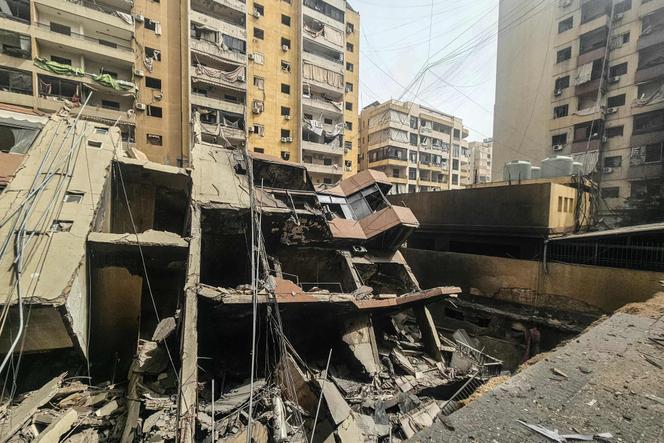
Israeli military forces launched a massive series of strikes across Beirut on Wednesday, resulting in scenes of chaos and destruction. The bombardment, described by the Israeli military as the largest coordinated strike of the current war, hit more than 100 Hezbollah-linked targets within 10 minutes across Beirut, southern Lebanon, and the Bekaa Valley, according to Al Jazeera. Lebanon’s Ministry of Public Health reported that dozens of people have been killed and hundreds wounded, with figures expected to rise as rescue efforts continue.
The strikes hit densely populated commercial and residential districts in central Beirut without warning, a rare occurrence since the current round of fighting began on March 2. While the Israeli military claimed it targeted missile launchers and command centers, local officials and residents insisted the struck buildings were not military sites, Al Jazeera reported. The escalation occurred just one day after United States President Donald Trump announced a two-week ceasefire in the war between Israel and Iran.
While Pakistan brokered the truce between Tehran and Washington, Prime Minister Benjamin Netanyahu’s office clarified that the agreement does not extend to Israel’s ongoing military operations against Hezbollah in Lebanon. Notably, Al Jazeera reported that Pakistan maintains the agreement was intended to extend to the Lebanon front as well, contradicting the Israeli position. The United States appears willing to allow the Lebanon front to remain active while it conducts broader peace negotiations with Iran.
In an English-language statement, Netanyahu defended the US-led decision, claiming that “Iran no longer poses a nuclear, missile and terror threat to America, Israel, Iran’s Arab neighbours and the world.”
However, the move faced immediate and sharp criticism from within Israel. Opposition leader Yair Lapid condemned the truce as one of the greatest “political disasters in all of our history.” Lapid argued that the Prime Minister had "failed politically, failed strategically, and didn’t meet a single one of the goals that he himself set,” contending that repairing the resulting damage to the country would take years.
Internal backlash and strategic fallout
Critics of the government also targeted Netanyahu’s communication style. Ofer Cassif, a member of the left-wing Hadash party, noted that the Prime Minister’s decision to issue the statement in English was telling. “Netanyahu has no interest in talking to the people of Israel. He rarely does and almost never enters the studio,” Cassif said.
Cassif further suggested that the Prime Minister’s strategy is designed primarily for an international audience rather than his own citizens. “He knows, probably correctly, that those who support him will do so anyway, and those who oppose him will continue to do so, so when he speaks, it’s to the international media and to reassure his base,” Cassif stated.
Analysts note that the ceasefire leaves Israel in a weakened position, with its defensive missile stocks depleted and the regional balance of power shifting. According to Al Jazeera, the conflict in Lebanon has now killed more than 1,530 people and displaced at least 1.2 million, as the perception of Israeli vulnerability grows among its regional opponents.