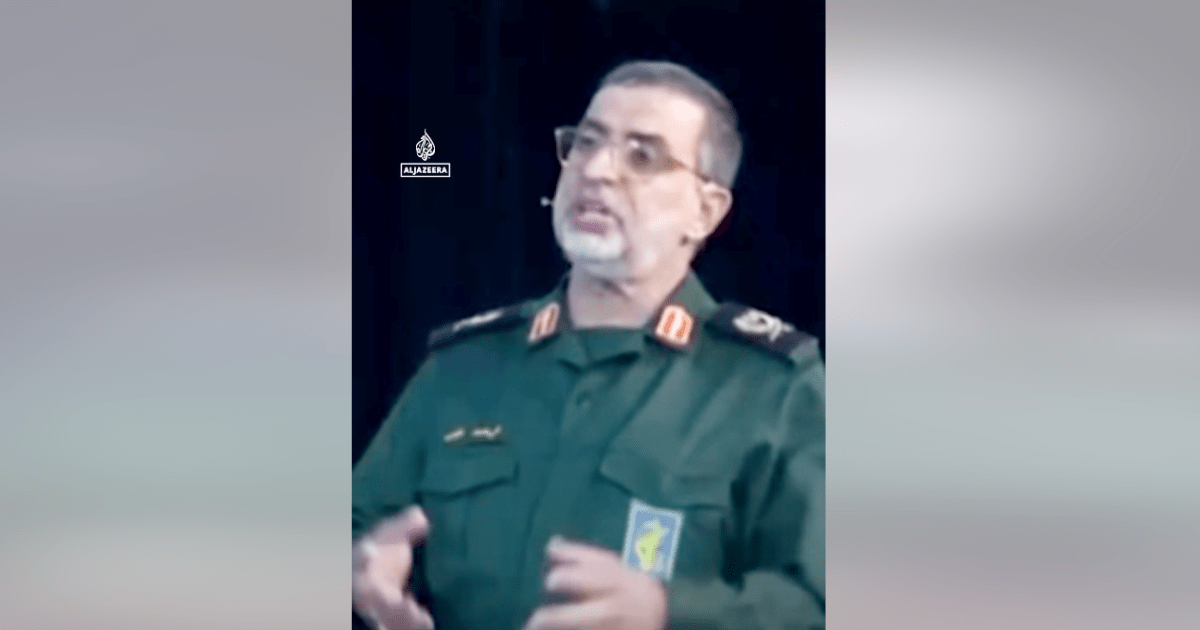
Iran’s Islamic Revolutionary Guard Corps confirmed the death of spokesman Ali Mohammad Naini following overnight strikes by the United States and Israel. The 68-year-old brigadier general was killed during the operation that commenced at dawn on Friday within the capital. This event represents a significant escalation in the military campaign targeting Tehran’s defense infrastructure and leadership. The incident marks a critical turning point in the conflict.
Naini appeared on national television just hours before the attack to insist that Iran retained full capacity to manufacture missiles. According to Fars news agency, the official stated there was no concern regarding production despite ongoing wartime conditions. The contradiction between his public statements and his subsequent death underscores the volatility of the situation. His death immediately followed these claims, creating a sharp contrast for domestic audiences.
His killing is the latest in a string of high-profile assassinations that have targeted Iran’s establishment in less than three weeks. Supreme Leader Ayatollah Ali Khamenei died in the opening hours of the joint US-Israeli military campaign on February 28. He has since been replaced by his son, Mojtaba Khamenei, altering the succession dynamic. This rapid turnover suggests a destabilization strategy aimed at the core of the regime.
Earlier this week, Ali Larijani, secretary of Iran’s Supreme National Security Council, was killed in a strike along with his son. The head of the Basij paramilitary forces, Brigadier General Gholamreza Soleimani, and Intelligence Minister Esmail Khatib were also confirmed dead within the same 48-hour period. These losses suggest a systematic effort to decapitate command structures. The speed of these events indicates a highly coordinated intelligence operation.
US Defense Secretary Pete Hegseth expressed satisfaction over the recent removals of senior Iranian officials during a press briefing. He stated that no one in the world currently desires a senior leadership role within the IRGC or Basij under current conditions. However, other US officials suggested that Washington and Israeli aims might not be fully aligned. This public display of sentiment may influence regional diplomatic calculations.
Director of National Intelligence Tulsi Gabbard told the House Intelligence Committee that American and Israeli objectives differ significantly. She noted that Israel focused on disabling the Iranian leadership while the Trump administration sought to destroy ballistic missile capabilities. The divergence in strategy introduces potential complexity into the ongoing conflict. Washington must navigate these differing goals carefully to avoid unintended escalation.
Israeli Prime Minister Benjamin Netanyahu cast the killings as a means of opening a path for Iranians to reclaim their country. He argued that the campaign against the country’s leadership would not happen all at once but would persist over time. This rhetoric suggests a long-term approach to destabilizing the regime through attrition. The strategy relies on sustained pressure rather than immediate regime collapse.
Iranian Foreign Minister Abbas Araghchi rejected the notion that the removal of individuals would cripple the political structure. He stated that the presence or absence of a single individual does not affect the organization. This defense highlights the resilience of the state apparatus despite the loss of key figures. Tehran maintains that the regime is institutional rather than personal in nature.
On Friday, the Israeli army claimed to have killed Esmail Ahmadi, a senior intelligence figure within the IRGC’s Basij paramilitary unit. The attack targeted the Basij command centre in central Tehran where Soleimani was also confirmed dead. There was no immediate comment from the Iranian authorities on Israel’s claim regarding Ahmadi. This ambiguity complicates the assessment of the operational success of the strike.
Al Jazeera reported that the mood in Tehran remains hushed as the country marks the Persian New Year, Nowruz. The festivities coincide with Eid al-Fitr, yet none of the customary celebrations were visible on the streets. The convergence of religious and cultural observances with active warfare creates a unique atmosphere of tension. International observers note the symbolic timing of strikes during this period.