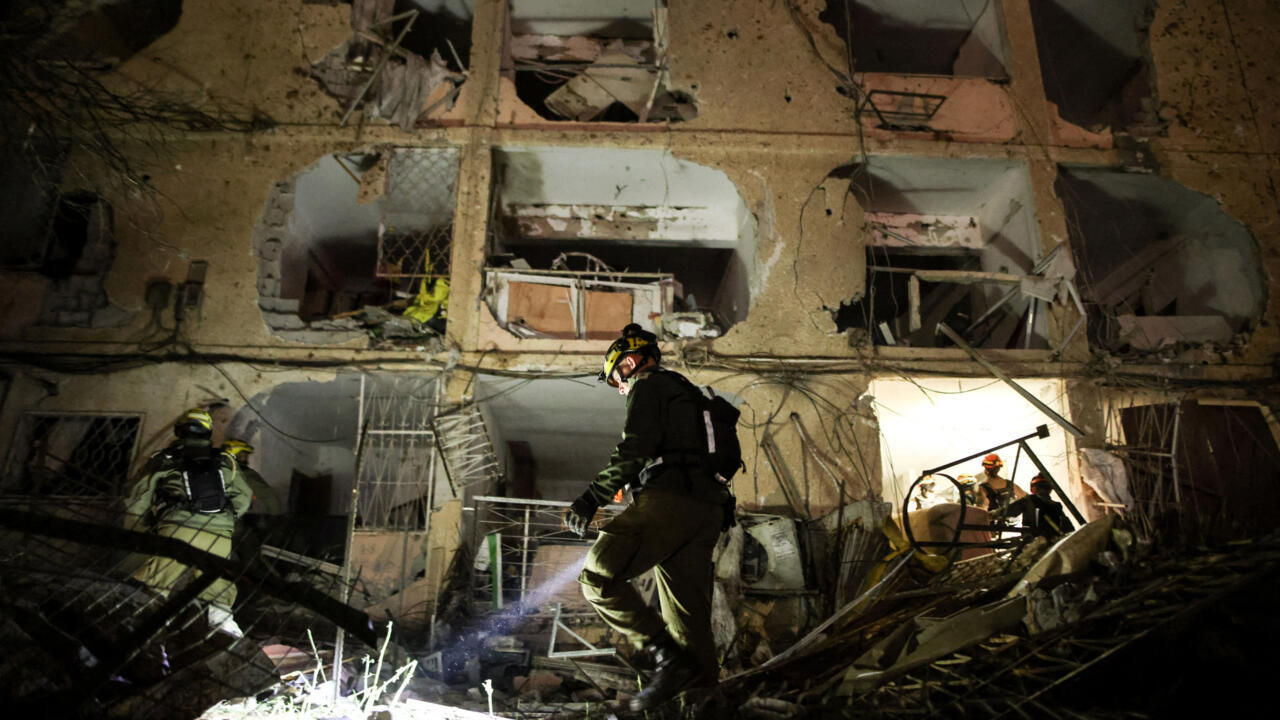
An Iranian missile struck the Israeli town of Dimona on Saturday, injuring dozens of civilians in what Tehran described as retaliation for reported strikes on its own nuclear site. The Islamic republic targeted the facility believed to host the Middle East's sole nuclear arsenal, although Israel has never officially admitted to possessing such weapons. This incident occurred as tensions between the two nations reached a critical point following weeks of heavy bombardment from allied forces.
Magen David Adom first responders reported treating 33 people injured at multiple locations, including a 10-year-old boy in serious condition with shrapnel wounds. The Israeli military confirmed a direct missile hit on a building within the town, noting that interception attempts were carried out after detection. Paramedic Karmel Cohen described the scene as having extensive damage and chaos at the impact site.
Iran's atomic energy organization earlier accused the United States and Israel of hitting the Natanz enrichment complex but stated no leakage of radioactive materials occurred. The Natanz facility, which hosts underground centrifuges for uranium enrichment, was already damaged during last year's June conflict. Israel's military said it was not aware of a strike on that specific site but claimed to have targeted a Tehran university facility linked to military industries.
Concurrently, Iran launched unsuccessful ballistic-missile attacks on the US-UK base Diego Garcia, located 4,000 kilometres from the Iranian border. Israel's military chief Eyal Zamir stated the country used a two-stage intercontinental ballistic missile with a range of 4,000 kilometers. This capability suggests the weapons can reach European capitals, extending the conflict zone significantly beyond the immediate region.
The escalating conflict has disrupted vital trade routes, with Iran choking off the Strait of Hormuz which carries one-fifth of global crude trade. Crude oil prices have surged more than 50% over the past month, with North Sea Brent crude now trading above $105 per barrel. Analysts warn that prolonged instability in the waterway poses severe risks to global energy markets and inflation rates.
Admiral Brad Cooper, head of US Central Command, stated that US warplanes dropped 5,000-pound bombs on an underground facility storing anti-ship cruise missiles. Cooper noted that intelligence support sites and missile radar relays used to monitor ship movements were also destroyed. This action aimed to degrade Iran's ability to threaten the strategic waterway and protect international shipping lanes.
Leaders from the UK, France, Germany, Italy, South Korea, Australia, the UAE, and Bahrain condemned the de facto closure of the Strait of Hormuz by Iranian forces. They expressed readiness to contribute to efforts ensuring safe passage through the region against state actors. Foreign Minister Abbas Araghchi clarified that restrictions applied only to vessels from countries involved in attacks against Iran.
Domestically, Iran marked the end of Ramadan as the war entered its fourth week, though Supreme Leader Mojtaba Khamenei remained out of public view. Instead, the head of the judiciary attended Eid al-Fitr prayers at the Imam Khomeini grand mosque in Tehran. Residents reported an atmosphere of uncertainty mixed with the traditional celebration amidst the ongoing violence.
Experts suggest the Islamic republic has survived the loss of top leadership and retained significant strike capacity for future operations. Neil Quilliam of Chatham House told a podcast that the regime showed resilience neither the US nor regional allies expected from their models. These factors indicate deep roots that make the government difficult to topple through force alone or targeted decapitation.
The standoff continues with the UK allowing Washington to use its bases for strikes targeting the Strait of Hormuz and Iranian military infrastructure. The attempted missile strike on Diego Garcia occurred before this announcement was made public to the international community. Regional observers now watch for further escalation as diplomatic efforts struggle to contain the violence and secure trade routes.