Iran's Foreign Minister Abbas Araghchi stated on Thursday that the European Union's decision to designate the Islamic Revolutionary Guard Corps (IRGC) as a terrorist organization constitutes a "major strategic mistake." This declaration follows the EU's move, which Israel praised as "historic," marking a significant rupture in European diplomatic engagement with Tehran.
The Iranian General Staff of the Armed Forces characterized the EU action as "irresponsible and spite-driven," asserting it was taken in "unquestioning obedience" to Washington and Tel Aviv's policies, according to the official IRNA news agency. This reaction underscores Tehran's perception of the designation as a direct alignment of European policy with US pressure tactics.
Citibank analysts anticipate that the near-term US and Israeli responses will be limited, aiming to compel Iran toward a nuclear agreement rather than triggering full-scale conflict. These constrained actions may involve targeted military actions and the seizure of oil tankers, which elevates the risk premium in energy markets, according to the bank's note.
Oil prices reacted immediately to the rising geopolitical risk, climbing three percent to a five-month high on Thursday due to concerns over potential disruptions to global supply routes. Such disruptions are particularly feared should Iran move to close the critical Strait of Hormuz transit point, a vital artery for OPEC crude exports.
Meanwhile, US President Donald Trump expressed a desire to avoid military engagement, noting the presence of powerful US naval assets near Iran while emphasizing plans for further dialogue regarding a nuclear deal. Iran's military leadership countered these diplomatic signals, threatening an instant and decisive response, not a limited operation, should Washington miscalculate, as reported by state television.
Brigadier General Mohammad Akraminia warned that US aircraft carriers and Gulf region bases fall within range of Iran's medium-range missiles, suggesting any conflict would be protracted beyond US expectations. This robust military posturing signals Tehran's commitment to deterring perceived aggression following the EU's decision.
Qatar's emir and the Iranian president reportedly discussed regional de-escalation efforts in a recent phone call, highlighting parallel diplomatic tracks attempting to manage the spiraling crisis. UN Secretary-General Antonio Guterres also urged diplomacy to prevent a crisis with potentially devastating regional consequences, as reported by reporters.
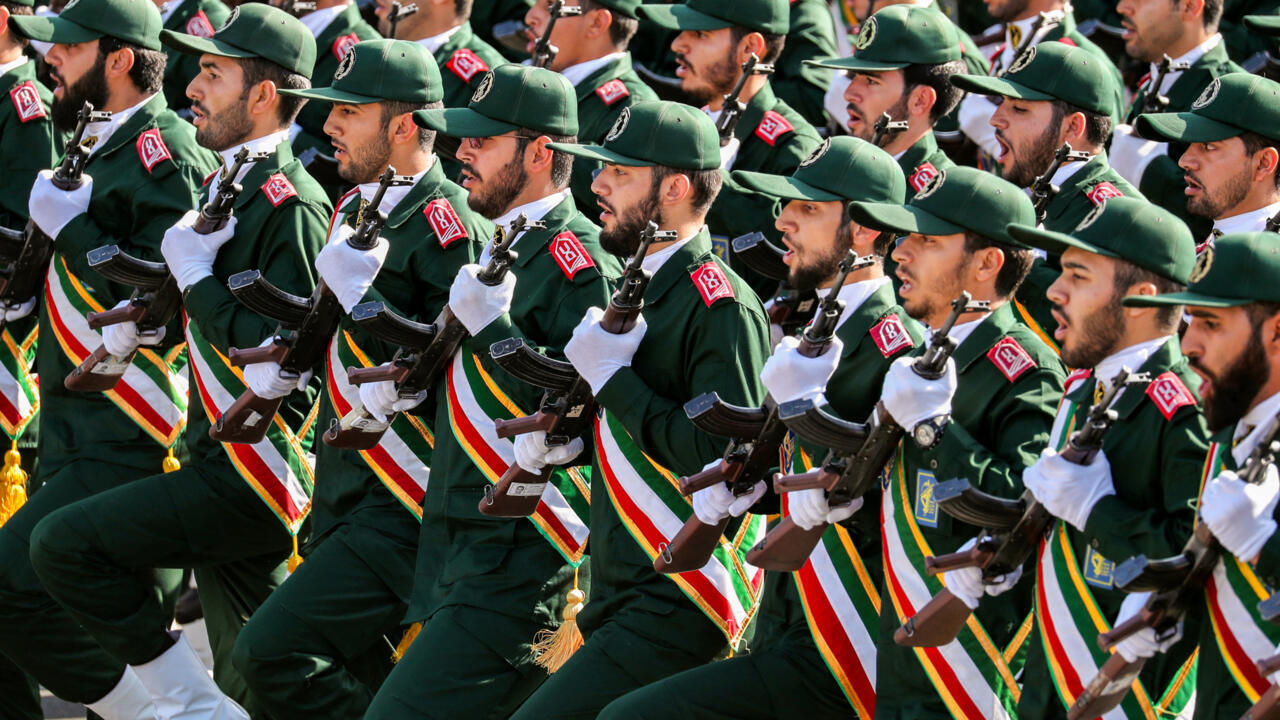
The IRGC designation is symbolically potent, as the organization controls significant sectors of the Iranian economy and armed forces, including its ballistic missile and nuclear initiatives. The EU's decision reportedly gained momentum following a brutal crackdown on domestic protests earlier this month, which resulted in thousands of casualties.