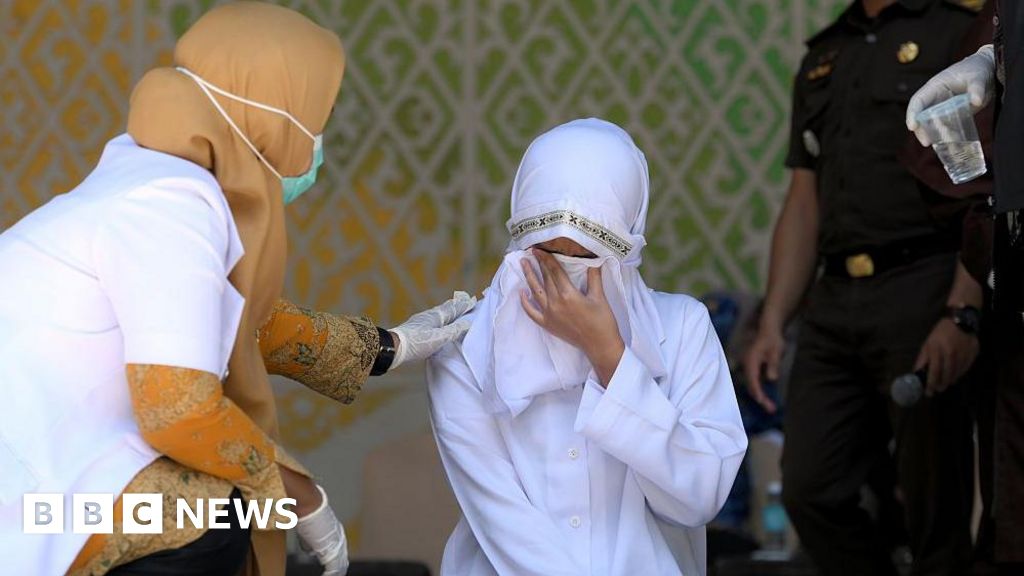
A couple in the Indonesian province of Aceh received 140 strokes of the rattan cane each on Thursday for violations of local Sharia law, specifically extramarital sex and alcohol consumption. The 21-year-old woman reportedly fainted mid-session after receiving what authorities stated was a record number of lashes administered publicly. Three female officers reportedly administered the strokes to the woman during the highly publicized judicial enforcement.
Under the specific Islamic criminal code enforced in Aceh, sex outside of marriage carries a penalty of 100 strokes, while the consumption of alcohol mandates an additional 40 strokes. The combined offenses resulted in the full 140-stroke sentence for both individuals. This region is the only area within the Muslim-majority nation of Indonesia that implements Sharia as its regional legal framework.
In addition to the couple, four other individuals faced caning penalties on the same day for various Sharia violations. Among those punished was an officer from the regional Islamic police force, who received 23 strokes, as did his female partner, for being in close proximity in a private setting. The head of Aceh's Islamic police force, Muhammad Rizal, confirmed the officer's dismissal following the ruling.
Kontras, an Indonesian human rights organization, voiced concern over the lack of regulation surrounding the corporal punishments. Azharul Husna, the Aceh coordinator for Kontras, stated that the rules governing these canings need improvement to ensure proper post-punishment support for those subjected to the penalties. The practice remains highly contentious internationally and domestically.
Public canings are a routine component of judicial enforcement in Aceh for numerous offenses deemed contrary to religious mandates. While the punishments are regularly carried out, they consistently draw sharp criticism from international human rights organizations arguing they constitute cruel, inhuman, or degrading treatment.
Geopolitically, Aceh’s continued autonomy to enforce Sharia highlights the complex relationship between centralized Indonesian governance and regional religious authority. The severity and public nature of these punishments serve as a marker for the province’s commitment to its unique legal status within the broader Southeast Asian democracy.
What follows will likely be continued scrutiny from international bodies monitoring human rights compliance in the region. The dismissal of the police officer involved suggests that even state actors are not exempt from the strict application of the local religious code, reinforcing its judicial reach.