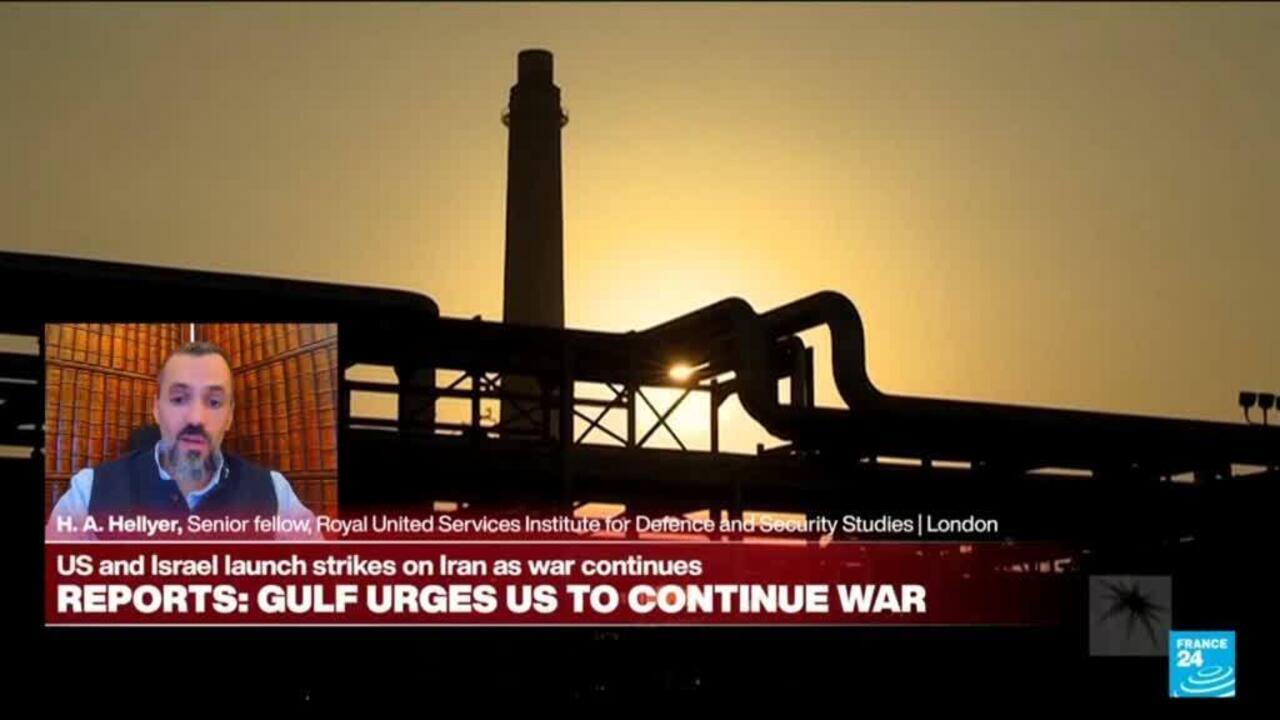
Gulf states, led by Saudi Arabia and the United Arab Emirates, are urging President Trump to continue prosecuting the war against Iran. According to U.S., Gulf, and Israeli officials, Riyadh and Abu Dhabi argue that Tehran remains too strong after the recent bombing campaign. They contend that a decisive defeat is necessary to secure long-term regional stability and prevent future aggression.
Key Details
The lobbying efforts indicate a desire for sustained military engagement rather than a quick resolution to the conflict. Sources report that Gulf leaders fear a negotiated settlement might leave Iranian influence intact within the region. This strategy aims to degrade Tehran's capacity to support proxy groups across the Levant and the Arabian Peninsula.
Dr H. A. Hellyer, a senior fellow at the Royal United Services Institute, provided analysis on the situation during a recent interview. > "Despite some Gulf States pressing to prolong the war, none of the Gulf States want the Iranian state to collapse," Hellyer said. This distinction clarifies the limits of their support for further escalation and potential regime change operations.
What This Means
This diplomatic push contrasts with previous administrations that sought de-escalation in the region through dialogue. Historically, Gulf allies have sought U.S. security guarantees while avoiding direct entanglement in Iranian internal affairs. The current approach marks a shift toward more aggressive containment tactics and direct military pressure.
Regional oil markets remain highly sensitive to any prolonged conflict in the volatile Persian Gulf region. Investors monitor these geopolitical shifts closely as supply lines pass through the strategic Strait of Hormuz. An extended war could disrupt energy flows, potentially driving global crude prices higher for consumers worldwide. This volatility creates uncertainty for global trade agreements and economic forecasts.
The outcome of these private discussions will shape Washington's foreign policy trajectory in the Middle East significantly. A decision to escalate risks drawing the United States into a broader regional confrontation that could consume resources. Conversely, a de-escalation might embolden Tehran to expand its nuclear program and regional ambitions. Washington must weigh these risks against alliance cohesion and domestic political pressures.
Observers will watch for official statements from the White House regarding the evolving Iran policy. Continued military strikes would signal a commitment to the Gulf states' strategic preferences and alliance demands. Diplomatic channels remain open, but pressure appears to be the primary tool at this specific stage.
The balance between defeating Iran and preventing state collapse defines the current strategic calculus for all parties. Success depends on aligning military objectives with political outcomes that satisfy both Washington and its key allies. Regional stability hinges on the administration's willingness to absorb the costs of further conflict.