German Military Chief Warns of Russian Attack Within Three Years
Publicidad
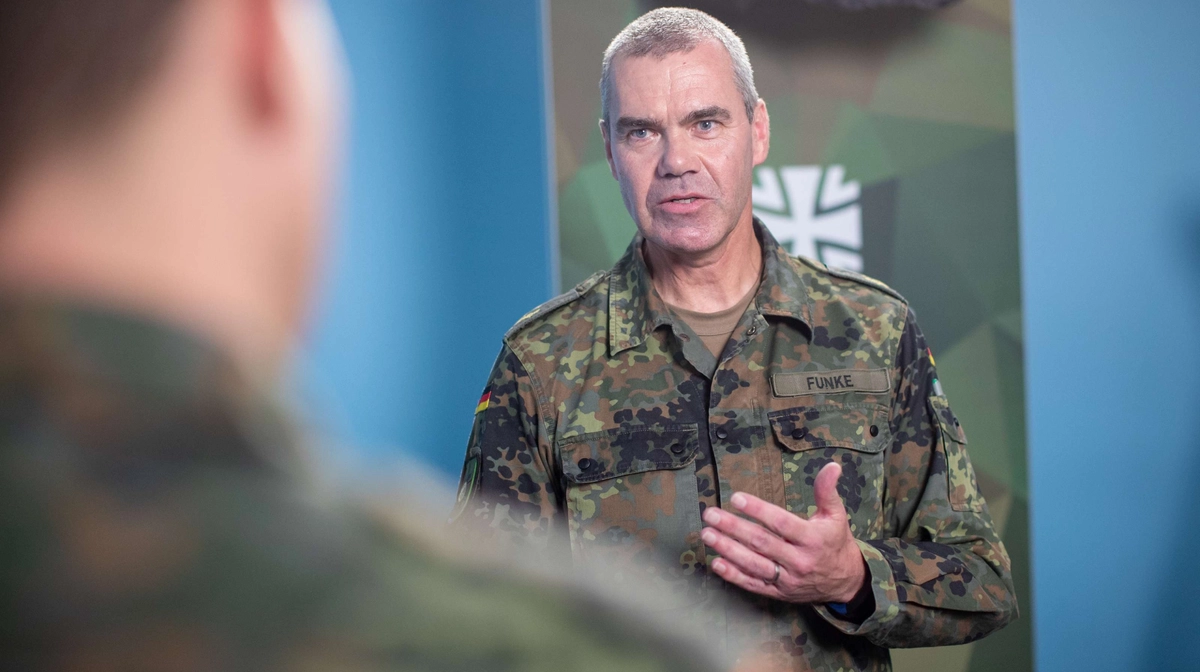
Germany's military leadership is preparing for the possibility of a Russian attack on NATO territory within the next two to three years, with the country positioned as a critical logistics hub in any potential conflict, according to a senior Bundeswehr commander.Lieutenant General Gerald Funke, Chief of the Bundeswehr Joint Support Command Headquarters, warned that Germany would face unprecedented challenges in managing military logistics and medical care during a hypothetical conflict with Russia, highlighting significant gaps in the country's current defense preparedness.Speaking to The Times, Funke outlined the scale of the logistical nightmare Germany would confront: moving tens of thousands of allied troops to front lines while major transportation networks face disruption from Russian sabotage, cyberattacks, and missile strikes."It's important for us to maintain Germany as a logistics hub and manage the supply lines for as long as possible as smoothly as possible, meaning that if one route fails we will have the option of using others instead," Funke stated.The medical capacity presents an even starker challenge. The Bundeswehr currently operates five hospitals with 1,800 beds total—a figure that could be overwhelmed within hours during active conflict. Funke's planning now accounts for up to 1,000 wounded personnel daily, a dramatic escalation from Germany's experience in Afghanistan."Whereas in Afghanistan I had a regrettably high but manageable number of wounded, I now have to plan for the possibility of a thousand injured personnel a day. The closer you look at it, the more complex it becomes and the harder it is to imagine," the general explained.To address these challenges, Funke's command has coordinated with Germany's Federal Ministry of Health to divide the civilian hospital network into four sections that can be reserved for military casualties during a crisis.The general's preparations include modernizing Cold War-era requisitioning systems for massive mobilization of civilian trucks, rail cars, and personnel. His command has also secured "standby agreements" with Deutsche Bahn, ensuring military transport trains can be deployed within 72 hours of notification.However, Germany's legal framework presents additional complications. Critical military measures require two-thirds parliamentary approval for declaring a "state of tension" or "state of national defense"—a threshold potentially complicated by radical left-wing and Russia-friendly far-right parties holding more than one-third of parliamentary seats.Funke's warnings reflect broader concerns among defense analysts that Germany may require excessive time to transition from peacetime to crisis conditions. The general argued that the traditional separation between peace and war has become obsolete in an era of hybrid warfare.These preparations come as NATO allies reassess their defense postures following Russia's invasion of Ukraine, with Germany's geographic position making it a crucial transit point for reinforcing Eastern European allies. The timing of Funke's public warnings suggests growing urgency within German military circles about the need for comprehensive defense preparations.Source: European Pravda, citing interview with The Times