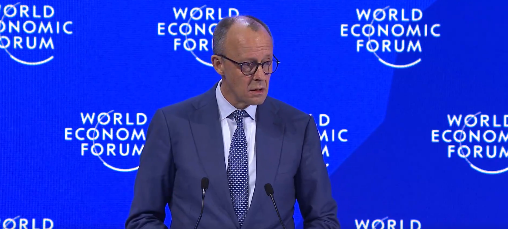
German Chancellor Friedrich Merz stated during the World Economic Forum in Davos that Europe must resist the impulse to quickly dismiss the transatlantic partnership, despite recent diplomatic strains. His address on Thursday came shortly after U.S. President Donald Trump retracted threats concerning Greenland, which had previously risked a significant rupture in relations.
Merz specifically referenced the abrupt shift in U.S. rhetoric regarding Greenland, noting that Trump had stepped back from utilizing tariff threats as leverage for territorial acquisition. This immediate escalation had introduced concerns over a potential global trade war alongside geopolitical instability.
"Despite all the frustration and anger of recent months, let us not be too quick to write off the transatlantic partnership," Merz asserted, according to reports from the forum. His sweeping remarks covered both global security architecture and the imperative for enhanced European economic competitiveness.
The Chancellor underscored the foundational importance of mutual confidence, particularly within the NATO framework. He argued that in the current geopolitical climate defined by major power competition, the United States itself relies heavily on this established trust.
Merz characterized the durable relationship between Europe and the U.S. as a "decisive competitive advantage" for both parties involved. This suggests an underlying recognition that economic and security cohesion is paramount when facing external systemic challenges.
Germany, along with seven other European nations, recently deployed military personnel to Greenland, following Denmark’s commitment to advancing plans for a more substantial, permanent NATO presence on the island. This action underscores ongoing European commitment to Arctic security dimensions.
Moving forward, the central challenge for Washington and Brussels involves actively repairing the eroded trust that underpins their collective security and economic interests. Analysts suggest sustained diplomatic effort will be required to solidify these core alliances against rising global uncertainties.
Merz's intervention serves as a direct appeal to European capitals to maintain strategic alignment with the U.S. rather than seeking immediate decoupling following periods of bilateral tension.