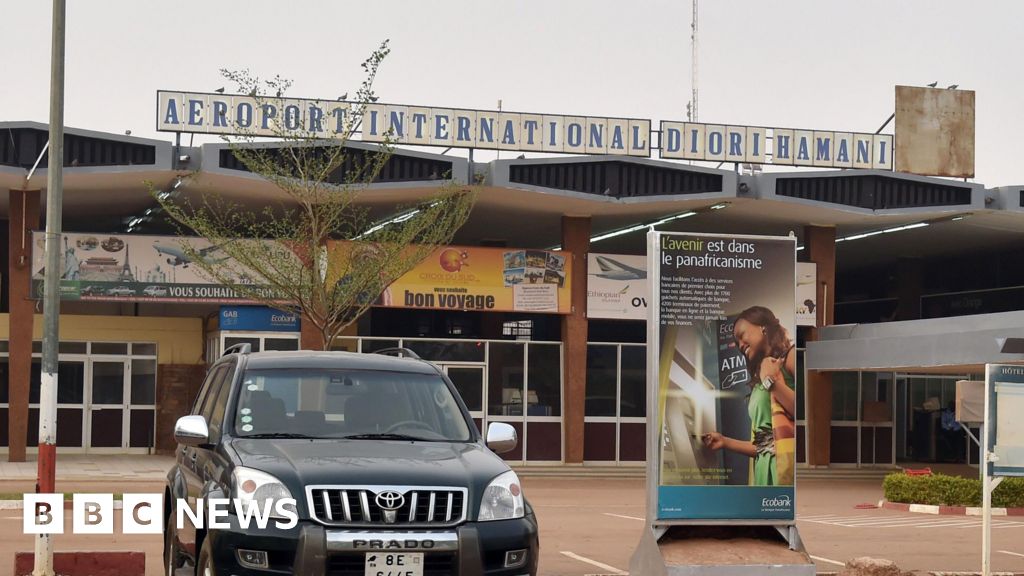
Suspected jihadist elements launched a significant overnight assault on Diori Hamani International Airport near Niamey, Niger, resulting in casualties among military personnel and the death of approximately 20 assailants, including a French national. The attack, which involved heavy gunfire and explosions, targeted what the Islamic State group later claimed was a 'co-ordinated surprise attack' on the Niger army's 'military base' housed within the facility.
In the immediate aftermath, the geopolitical implications became front and center. General Abdourahamane Tiani, the head of the junta that seized power in the July 2023 coup, publicly acknowledged the role of external actors. He specifically thanked 'Russian partners' for their professionalism in defending the security sector, while issuing sharp condemnations against the leaders of France, Benin, and Ivory Coast, whom he accused of backing the mercenaries responsible.
This public alignment confirms the strategic pivot undertaken by the ruling military administration since ousting the former colonial power, France. Relations with Paris, Benin, and Ivory Coast remain severely strained, with Niamey consistently alleging destabilization efforts by these nations. The junta’s embrace of Russian security cooperation is now explicitly framed as a counter-measure against perceived Western machinations, underscoring the deepening strategic rift in the Sahel.
While airport operations reportedly normalized later Thursday, the incident highlights persistent security vulnerabilities despite the shift in military alliances. The presence of an air force base within the civilian airport complex makes it a high-value target, particularly given the ongoing regional insurgency by Islamist groups operating across the porous Sahelian borders.
Adding a layer of economic complexity, Niger, a significant uranium producer, has seen its strategic mineral exports complicated by the coup. Sources confirm that a large uranium shipment, currently held at the airport amid unresolved legal and diplomatic disputes with France following the nationalization of mines, remained undamaged during the exchange of fire.
This event serves as a potent symbol of the volatile security environment coupled with shifting international alignments in West Africa. The incident provides the junta with renewed justification to consolidate ties with Moscow while further isolating it from traditional Western partners, impacting regional security architecture and potential foreign investment flows into critical resource sectors.
(Source: Based on reports from BBC News and associated international wire services.)