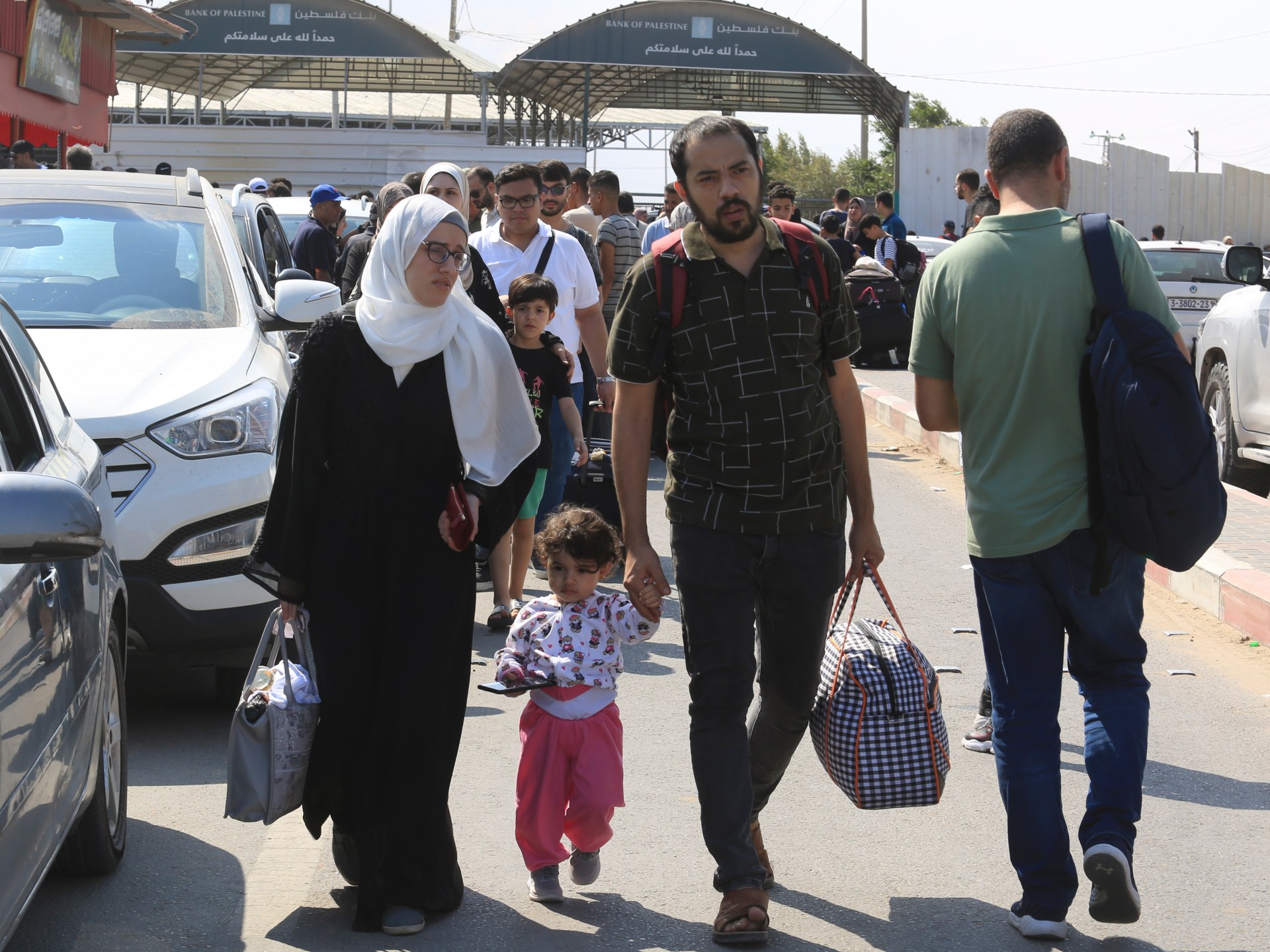
As preparations for a tentative partial reopening of the Rafah border crossing intensify, a significant diplomatic and operational dispute has emerged between Cairo and Tel Aviv concerning the flow of Palestinian civilians. The core contention revolves around Israeli negotiators reportedly conditioning the crossing’s operation on a requirement for 'more exits than entries,' a proposal Egyptian officials have firmly rejected in favor of an equal ratio.
Cairo views the asymmetric formula with deep suspicion, fearing it constitutes a deliberate attempt to manage and potentially reduce Gaza’s long-term population base. This concern is amplified by reports detailing the proposed technical framework, which seems designed to impose stringent, one-sided controls over movement, according to Israeli media outlets like Kan and Ynet.
The proposed operational structure diverges sharply from the 2005 Agreement on Movement and Access, which established Rafah as a Palestinian-Egyptian crossing under EU oversight to guarantee a degree of Palestinian sovereignty. Technical specifications reveal a system where all departing travelers require 24-hour vetting by Israel’s Shin Bet security service, while the actual processing methods for entry and exit appear fundamentally unequal.
Security analysts suggest the mechanism transforms the crossing from a sovereign gateway into a tool for political leverage. Former Egyptian military officials argue that the Israeli proposal effectively seeks to open Rafah 'in one direction' for exit only, aligning with broader displacement agendas that Egypt has categorically opposed.
Observers note that this framework, sometimes dubbed 'Rafah 2,' prioritizes remote monitoring for exits while reserving physical, potentially humiliating scrutiny for those attempting to return. This structural disparity is framed by critics as engineering an environment where departure is encouraged, but return is made prohibitively difficult or impossible.
Furthermore, reports indicate Israeli military planning for the area extends beyond logistics, with discussions emerging about constructing a large-scale facility near Rafah equipped with biometric tracking, including facial recognition, to maintain long-term military control and surveillance over movement in and out of the enclave.
This multifaceted dispute over access ratios, technical vetting, and long-term infrastructure planning underscores the profound geopolitical sensitivity surrounding Gaza's external lifelines. The outcome will dictate not only immediate humanitarian access but also the future parameters of Palestinian sovereignty at this critical juncture, as reported by Al Jazeera and other regional sources.