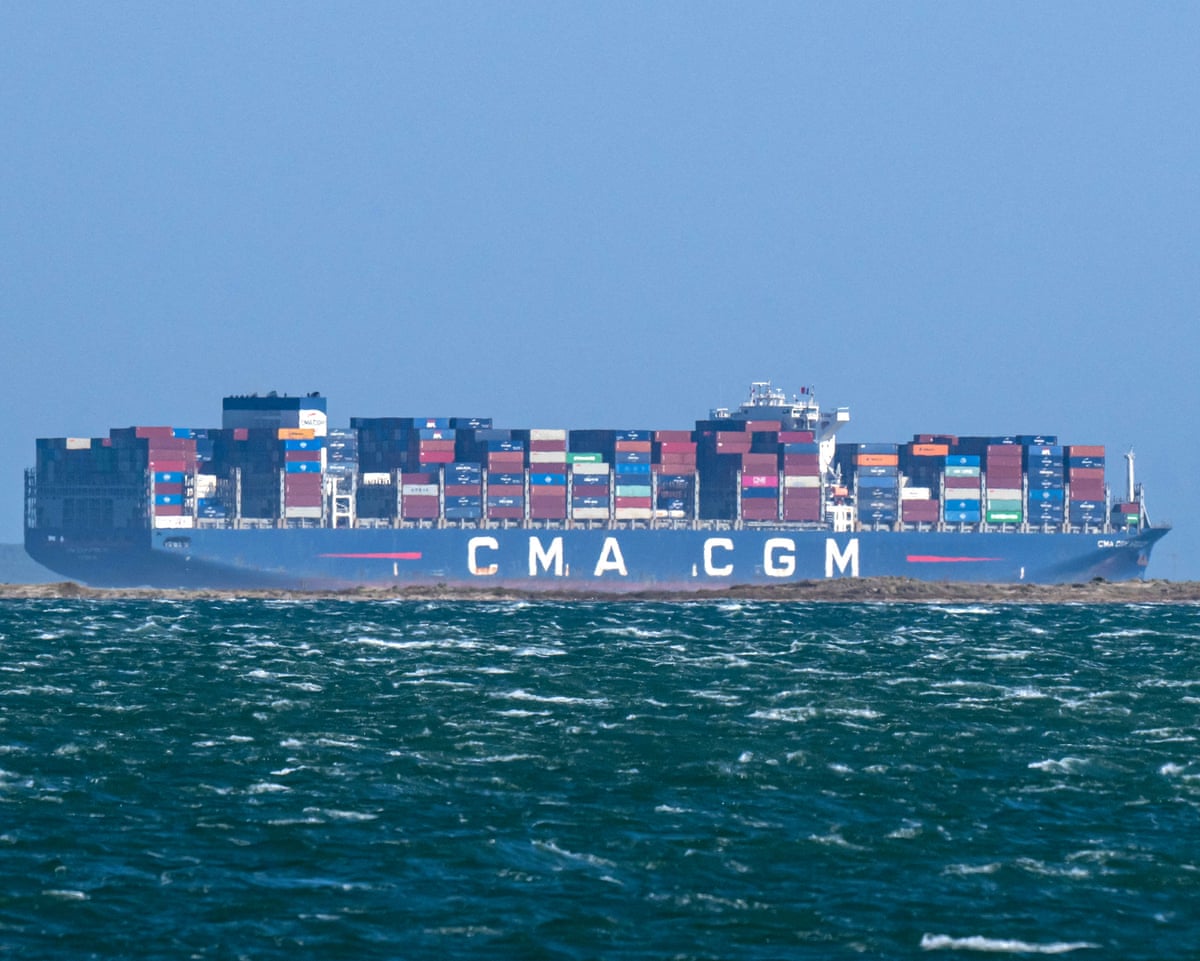
A Malta-flagged container ship owned by the French firm CMA CGM completed a transit through the Strait of Hormuz on Friday. This marks the first passage by a major Western European company’s vessel since the waterway became effectively closed following the outbreak of the US-Israel war with Iran over a month ago.
Shipping analysts at Kpler confirmed the transit. Data tracking indicated the ship navigated near the Omani coast, positioning itself on the opposite side of the channel from Iranian territory. A Japanese vessel carrying natural gas also successfully exited the strait, with Japanese firm MOL confirming that the safety of the vessel and its crew remained intact.
While the Strait of Hormuz remains largely shuttered, transit activity has not ceased entirely. BBC Verify reported that approximately 100 vessels, mostly featuring links to Iran, Pakistan, or India, managed the journey in late March. This equates to roughly five or six ships per day, a 95% reduction in traffic compared to pre-conflict levels.
Economic fallout and production adjustments
Global energy markets continue to grapple with the instability. Crude prices have climbed to four-year highs, hovering near $120 a barrel. JPMorgan analysts warned that if disruptions persist through mid-May, prices could escalate beyond $150. The closure has halted exports from key producers, including Saudi Arabia, the United Arab Emirates, Kuwait, and Iraq.
OPEC+ members agreed during a virtual Sunday meeting to increase oil output quotas by 206,000 barrels per day for May. However, the move is largely symbolic, as several key members remain unable to boost production due to the ongoing conflict. The eight participating countries expressed concern regarding attacks on energy infrastructure, noting that repairs are both costly and time-consuming.
President Donald Trump addressed the blockade on Truth Social, stating, "With a little more time, we can easily OPEN THE HORMUZ STRAIT, TAKE THE OIL, & MAKE A FORTUNE." He added, "IT WOULD BE A 'GUSHER' FOR THE WORLD???" The President has also threatened to escalate military operations against Iranian civilian infrastructure, including bridges and power plants, should the strait remain closed past Monday.
Iran has maintained that "non-hostile vessels" may utilize the waterway. Tehran has specifically exempted Iraq from transit restrictions, and shipping data from Sunday confirmed an Iraqi tanker successfully passed through the channel. Oman’s Foreign Ministry announced that deputy foreign minister-level talks are underway with Iran to explore options for maintaining safe transit.
Experts suggest the crisis has triggered a systemic shock to global supply chains. Ian Lesser, Senior Director for Foreign and Security Policy at the German Marshall Fund, noted that the situation represents a convergence of energy insecurity, strategic distrust, and shifting international alliances. Meanwhile, the U.S. continues to manage the broader conflict, recently conducting a rescue operation for a missing airman held in Iran.