Franco-Danish Arctic Tensions Highlight Europe's Enduring Strategic Dependency on Washington
President Macron’s reaction to the US interest in Greenland serves as a 'strategic wake-up call,' underscoring Europe's persistent inability to project unified geopolitical leverage without American backing. Analysts suggest repeated crises reveal a structural weakness in European strategic autonomy, questioning long-term foreign policy effectiveness.
Franco-Danish Arctic Tensions Highlight Europe's Enduring Strategic Dependency on Washington
Publicidad
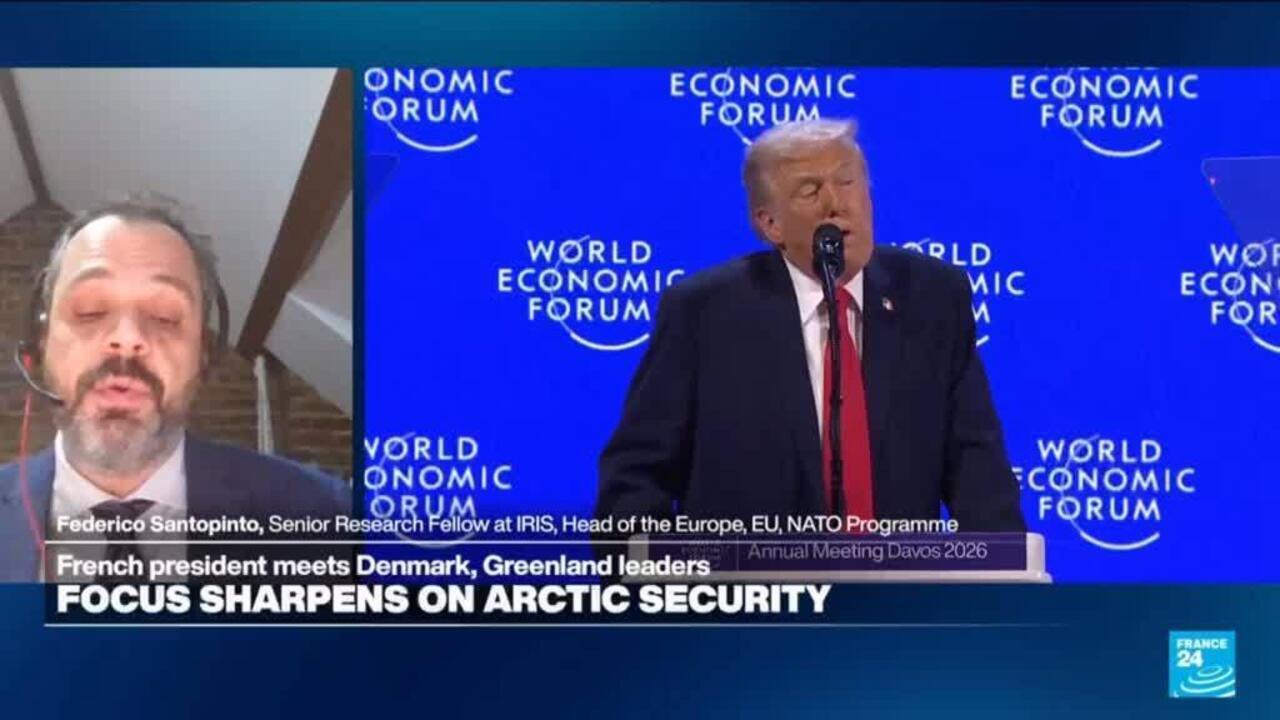
PARIS/COPENHAGEN – Recent diplomatic friction involving the United States, France, and the Danish realm—specifically concerning strategic assets in Greenland—has reignited a long-standing debate within European capitals regarding genuine strategic autonomy. French President Emmanuel Macron recently characterized the standoff as a 'strategic wake-up call for all of Europe,' speaking alongside Danish and Greenlandic leadership.The incident, which reportedly stems from US interest in potential economic or military engagement in the Arctic territory, has exposed what many observers view as the core vulnerability of the European project: its foundational reliance on the United States for security and, increasingly, geopolitical coordination.Federico Santopinto, Senior Research Fellow at the Institute for International and Strategic Relations (IRIS), noted the cyclical nature of this realization. “Europe has had already several strategic wake up calls in the past, but when a new crisis comes they discover that they are still weak and dependent on the United States,” Santopinto told FRANCE 24.This assessment resonates across Brussels and key European capitals, where efforts toward 'strategic sovereignty'—the ability to act independently in defense, energy, and critical supply chains—have been central policy goals for years. However, geopolitical flashpoints, ranging from Eastern European security dynamics to commercial disputes with major global powers, consistently reveal gaps in collective European capacity.The geopolitical significance of the Arctic region is escalating due to climate change opening new maritime routes and increasing accessibility to natural resources. For Europe, losing influence or failing to present a cohesive front in such a critical area—even in consultation with a key NATO ally—raises concerns about the bloc's capacity to secure its own long-term economic and security interests in emerging theaters.The challenge for the European Union is translating high-level political rhetoric about independence and sovereignty into tangible, deployable capabilities and unified decision-making processes that can withstand external pressure without immediately defaulting to Washington's framework. The Greenland episode serves as a stark reminder that while European integration progresses on many fronts, deep-seated strategic fissures remain, limiting its effectiveness as a truly independent global actor.Source attribution: Based on reporting from FRANCE 24 and analysis from IRIS.