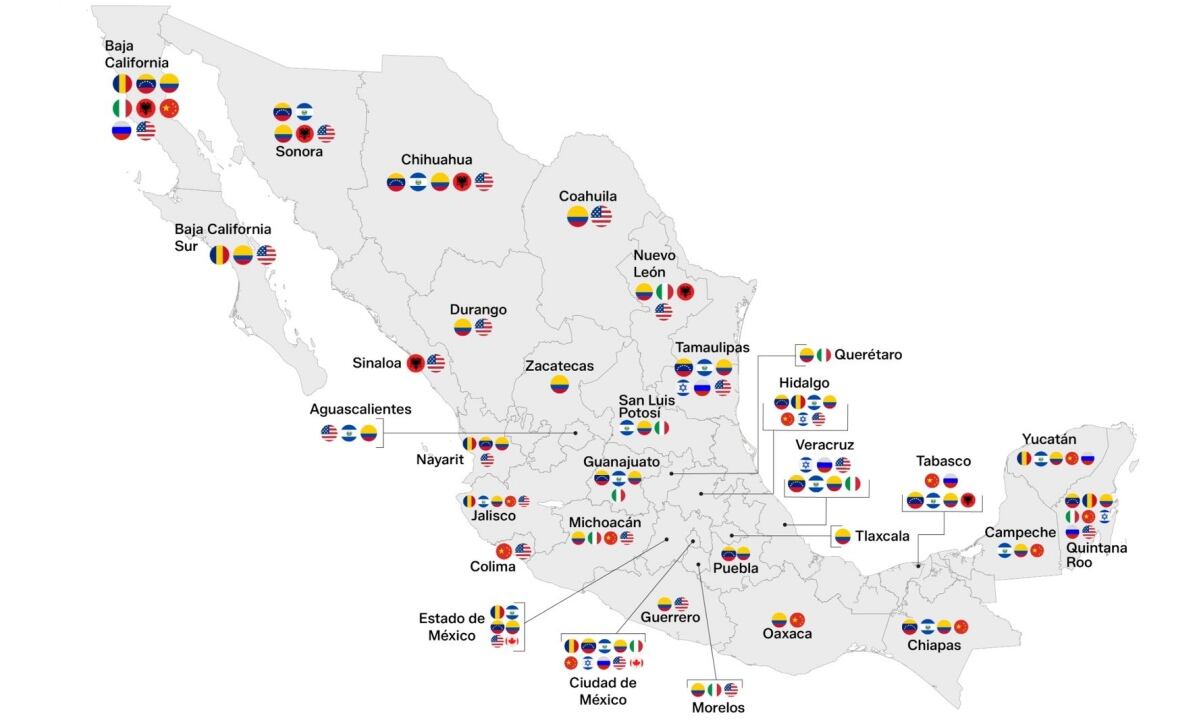
A security researcher has documented the widespread presence of foreign criminal organizations across all 32 Mexican states. Víctor Manuel Sánchez Váldes from the Universidad Autónoma de Coahuila published detailed findings regarding groups originating from Albania to Venezuela. The investigation highlights a complex network operating alongside established domestic cartels within the national territory. This data reveals a significant escalation in transnational criminal activity that challenges local enforcement capabilities.
Colombian organizations hold the largest coverage within the country according to the compiled data. These groups operate in approximately 30 states, primarily utilizing fraud schemes known as gota a gota to target financial assets. Sánchez Váldes noted this significant prevalence during an interview with El Universal regarding the security situation. Their activities demonstrate a sophisticated approach to financial crime that targets both nationals and international visitors.
Geographic distribution shows higher concentrations in border states and major urban centers throughout the republic. Tourist hubs like Cancún and the Riviera Maya facilitate the entry of international operatives seeking anonymity. Mexico City and the State of Mexico also serve as key operational bases for these transnational networks. The density of these groups correlates with high traffic areas where surveillance is more difficult to maintain effectively.
Russian criminal elements previously exploited tourists through fraudulent ATM installations in major tourist zones. The Florian Tudor family established a scheme that targeted visitors in Quintana Roo and Jalisco before authorities dismantled the operation. While dismantled, the methodology remains a persistent risk for the tourism sector and local banking infrastructure. Local police forces continue to monitor similar devices to prevent recurrence of these sophisticated financial thefts.
United States-based gangs maintain a visible presence in northern border regions such as Chihuahua and Baja California. Groups like Barrio Azteca operate alongside Mexican cartels in these territories to enforce control over smuggling routes. Additionally, fugitives from the United States sometimes seek refuge within Mexican territory to avoid prosecution. This cross-border dynamic creates significant complications for extradition treaties and regional law enforcement cooperation.
Chinese organizations engage in significant environmental crimes, specifically illegal logging in the southern region of the country. They utilize local operators to harvest valuable timber for export back to China through established shipping lanes. This activity involves monitoring and logistics managed by personnel of Chinese origin to protect the supply chain. The environmental impact of this extraction poses long-term threats to biodiversity and local ecosystems in the southeast.
Human trafficking networks frequently target migrant populations moving through Central and South America toward the northern border. Venezuelan groups such as Tren de Aragua collaborate with local Mexican organizations to facilitate this forced movement. Experts warn that the 2026 World Cup could exacerbate the trafficking of women for sexual exploitation in major cities. Security agencies are advised to increase screening protocols during the upcoming international sporting event to mitigate these risks.
Sánchez Váldes constructed the database using focused Google searches and temporal intervals to verify historical records. He verified information from news sources and recorded findings by entity and nationality to ensure accuracy. This manual compilation formed the visual representation of the criminal activity currently operating in the nation. The methodology allowed for a granular analysis of criminal trends over the last five years of reported incidents.
These foreign entities often establish strategic alliances rather than conflict with domestic cartels to maximize profit. Motivations include selling chemicals, buying illegal resources, and laundering money through legitimate business fronts. Such cooperation deepens the integration of transnational crime into the national security challenge facing the government. Financial tracking systems must evolve to identify these complex money laundering networks before they destabilize the economy.
The findings suggest a critical need for coordinated international law enforcement efforts to address the root causes. Governments must address the root causes driving these groups to establish operations in Mexico to prevent further escalation. Monitoring remains critical as the 2026 tournament approaches and infrastructure usage increases significantly. Future policy decisions will rely on this data to allocate resources effectively against evolving criminal threats.