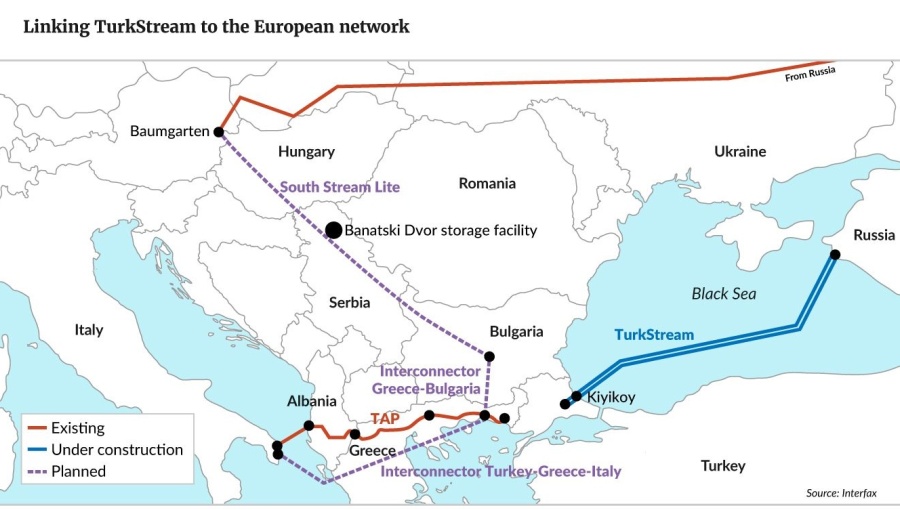
Serbian security forces discovered two backpacks packed with explosives and detonators near the Balkan Stream gas pipeline in Kanjiza on Sunday. President Aleksandar Vucic confirmed the find, stating the materials were located just hundreds of meters from the critical infrastructure that supplies Russian gas to Hungary.
"Our intelligence services did a good job," Vucic said, noting that the explosives could have caused significant damage and endangered numerous lives. He added that authorities have identified "certain traces" related to the plot but declined to offer further specifics while the investigation remains active.
Hungarian Prime Minister Viktor Orban responded to the discovery by convening an emergency meeting of his national defense council. Orban characterized the pipeline as a vital piece of energy infrastructure, though he provided little additional detail regarding the potential threat.
Political tensions rise ahead of Hungarian vote
The timing of the discovery has fueled accusations of political manipulation ahead of Hungary’s national election scheduled for next Sunday. Peter Magyar, Hungary’s opposition leader, publicly questioned the legitimacy of the findings in a post on X.
"For weeks, we've been receiving warnings from multiple sources that Orban – allegedly with Serbian and Russian assistance – may be planning to cross another line," Magyar wrote. He suggested the event could be a "false flag" operation designed to influence the upcoming vote and requested inclusion in the national defense council meeting.
Kyiv also moved to distance itself from the incident. Ukrainian foreign ministry spokesman Heorhii Tykhyi rejected any suggestion that Ukraine was involved in the affair. "Ukraine has nothing to do with this," Tykhyi posted on X. "Most probably, a Russian false-flag operation as part of Moscow's heavy interference in Hungarian elections."
Serbia remains heavily dependent on Russian gas, currently importing approximately six million cubic meters per day at rates well below market value. Hungary similarly relies on Russian energy imports, a dependency that has become a central point of contention in its domestic political discourse.
In recent weeks, Orban has frequently criticized the Ukrainian government, accusing officials in Kyiv of intentionally delaying repairs to a separate pipeline system. Those delays have restricted the flow of Russian oil to Hungary, exacerbating existing diplomatic friction between the two nations.