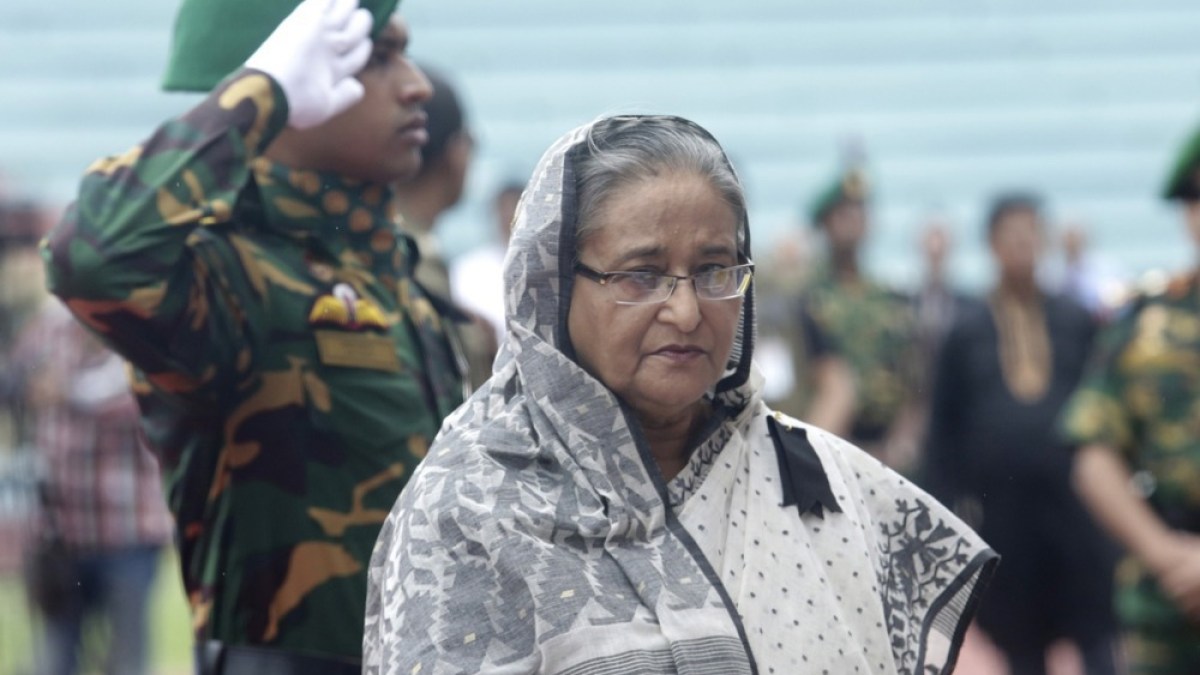
The political landscape in Bangladesh faces heightened uncertainty as exiled former Prime Minister Sheikh Hasina has forcefully denounced the forthcoming general election scheduled for February 12. Her condemnation follows the barring of her party, the Awami League (AL), from participating in the polls, a decision that analysts suggest deepens existing political fissures.
In a statement disseminated via The Associated Press, Hasina, who was sentenced to death in absentia following the 2024 crackdown that ended her 15-year tenure, argued that denying political participation to a major segment of the electorate fosters resentment and undermines institutional legitimacy. Her exile in India places her outside the immediate jurisdiction of the interim government led by Nobel Peace Prize laureate Muhammad Yunus, who assumed power after weeks of violent civil unrest.
The election is widely regarded as one of the most consequential in decades for the South Asian nation of over 127 million eligible voters. While the Yunus administration promises a free and fair process, the exclusion of the AL casts a significant shadow over its democratic credentials. Furthermore, voters are set to weigh in on a proposed constitutional referendum that could enact sweeping political reforms.
Hasina asserted that the current administration has deliberately disenfranchised millions of her supporters. This narrative was amplified during her first public address since fleeing in August 2024, delivered from a press club in Delhi, where she stated Bangladesh would 'never experience free and fair elections' under Yunus’s supervision. This address prompted a sharp reaction from Dhaka, with Bangladesh’s Ministry of Foreign Affairs expressing surprise that India permitted the broadcast, as Dhaka continues to seek Hasina’s extradition.
Meanwhile, the political vacuum left by the AL’s exclusion may benefit rivals. Tarique Rahman, acting chairman of the Bangladesh Nationalist Party (BNP) and son of the late former Prime Minister Khaleda Zia, has returned to the country and is positioned as a strong contender in the revised electoral field.
The Yunus government has sought to reassure international observers and domestic stakeholders, stating that security forces will guarantee an orderly election free from coercion. International monitors have been invited to oversee the proceedings, aiming to lend credibility to a process already marred by significant political exclusion.
From a geopolitical standpoint, the situation strains relations between Dhaka and New Delhi, as India’s previous support for the Hasina government has reportedly frayed bilateral ties since her overthrow. The outcome of the February polls, and the subsequent stability of the government formed, will be closely watched by regional powers concerned with economic continuity and security in the Bay of Bengal region. (Source: Al Jazeera, aggregated and analyzed for La Era)