Europe Seeks Strategic Independence as Greenland Crisis Exposes US Reliance
The Trump administration's threats over Greenland have triggered urgent calls across Europe for reduced dependence on US military protection and financial systems.
Europe Seeks Strategic Independence as Greenland Crisis Exposes US Reliance
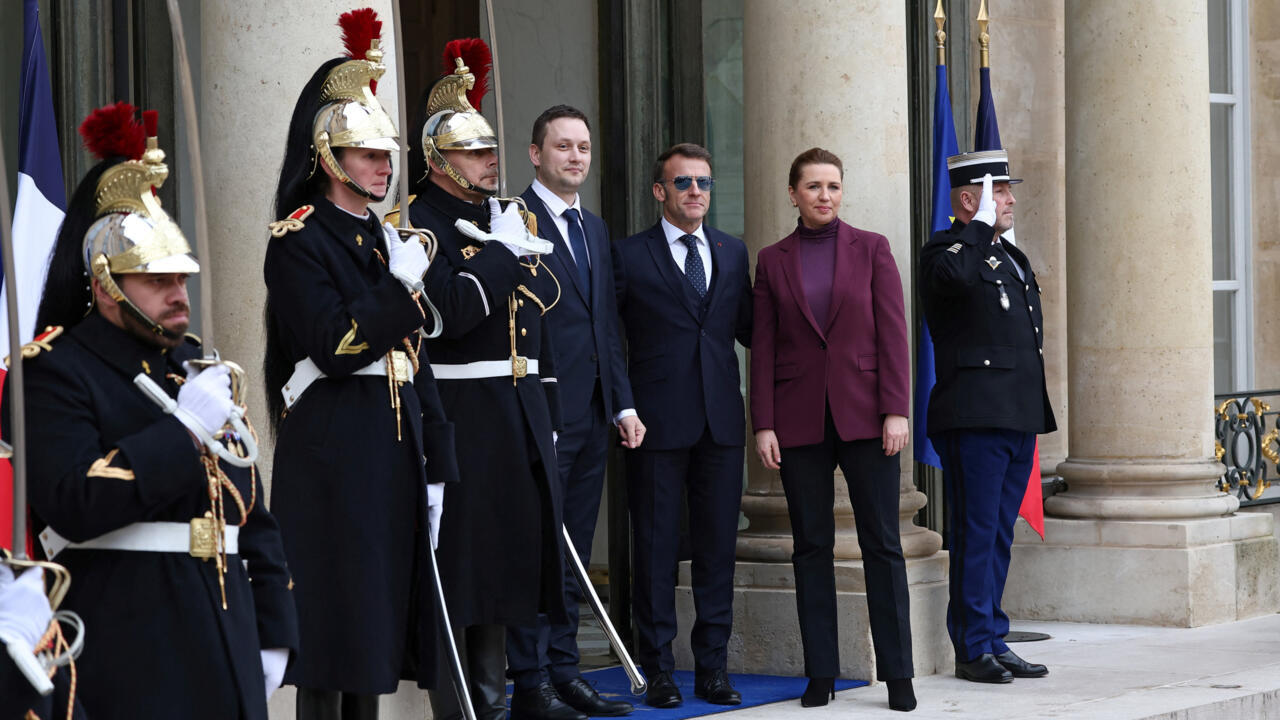
The standoff between the United States and Denmark over Greenland has crystallized into what French President Emmanuel Macron termed "a strategic wake-up call for all of Europe," as European leaders gathered in Paris Wednesday to chart a path toward greater continental autonomy.Speaking at the Élysée Palace alongside Danish Prime Minister Mette Frederiksen and Greenland's leader Jens-Frederik Nielsen, Macron emphasized that Europe's "awakening" must focus on "asserting our European sovereignty, on our contribution to Arctic security, on the fight against foreign interference and disinformation, and on the fight against global warming."The crisis has exposed deep vulnerabilities in Europe's defense and economic infrastructure. Frederiksen acknowledged the continent's precarious position, stating it would be "extremely difficult" for Europe to defend itself independently. "Because when you look at intelligence, nuclear weapons, and so on, we depend on the US," she conceded at Sciences Po university.The Danish Prime Minister criticized Europe's previous military budget cuts as a "big mistake" and rejected NATO's 2035 defense spending targets as insufficient. "I'm sorry to say it would be too late," she warned, advocating for immediate rearmament efforts.Economic dependencies have also come under scrutiny. EU Economic Commissioner Valdis Dombrovskis highlighted the bloc's reliance on US payment systems, with nearly two-thirds of EU card transactions processed by Visa and Mastercard. "This makes us dependent on foreign-owned companies in an increasingly polarized and fragmented world," Dombrovskis warned at the European Banking Summit, calling for accelerated development of a digital euro.Energy security concerns have similarly intensified. EU Energy Commissioner Dan Jorgensen noted growing fears that Europe risks "replacing one dependency with another" as it transitions from Russian energy imports to increased reliance on US liquefied natural gas supplies.The geopolitical implications extend beyond immediate security concerns. EU foreign policy chief Kaja Kallas observed that Trump has "shaken the transatlantic relationship to its foundation," arguing that "Europe is no longer Washington's primary center of gravity." She characterized this shift as "structural, not temporary," demanding that Europe "step up" to ensure its survival.Despite the tensions, diplomatic channels remain open. US Secretary of State Marco Rubio indicated expectations for "a good outcome" through technical-level meetings between the US, Denmark, and Greenland, following President Trump's recent statement that he would not use force to seize the territory.The crisis has prompted unusual expressions of solidarity, including veteran musician Neil Young offering free access to his music catalog to Greenland residents, describing it as "an offer of peace and love" to ease "unwanted stress and threats" from what he termed America's "unpopular and hopefully temporary government."As European leaders grapple with this new reality, the consensus emerging from Paris suggests a fundamental recalibration of transatlantic relations, with Europe seeking to maintain alliance structures while building greater strategic autonomy. The Greenland crisis may ultimately prove a catalyst for the continental integration that has long been discussed but rarely urgently pursued.