EU-India Trade Pact Signals New Strategic Realignment Amid Global Tensions
After two decades of negotiations, the EU-India trade agreement represents a strategic pivot in response to changing geopolitical dynamics and economic protectionism.
EU-India Trade Pact Signals New Strategic Realignment Amid Global Tensions
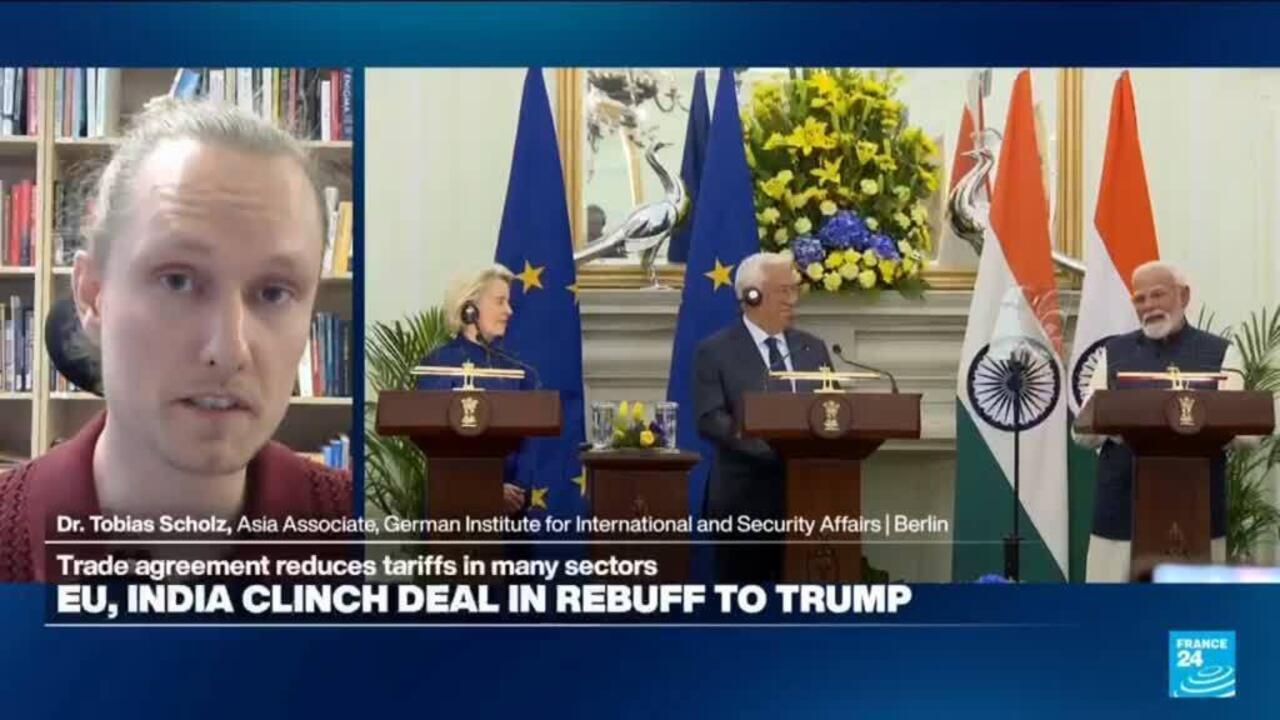
The European Union and India have concluded a landmark trade agreement after nearly twenty years of intermittent negotiations, marking a significant shift in global economic partnerships amid rising geopolitical tensions and protectionist policies.According to Dr. Tobias Scholz, Asia Associate in the Research Cluster of Cybersecurity and Digital Policy at the German Institute for International and Security Affairs, the timing of this agreement reflects broader strategic recalibrations driven by Russia's war in Ukraine and the increasing fragmentation of global trade relationships.Unlike the controversial EU-Mercosur agreement, which has faced substantial opposition, the EU-India pact is gaining momentum due to its careful exclusion of sensitive agricultural sectors that have historically derailed trade negotiations. This strategic omission has helped build broader political support across European capitals.The agreement comes as both the EU and India reassess their strategic priorities in response to what experts describe as a new era of economic nationalism. India's growing economic influence and political stature on the global stage have made it an increasingly attractive partner for the European bloc seeking to diversify its trade relationships.The deal represents more than just economic cooperation; it signals a potential challenge to what some analysts characterize as imperialist policies wielded by major powers. By strengthening ties between democratic economies, the agreement could reshape global trade dynamics and reduce dependence on authoritarian regimes.The trade pact now awaits ratification processes in both jurisdictions, with implementation expected to proceed despite the complex geopolitical landscape. Industry observers suggest the agreement could serve as a template for future trade relationships in an era of increasing economic fragmentation.Source: Analysis based on reporting from France24