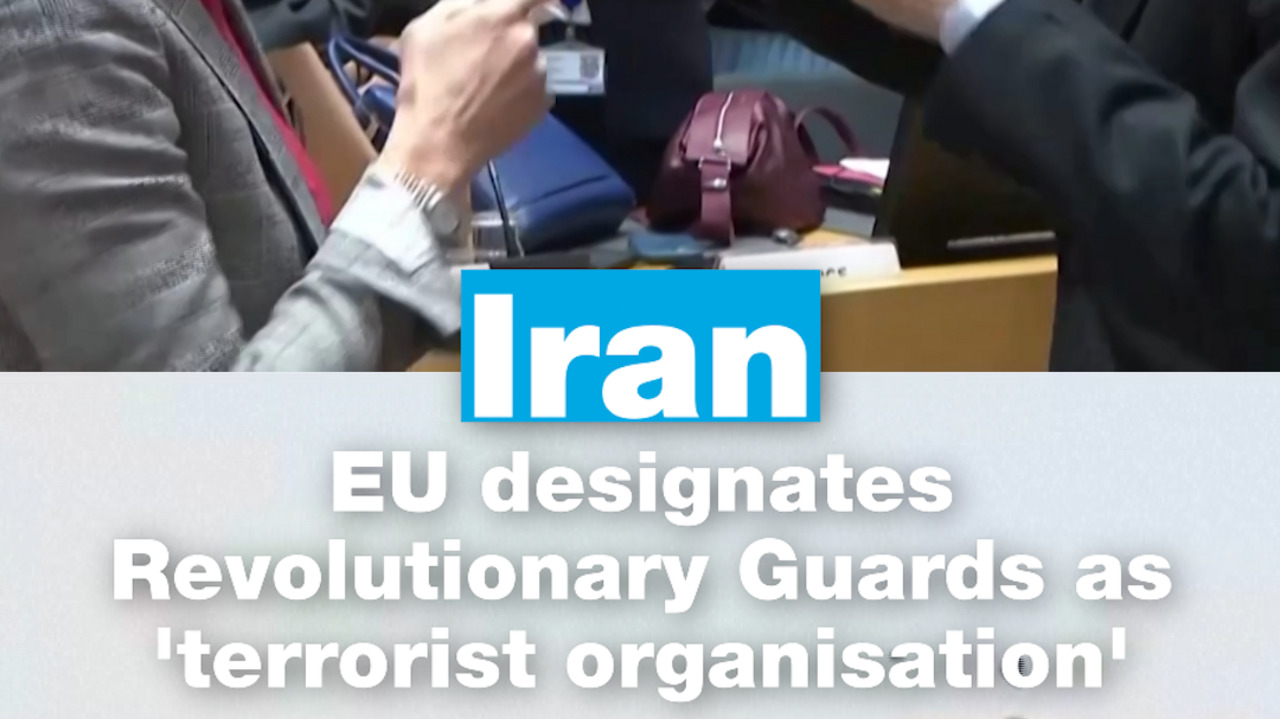
The European Union reached a landmark consensus this week, as foreign ministers formally agreed to designate Iran's Islamic Revolutionary Guard Corps (IRGC) as a terrorist organization. This decision, long contentious among the 27 member states, represents a decisive hardening of the bloc's diplomatic and security stance toward the Islamic Republic of Iran.
European foreign policy chief Kaja Kallas confirmed the designation, stating that this action places the IRGC "on the same footing with Daesh, Hamas, Hezbollah, al-Qaida." This legal classification carries substantial implications, potentially leading to severe financial sanctions, asset freezes, and restrictions on travel for entities and individuals associated with the IRGC across the EU.
The move follows months of escalating tensions, fueled by Tehran's domestic crackdown on protests and its alleged support for proxy groups in the Middle East. For years, several member states resisted such a designation, fearing disproportionate economic repercussions, particularly concerning vital energy trade, and a potential collapse of ongoing diplomatic channels aimed at preserving the Joint Comprehensive Plan of Action (JCPOA).
The designation is fundamentally a geopolitical recalibration. By equating the IRGC—the ideological guardian of Iran's political system—with established global terror networks, the EU is signaling a clear prioritization of security concerns over the delicate balance of maintaining complex economic ties with Tehran.
Economically, the designation introduces significant regulatory risk for European businesses operating in sectors that intersect, even tangentially, with the IRGC’s vast commercial holdings. Financial institutions within the EU will now face heightened scrutiny regarding compliance with anti-money laundering and counter-terrorism financing directives concerning Iranian assets.
This decision will inevitably strain EU-Iran relations further, likely prompting immediate and strong condemnation from Tehran. Analysts suggest this move could empower hardliners within the Iranian regime while simultaneously complicating any near-term prospects for reviving nuclear negotiations or de-escalating regional conflicts where the IRGC plays a central role.
As reported by France 24, the agreement signals a symbolic, yet concrete, shift in the EU's approach to managing security threats emanating from the Middle East. The operational impact—how quickly and comprehensively member states implement secondary sanctions related to this listing—will now become the critical focus for international markets and security planners.
(Source: Based on reporting from France 24 on the EU foreign ministers' decision.)